Department of Botany

Dr. Babasaheb Ambedkar Marathwada University | Official Website

Department of Botany

About Department

The Department of Botany offers Postgraduate teaching and Ph.D. Programmes. The Department admits 48 students each to the M. Sc. I Year and II Year Classes. It offers four specialization viz. Plant Physiology, Plant Pathology, Cytogenetics and Angiosperm Taxonomy. Around 20 scholars are engaged in doctoral research at the moment. The Department turned out about 350 doctorates during the last five decades of its existence.

The Department is now a three storied building with one seminar hall, one lecture hall, 5 laboratories for M. Sc., 13 research laboratories, museum, glass house, herbarium, tissue culture laboratory and molecular biology laboratory. It is also equipped with photographic section, library and botanical garden. In addition to this, each teacher has independent cabin with all facilities including computer, scanner, printer, refrigerator etc.

Research in the four section of the Department is funded by the University, U. G. C., CSIR., MFM (USA), Royal Society (England), D.A.E., I.R.D.P., Ministry of Environment and forest, D.B.T., D.S.T., R.G.S.T.C. etc.

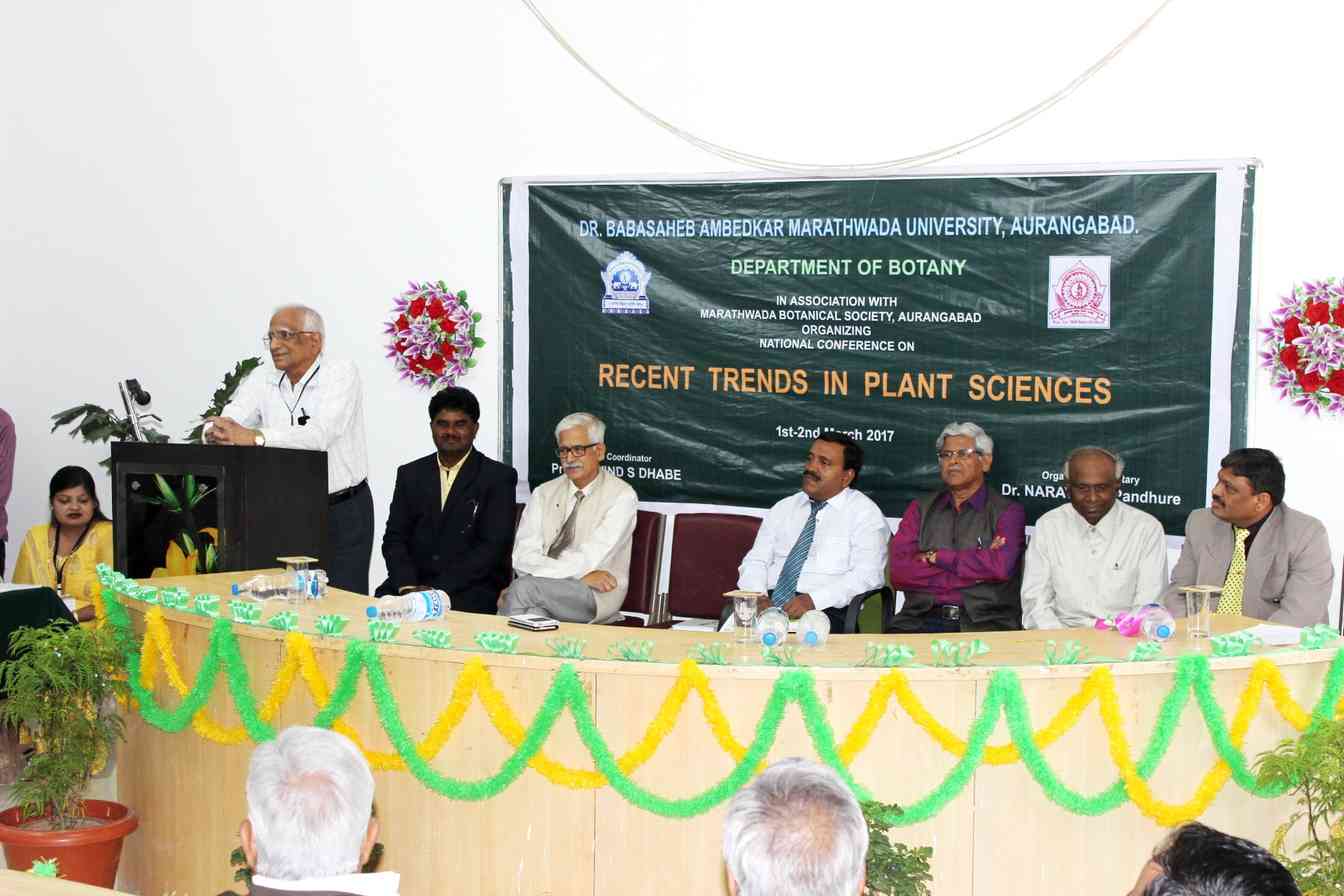
The Department is often visited by botanists and biologists from abroad under various programs. We had the privilege of having Fulbright Professor John Harris, Tenesse University, USA and Prof. Mark Stahaman, Wisconsin University, USA for three months to lecture and train in techniques in Biochemistry etc. Prof. Dr.Tod F. Stuessey, Secretary General, International Association for Plant Taxononomy, Vienna, Austria; Prof. Dr. Karol Marhold, President , International Organization of Plant Biosystematists, Bratislava, Slovak Republic, Dr. Jana Leong Scornikova, Singapur Botanic Garden, Singapore; Dr. Salvatore Cozzolino, Napoli, Italy; Prof. Oluwa Toin Ogundipe, University of Lagos, Nigeria; Dr. Silvia Pihu, University of Tartu, Estonia; Dr. Eckhard von Raab-Strabe, Freie University, Berlin, Germany; Dr. Jan Suda, Charles University in Prague, Czech Republic; Prof. Marten J. M. Christenhusz; Finnish Museum of Natural History, Helsinki, Finland;Dr. Ongkararn Vanijajiva, Phranakhon Rajabhat University, Bangkok, Thailand; Dr. Tatiana Feodorova, Lomonosov Moscow State University, Moscow, Russia; Dr. Hye Ryun Na, Ajou University, Suwon, South Korea; Prof. Debashish Raha, Sydney University, Australia etc. have visited Department. About 50 foreign delegates have attended XI International Conference of International Organization of Plant Biosystematists, “Evolution of Plants from Tropical to high mountain ecosystem” held by the Department during 02nd to 04th September 2010.Similarly, teachers made short or long foreign outings for seminars, conferences and even training. Notably the foreign fellowships secured by many students of Plant Physiology section e. g. U. K., Ireland, Japan etc. Prof. Arvind S. Dhabe has got PEIN Fellowship of University Santiago de Compostella, Spain during May – June 2014.

Department insights

History

The Department was established in the year 1962 and was housed in three halls of Milind College of Arts, which was shifted to its present premises in 1967. The founder head was late Prof. K. B. Deshpande. In the early years the Department carried researches in two streams i. e. Plant Pathology & Mycology and Angiosperms and subsequently two more areas of Physiology and Cytogenetics were added. In the year 1967, the Department produced the first Ph. D. degree. The faculties have contributed the Botany of the region and published around 40 books. Some of the masterpieces are Angiosperm Taxonomy (1984), Tata Mc Graw Hill; Flora of Marathwada (2 valumes, 1998), Gazetteer of Maharashtra (2010) Govt. of Maharashtra etc. Till date, the Department has produced more than 350 Ph. D. candidates. For the enrichment of the knowledge of the students, research scholars and teachers, there are several lecture series namely - Scientists lecture series, UGC extension lecture series, Teacher exchange programme, Late Prof. K. B. Deshpande memorial lecture, Late Prof. V. N. Naik memorial lecture series etc.

Herbarium was established in 1969 with the incorporation of the flora of Osmanabad and later on go on enriching day by day. All the students of Late Prof. V. N. Naik have collected the flowering plant specimens from respective districts of Marathwada. There are special collections like - Late Prof. V. N. Naik: genus Chlorophytum; Dr. M. A. Wadood Khan: family Cyperaceae; Prof. D. S. Pokle and Prof. Arvind Dhabe: genus Alysicarpus; Prof. Arvind Dhabe: genus Terminalia, Tephrosia, Cassia, Medicinal plants of Aurangabad, Jalna, Parbhani and Nanded districts, Flowering plants from all over India; Prof. M. M. Sardesai: genus Sida; Prof. M. M. Sardesai and Dr. Ravikiran Govekar: Flora of Gadchiroli etc. It is Internationally Recognized with Acronym 'BAMU'.

Our Batanic Garden is the largest University Botanic Garden in India. It has 4 parts viz. Departmental Botanic Garden, Central Oval Garden, Main Botanical Garden and Institutional Forest. It has about 215 species of trees, and 600 species of Botanical interest. We use the plant specimens from the Botanic Garden for teaching and research.

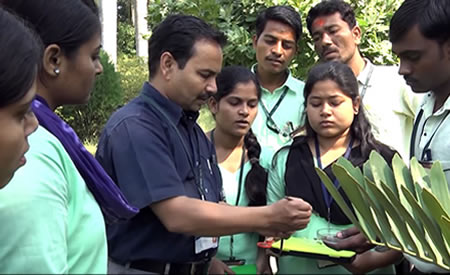
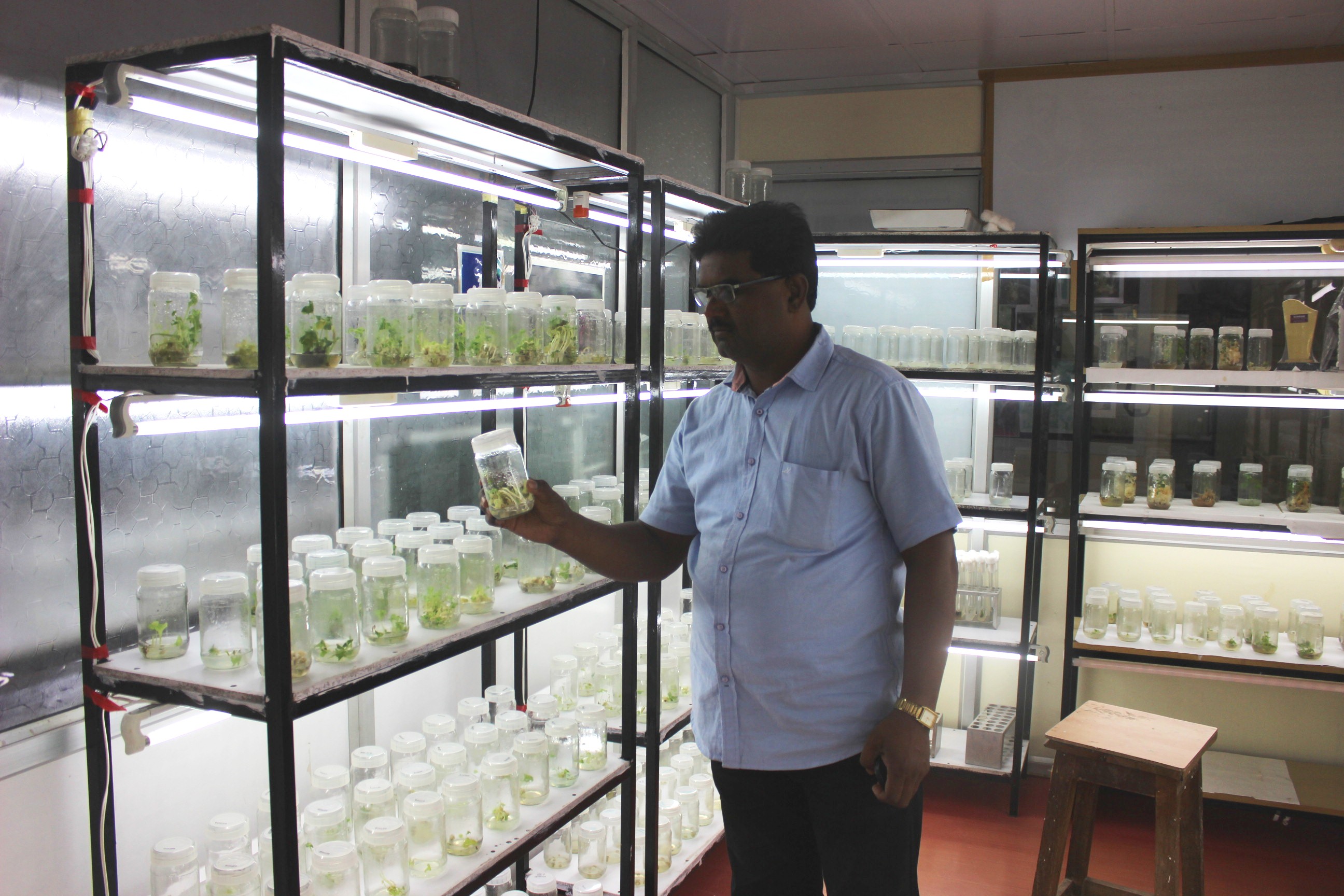
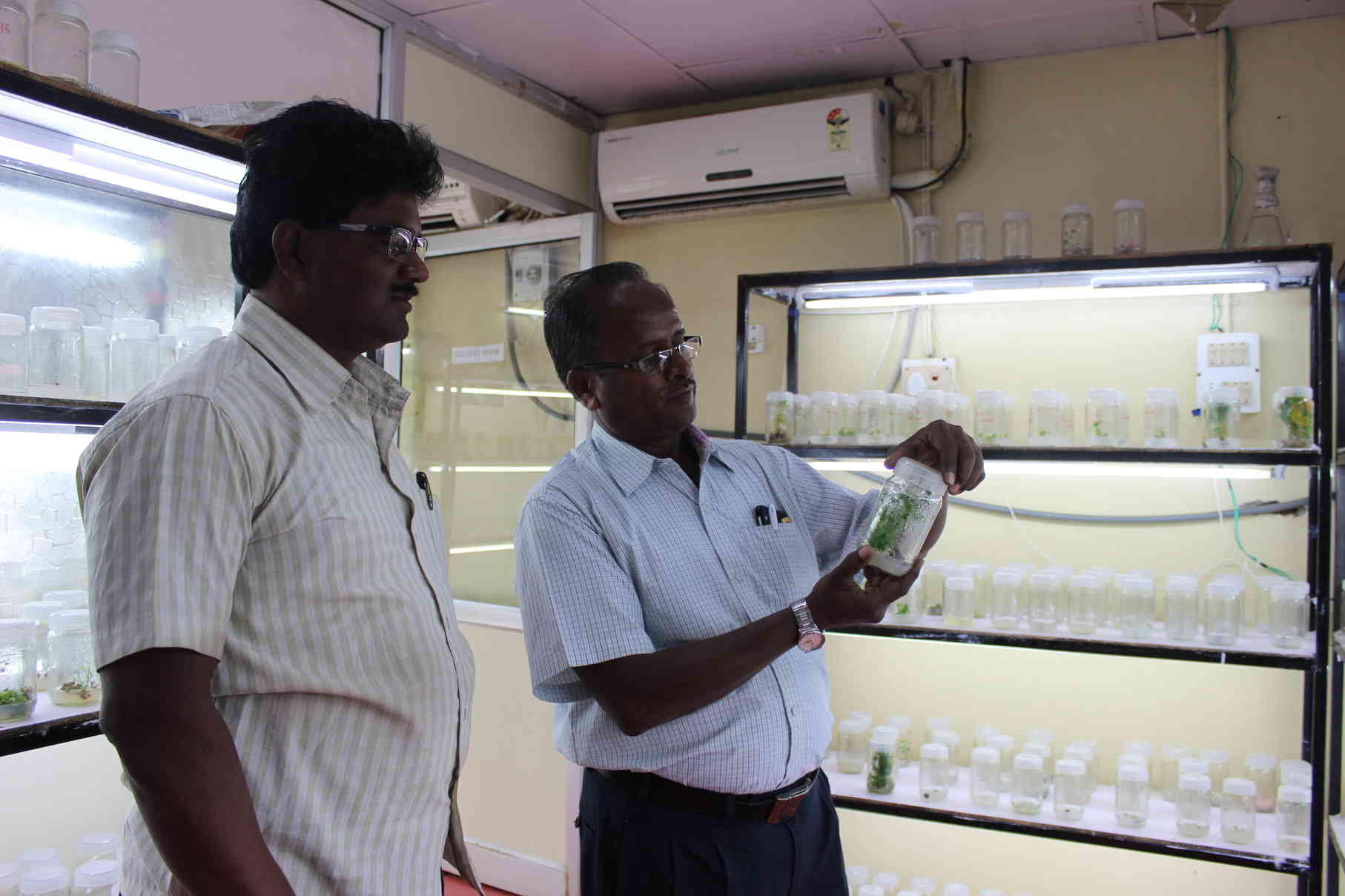
Department conducts plant excursion and study tours to various remote places and the collection is deposited in the 'BAMU' Herbarium and used for the practicals. Tissue culture laboratory has been established for conservation and in-vitro propagation of endangered and medicinal plants of Marathwada region

Department has implemented the semester system from 2003, Academic flexibility has been given in 2009 and CBCS system is implemented from 2012 and NEP 2020 Curriculum from 2023 – 2024. The exam pattern is 60:40 that is 60% External Assessment through Term End Examination and 40% Continuous Internal Assessment through Regular assessment, Unit Tests, Seminars, Remedial tests etc. More than 25% weightage is given to Research methodology. Through NEP 2020 Curriculum the Department has incorporated the new courses like Horticulture, Botanical Techniques, On Job Training in Seed industries, Field Projects, Industrial Technology, Pharmacognosy etc.

Students have to present their Project Work before External Examiner, all faculties, all Research Scholars and all PG students.

Vision and Mission

Vision

To structure The Dr. Babasaheb Ambedkar Marathwada University to be an Epitome of Excellence by creating and imparting time responsive Quality Education to address Changing Scenario, keeping Research and Development at its core, for ‘Anyone’ at ‘Anytime’ and ‘Anywhere’.

Mission

  • To apply conventional and non-conventional tools to conceive plant processes.
  • To apply tools and techniques in the development of plant tissues.
  • To analyze the plant characteristics and develop new/hybrid plants.
  • To conduct research-based activities in plant science with a special focus on health science and food plants.
  • To establish a continuing education cell with an emphasis on interdisciplinary plant science research and development.
  • To establish collaboration with eminent institutes and industries for enhanced learning experiences and the teaching-learning process.

Objectives

  • To develop the Department as a leading centre of plant sciences in the Country.

HOD's Desk

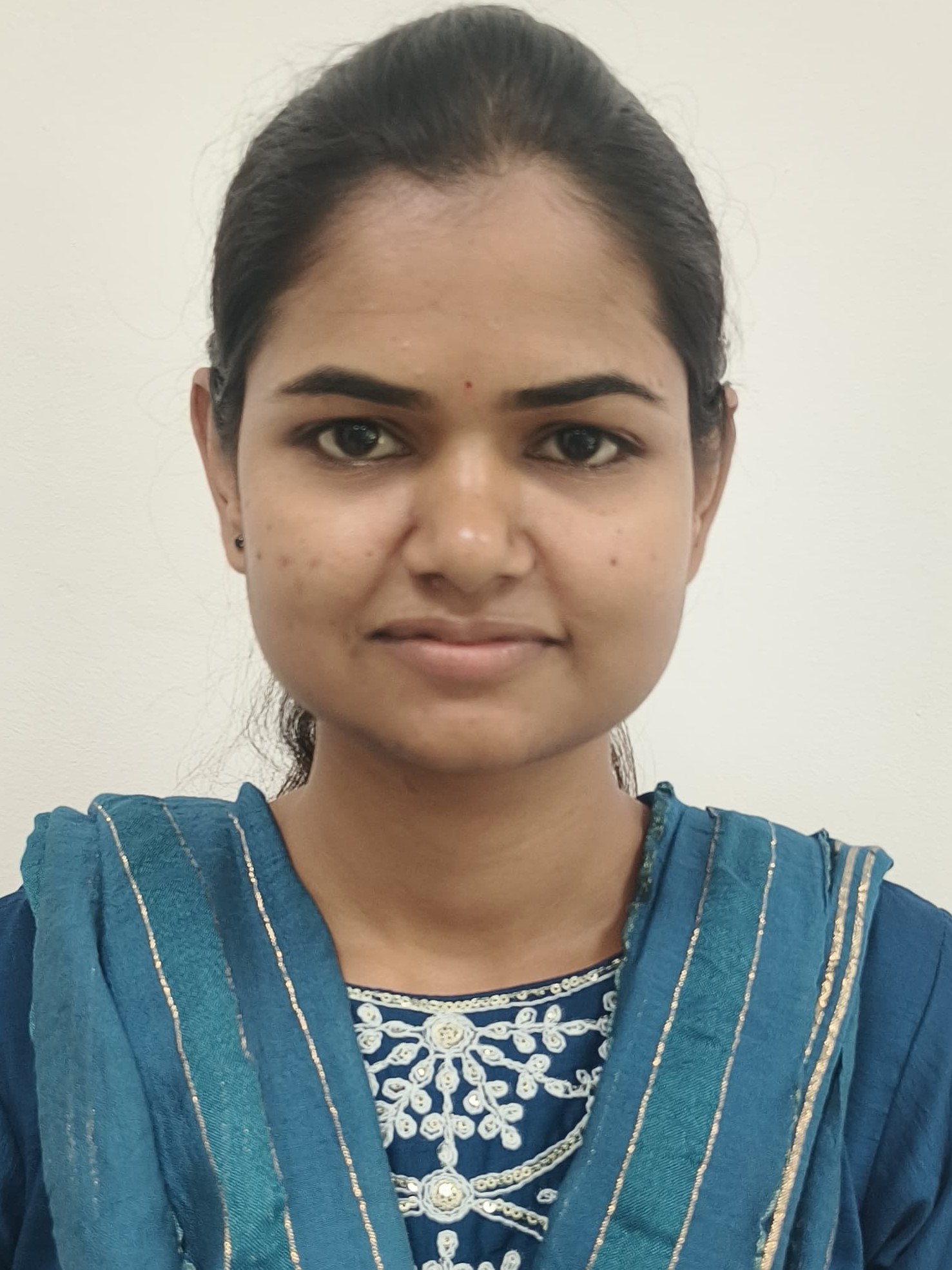
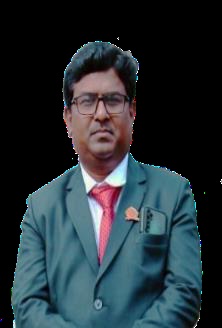
Dr. Arvind S. Dhabe

Professor & Head

View Biodata

Phone No. (office):0240-2403303

Department Phone No. : 0240-2403304,305

Mobile No. : 9923300222

E-mail : head.botany@bamu.ac.in

Dhabe
"Botany is the interesting basic science learned not only in the Classrooms and Laboratories but in the Nature. It nurtures the life on the living planet"

Welcome to the Department of Botany, Dr. Babasaheb Ambedkar Marathwada University, Aurangabad. This is nationally and internationally renowned Department established in 1962. It was started in the premises of Milind College of Science and shifted in its own building in 1967. Late Prof. K. B. Deshpande was the founder Head of the Department. It is said that, the Universities are known by the Professors and we proudly say that, this Department was shaped by the stalwart Botanists like - Late Prof. K. B. Deshpande, Prof. R. M. Pai, Prof. R. N. Joshi, Prof. S. T. Tilak, Late Prof. V. N. Naik, Late Prof. L. V. Gangawane, Late Prof. A. B. Sapre, Prof. N. P. Vaikos, Prof. D. S. Mukadam, Prof. A. M. Mungikar, Prof. D. S. Pokle, Prof. V. S. Kothekar, Late Prof. Bharti Jadhav, Prof. P. B. Papdiwal, Prof. Suniti Barve, Sr. Prof. A. M. Chavan etc. The present faculty is also doing well to continue this tradition.

We offer M. Sc. and Ph. D. programs in Botany. We have four specializations like - Cytology and Genetics, Plant Pathology, Taxonomy of Angiosperms and Plant Physiology. The Department is now a two storied building with one seminar hall, one lecture hall, 5 laboratories for M. Sc., 13 research laboratories, museum, glass house, tissue culture laboratory and molecular biology laboratory, herbarium and Botanical garden. It is also equipped with photographic section and Departmental library. In addition to this, each teacher has independent cabin with all facilities including computer, scanner, printer, refrigerator etc. "BAMU" is an internationally recognized Herbarium in-housing 1,04,000 plant specimens. It is the only Herbarium among the Indian Universities who has got the right to cast 2 institutional votes in the Nomenclature Section of International Botanical Congress held at Shenzhen, China in July 2017. Prof. Arvind S. Dhabe has casted his 1 personal vote and 2 institutional votes on behalf of "BAMU" Herbarium. Our Botanic Garden is considered to be the largest Botanic Garden among Indian Universities having 215 species of trees and other 600 species of Botanical interest. It has been enlisted in the Directory of Botanic Gardens in India. Both the Herbarium and Botanic Garden are proved to be important tools for teaching and research in Botany.

Our most of the students awarded with fellowships/ scholarships like EBC, GOI, UGC National Merit, UGC Rajiv Gandhi National Fellowship for SC/ST, UGC Maulana Azad National Fellowship for Minorities, BARTI, MAHAJYOTI, SARTHI Fellowships of Government of Maharashtra, Eklavya Scholarship, Dakshina Abhidan Shishyavrutti, Dr. BAMU Golden Jubilee Scholarship and many more.

We welcome the energetic, enthusiastic budding Botanists for shaping their future in the ragging free, student centered, student's friendly and healthy atmosphere of Department of Botany in naturalistic campus of Dr. Babasaheb Ambedkar Marathwada University, Aurangabad.

It's my proud privilege to welcome you all.

With warm regards.

Professor Arvind S. Dhabe

Contact

Head, Department of Botany

Dr. Babasaheb Ambedkar Marathwada University, Aurangabad, Pincode - 431 004

Email : head.botany@bamu.ac.in

Head : 0240-2403303 (HOD)

Mobile : 9923300222 (HOD)

Office : 0240-2403304, 305

Courses/Programs
Admissions
Faculty / Staff
Facilities
Research
Alumni
Achievements
Photo Gallery
Course Structure
M.Sc. Botany
  1. Any Science Graduate with at least one Optional Subject as Botany.
  2. Qualifying degree percentage: Minimum 45% for open and 40% for reserved category.
M. Sc. BOTANY PROGRAM OUTCOME
  • To be fundamentally strong at core subjects of Plant Sciences.

  • Able to identify, classify plant species belonging to different groups and knowing their utility.

  • Able to understand the inheritance, cellular, molecular, physiological, biotechnological phenomenon/processes.

  • Able to recognize the diseases of plants, their pathogens and control measures.

  • Broad understanding of latest technological trends

  • Ability to understand and apply fundamental research concepts.

  • Able to understand the nature, ecosystem and sustainable development.

  • Able to conserve the endangered plant species through conventional and micro-propagation methods.

  • To be rational in professional ethics and attitude

ASSESSMENT METHODS AND EXAM REFORMS
  • Choice based Credit System (CBCS) 60:40 Pattern [Semester End: Continuous Internal Assessment (CIA)], 10 point scale

  • Offer Academic Flexibility, Continuous evaluation, bridge course, service course to the students.

  • Result analysis after term end examination for all Programs.

  • Teacher evaluation by students.

  • Continuous Internal Assessment consists of two formal test, surprised test, assignments and seminar presentation etc.

  • Transparent evaluation system (showing of the answer sheets to the students, taking feedback on assessment).

  • Assessed answer scripts are being shown and discussed for suggestive improvement with students for all assessment criteria and their grievances are redressed.

M.Sc (Botany) PG-CET 2019 Syllabus
View Syllabus
  • In response to the advertisement for registration, (in newspapers and University Website in the last week of May), interested students will have to register themselves.
  • Duly filled Application Form (available on University website) should be filled in prescribed format and submitted to the office of Department of Botany.
  • Admission will be done on the basis of performance of students at Common Entrance Test (CET). The Entrance test is usually conducted in the second week of June every year.
  • Selected candidates will have to go through MKCL registration process.
Procedure for Registration:
  • Interested candidates are required to fill in the online registration form provided on http://bamua.digitaluniversity.ac and submit the printout of the filled-in form along with the necessary attested documents and the prescribed fees to the department office.
  • Original and/or attested copies of the following documents are essential at the time of admission:
  • Photo ID proof as per Govt. of India norms (Voter ID / Aadhar card / Driving License)
  • SSC (High School) Board Certificate as proof of date of birth
  • Mark sheet of SSC and HSC
  • All semesters Grade/Mark sheets of qualifying examination (Degree)
  • Degree / Provisional certificate (if any) if the degree is completed
  • Transfer Certificate (Original) of Degree
  • Degree Certificate
  • Caste Certificate and Validity Certificate (if applicable)
  • Income Certificate of parent(s)
  • Domicile Certificate
  • Non-Creamy Layer Certificate (for NT-2, NT-3, and OBC candidates)
  • Gap Certificate (if any)
  • Students who come under the jurisdiction of another university should submit a Migration Certificate in original
Students who come under the jurisdiction of other University submit Migration Certificate in original.

Pattern of CET

M.Sc(Botany)

Students those who are desirous to seek admission to M. Sc. (Botany) in the Department, have to go through the CET Examination.


The final merit list of provisionally selected candidates will be prepared based on 50% Marks from Qualifying Degree Score of Botany subject and 50% Marks from CET Score. The students appeared in Final Year (B.Sc.) or previously passed are eligible for CET Examination.


Syllabus for CET

All Botany papers of current syllabi of B. Sc. I, II, III, IV, V & VI semester of Dr. Babasaheb Ambedkar Marathwada University, Aurangabad.


Exam Pattern of CET

CET question paper is of 100 marks on multiple choice questions of two hour duration. Each question carries 1 mark. THERE IS NO NEGATIVE MARKING SYSTEM.

Eligibility

M.Sc. Botany:
  • Any Science Graduate with at least one Optional Subject as Botany.
  • Qualifying degree percentage: Minimum 45% for open and 40% for reserved category.

Intake/Reservations

For M.Sc. Botany:

48 Students for M. Sc. (Botany)

Reservation For M.Sc. Botany:

Category wise Reservation will be as per the Govt. of Maharashtra and Dr. B. A. M. University guidelines.

Distribution

SSC Board HSC Board Degree % of Seats
Maharashtra Maharashtra Dr. BAMU 80%
Maharashtra Maharashtra Other 10%
Other Other Other 10%

Note: 0% Seats in each Course will be reserved for Women Candidates. 3% Seats in each Course will be reserved for Physically Handicapped.

Over and Above Quota:

Category No. of Seats
Service Man/ Ex-Service Man/ Freedom Fighter 02
Sports/ Debit Competition/ Youth Festival/ Any other National Level Competition 01
SRTMU 02
Migrated Service Man from Outside the University Region 02
Foreign Students (20% of intake capacity)
Son/Daughter of Martyr Soldier/ Officers of Kargil War 01

Course/Program Fees

For M.Sc. Botany: Rs. 1531/- and Exam Fees Rs. 350/-

Scholarships

Facility for son I daughter! ward of Secondary Teacher (S.S.T.)

Candidates who are son / daughter / ward of Secondary Teachers & seeking the tuition fees facility should submit their application to the concerned departments. The forms should be carefully filled in.lt should be complete in all respect.

Facility for son [daughter] ward of Ex-serviceman I Freedom Fighter

Candidates who are son / daughter / ward of Ex-serviceman I Freedom fighter and seeking the tuition fees facility should submit their application signed with the seal of District Ex-serviceman Welfare Board to concerned department. The forms should be carefully filled in and complete in all respect. Application for BBC. facility must be submitted before the last date in the ooncemed departments. Applications received after the last date will not be entertained.

Schedule of application procedure for candidates of E.B.C., P.S.T., S.S.T. and Ex- Serviceman will be communicated to Departments through circular by P.G. section EBC, PST, SST. facility for non granted courses is subject to decision of GovemmentAuthority.

Scholarship Govt. of India Scholarship (G.O.I.)

The Government of Indian (G.O.|.) gives scholarships for students belonging to the reserved categories. Online application form in properformat and supported by following documents must be submitted to Post-Graduate Section (Admission Unit) before the last date. The applications received after the last date will not be entertained in any condition. AADHAR CARD No. is compulsory for Scholarship holder students. Management Quota Students are not eligible for GOl and Freeship Scholarship (Ex. MBA. MCA. B.Tech. Students of Management Quota are not eligible forthis facility.)

A.New scholarship application form with passport size photograph of the student must be duly signed by the competent authority.

B.Application for scholarship forms must be submitted with attested copies of following documents.

  • Transfer Certificate (Photocopy of original T.C.)
  • Caste Certificate
  • Income Certificate of the father/guardian (original) (issued by the Executive Magistrate)
  • Attested Copy of Death Certificate in case of death of the father
  • March Salary Certificate of parents in case of service
  • Photocopy of Mark Memo
  • Certificate from hostel in case of student staying at hostel
  • Income Certificate of the husband must be given in case of married girl student
  • District change certificate must be given in case of student coming from another district
  • In case of Duplicate T.C., no concession/scholarship will be given. Such students will have to pay full fees.
  • Scholarship will be issued to the students who have fulfilled 75% attendance.
  • Income of the guardian of the student should be less than the limit declared by the Government from time to time.
  • Caste of the student (Scheduled Caste, Scheduled Tribe, Nomadic and Denotified Tribe, Other Backward Special Backward Categories) must be included in the list as per the government policy for reservation.
  • Students or parents of students belonging to Erstwhile Scheduled Caste who have later converted to Buddhist religion (Buddhism) are entitled to obtain a scholarship.
  • Candidates who applied for vocational courses can obtain scholarships whether they passed or failed in the course (Degree/Diploma) from Arts, Commerce, and Science faculty. But such students cannot further change their course.
  • Candidates who have once accepted a scholarship for a vocational course are not allowed to get a scholarship for the next vocational course.
  • Candidates working in a full-time job are not eligible for scholarships. However, candidates on leave without salary will be eligible for a scholarship.
  • Scholarships will not be given to more than two children in the same family. (This condition is not applicable in the case of girls.) (The third child will not get the scholarship.) (Exception: If the second child is a twin or more than two are born at the same time, they will be considered as one unit.)
  • Candidates should fill a new application form for a scholarship in case of their first admission. Second-year candidates must follow the process as directed by the Social Welfare office. A new application form should be filled in case of any gap.
Important notes about scholarships /Fellowships
  • Exam appearance is for GOI Freeship, EBC, PST, SST, Ex-Serviceman, Freedom Fighter, and other scholarship facility holders. Otherwise, students must pay the total tuition fees.
  • Scholarship facility is not available for Certificate and Diploma courses.
  • In some scholarships, tuition fees are not transferred to the university/college account. Students must pay their tuition fees (e.g., Minority Scholarship, Handicapped Scholarship, etc.).
About Other Scholarships:

1.Vidyavetan Facility:

  • Application form should be submitted in P.G. Section Within the period of 15 days after completion of admission. Govt. Hostel Certificate is necessary to fulfill this form.
  • This facility is only for SC. ST. DNT students who had completed their admission for professional Courses ST Students must attached attested caste validity certificate with scholarship form and if Student is living in hostel then he must furnish Hostel Certificate.

2.Important Note about Scholarship:

  • Candidate is not eligible for GOI, EBC. PST, SST, Freedom fighter or any governmental scholarship. if he/she does not attend exam, and will have to pay full fees.
  • Governmental Scholarship is not given for Diploma/ Certificate Courses.

3.Other Scholarships:

Candidates of University campus can get following scholarships by Govt. of Maharashtra and University as stated below:

4.Eklavya Scholarship:

This Scholarship will be given to the candidate who has secured 60% marks in Degree Exams in Art Faculty and 70 % Marks in Science Faculty Degree Examination. After submitting application form in proper format, Eklavya Scholarship will be approved by the Director of Higher Education. Govt. of Maharashtra. Pune. The Annual Income of the parents of an applicant must be prescribed by Government.

5.University Merit Scholarship:

After completing the admission procedure of the University Scholarship will be granted to the applied candidates ranking 1st and 2nd as per merit in each subject. Three candidates of M.Phil. can get this Scholarship as per merit list in each subject.

6.Post Matriculation Scholarship:

Post Matriculation Scholarship for students 'belonging to Minority communities. The students belonging to the Minority communities (Muslim, Parshi. Shikh. Christian, Buddha, Jain learning in the university.

7.Scholarship for Non-Hindi Language Speakers:

Non-Hindi Language speakers, who are doing study in Hindi language, could submit their applications in proper format for Scholarship for Non-Hindi language speakers. Scholarship for Non-Hindi Language speakers will be given to four candidates only.

The scholarship holders of any kind are supposed to abide the following rules:

  • Exam appearance is for GOI Freeship, EBC, PST, SST, Ex-Serviceman, Freedom Fighter, and other scholarship facility holders. Otherwise, students must pay the total tuition fees.
  • Scholarship facility is not available for Certificate and Diploma courses.
  • In some scholarships, tuition fees are not transferred to the university/college account. Students must pay their tuition fees (e.g., Minority Scholarship, Handicapped Scholarship, etc.).

Important Dates

Sr. No. Event Date
1 Call for applications First week of May
2 Last Date for Online Registration 30th May
3 Last Date for Hard copy submission 3 days after last date of online registration
4 Date of Entrance Test First week of June
5 Display of the Result of Entrance Test 3 days after Entrance Test
6 Display of first list of provisionally selected candidates Second week of June
7 Display of second list of selected candidates Third week of June
8 Spot Admission if seats are available First week of July
9 Commencement of teaching First week of July
Name Specialization

Dr. Arvind S. Dhabe

Professor & Head

Qualification: M.Sc., Ph.D.

Email: head.botany@bamu.ac.in

Contact: 0240-2403303

Resume
-

Dr. Pranita Vishwanath Raithak

Assistant Professor (Contractual)

Qualification: M.Sc., Ph.D.

Email: praithak@yahoo.co.in

Contact: 94039612086, 8625926968

Resume
Plant Pathology

Mr. Sushil Kalyan Ahiwale

Assistant Professor (Contractual)

Qualification: M.Sc., MH-SET

Email: ahiwalesushil1997@gmail.com

Contact: 7798227128

Resume
Taxonomy of Angiosperms

Ms. Sawant Pooja Suresh

Assistant Professor (Contractual)

Qualification: M.Sc., SET, CSIR-NET-JRF

Email: poojasawant5694@gmail.com

Contact: 8857948108, 9623379392

Resume
Cytogenetics

Dr. Aarti Mohan Patil

Assistant Professor (Contractual)

Qualification: M.Sc., Ph.D., SET

Email: aartimp27@gmail.com

Contact: 9404136696

Resume
Plant Pathology

Dr. Asawari T. Gorane

Assistant Professor (Contractual)

Qualification: M.Sc., Ph.D., MH-SET

Email: asawarigorane@gmail.com

Contact: 9168072202

Resume
Plant Molecular Biology and Biotechnology

Dr. Bharat V. Chavan

Assistant Professor (Contractual)

Qualification: M.Sc., Ph.D.

Email: bcindia2@gmail.com

Contact: 9765685001

Resume
Plant Pathology

Miss. Aishwarya Nagnath Akuskar

Assistant Professor (Contractual)

Qualification: M.Sc., SET

Email: aishwaryaakuskar@gmail.com

Contact: 8669346235

Resume
Biodiversity

Dr. Shrikant Mane

Culturist, Honorary Teacher

Qualification: M.Sc., Ph.D.

Email: maneshrikant81@gmail.com

Contact: 9420385182, 9921965945

Resume
Plant Pathology
Supporting Staff
Sr.No. Name Designation
1. Dr. S. B. Mane Culturist
2. Mr. R. T. Sable Senior Assistant
3. Mr. G. B. Tezhad Lab Technician
4. Mr. M. R. Kame Lab Technician
5. Mr. R. T. Bhingare Lab Attendant
6. Mr. B. J. Mhaske Mali
7. Mr. M. N. Mhaske Mali
Garden Staff
Sr.No Name Designation
1 Mr. D. M. Magare Field Supervisor
2 Mr. S. J. Shukla Head Mali
3 Mrs. A. S. Bachke Mali
4 Mrs. S. M. Dhiwar Mali
Contractual staff
Sr.No. Name Designation
1 Mr. Rushikesh S. Ghorpade Skilled worker
2 Mr. Mahavir Namdeo Kamble Unskilled worker
3 Mr. Sachin M. Bhalerao Sweeper
4 Mrs. Shalu V. Khare Sweeper
The Herbarium:

Herbarium is a place where dried plant specimens are stored. It was established in the year 1969 by Dr. V. N. Naik, the pioneer Taxonomist of this region. It was initiated with the flowering plants of Osmanabad district and later on collections from all over India have been incorporated. The Herbarium of the Department harbours almost each and every species from Marathwada region. At present it has more than 100000 specimens and 57 type specimens. It has collections from foreign countries either on donation or exchange basis, like Brazil, England, Germany, Switzerland, Denmark, Czech Republic, Slovak Republic, Austria, South Africa, The Netherlands etc. This is internationally recognized and its acronym is “BAMU”. It has special collection of Medicinal plants, Family Cyperaceae, Asteraceae, genus Chlorophytum, Alysicarpus, Terminalia, Tephrosia, etc. 57 new plants have been described by the scholars from this Herbarium. It is a comprehensive collection of plants and has developed as a centre of reference for taxonomists. The University has sanctioned a special grant of 6 lakh for the development and maintenance of herbarium which represents biodiversity. This is one of the largest Herbarium among Indian Universities.

Museum:

The museum is rather small but it is in budding stage. It harbours plant species of botanical importance. These plant specimens are kept in the museum for general observation as well as for class work material.

Microbial Culture Collection

The principally act as service collection performs basic functions as core activities, viz., collecting, isolating of different microbes and its strains from different localities of Marathwada, verification, preservation & maintenance, deposit & accession, distribution of authentic fungal strains and associated information and cataloguing. Marinating Plant Disease Herbaria and More than 300 fungal members. The facility is well equipped and offers various services, like identification, deposit & accession, and supply of authentic fungal strains to academia.

Botanic Garden:

The botanic garden forms an important part of the department covering an area about 40 acres.
The garden has a unique collection of 800 species brought and cultivated from all over the India. It included a collection of many rare and endangered species like Psilotum, Agathis etc. Botanically it is largest garden in Indian Universities and has been recognized by Botanical survey of India (BSI) and enlisted in the directory of Indian Botanic Gardens. It is useful for teaching and research in the department. It is divided in three parts viz.,
a)The departmental garden which harbours several tree, shrubs, gymnosperms and aquatics of botanical interest.
b)Formal garden or central oval is based on model of Vrindavan Garden Mysore. This basically is garden of Public Interest. However there is section of Plants with 15 species. Both these gardens are spread over 22 acres of land.
c)Important noteworthy features of the garden are:

  • Arboretum 8 acres
  • a) Tree 210 Species
  • b) Palms 15 Species
  • c) Gymonsperms 12 Species

Labratories:
  1. Pharmacognosy Phytochemistry Laboratory
  2. Molecular Biology Laboratory
  3. Mushroom Cultivation Laboratory
  4. Microbial Culture Laboratory
  5. Seed pathology and Fungal Biotechnology Laboratory
  6. Computer Laboratory
  7. Plant Physiology Laboratory
  8. Cytogenetics Laboratory
  9. Cytogenetics Research Laboratory
  10. Plant Pathology Laboratory
  11. Taxonomy Laboratory
  12. Taxonomy Research Laboratory
  13. Tissue culture Laboratory
  14. M. Sc Previous Laboratory
  15. Physiology research Laboratory
Major Equipments
  • PCR
  • Soxhlet Extractor
  • Shaker
  • Tray dryer Oven
  • Hot air oven
  • Hot plate
  • Spectrophotometer
  • Microcentrifuge
  • Autoclave
  • Refrigerator
  • Muffle furnish Distilation Unit
  • Green crop fractionation lab
  • Inoculation and Incubation lab
  • Incubator
  • Laminar Air flow
  • Microscope
  • Dissecting Microscope
  • Refrigerators
  • Harbrium Pressing Machine
  • Cooling Incubator
  • Distilation Unit
  • Cooling Incubator
  • Cooling Centrifuge
  • Deep refrigerator
  • Plant growth chamber
  • Seed germinator

Research related articles

Dr. Ashok M. Chavan

Publications: Papers Published in Peer Scientific Journals

  1. Chavan, Ashok M. and S.P. Danai (1993). Fungi occurring on discoloured seeds of pulses and oil seeds. Indian Bot. Reporter. 12 (1+3): 87-90.
  2. Chavan, Ashok M. (1994). Studies on effect of fungal pigments on hydrolytic enzymes of pathogenic seed moulds. Indian Bot. Reporter 13 (1+2): 96-97.
  3. Chavan, Ashok M., B. M. Waghmare and D.S. Mukadam (1995). Studies on effect of Carbon and Nitrogen sources on pigment production in seed mould. Biologia Indica. 6 (1+2): 01-04.
  4. Chavan, Ashok M. and D.S. Mukadam. (1995). Effect of antibiotics and fungicides on pigment production in seed borne fungi. Ann. Sci. J. Dr. B.A.M.U., Aurangabad. 28: 5-7.
  5. Chavan, Ashok M.(1996). Effect on fungal pigment on hydrolytic enzyme activity. Flora and Fauna 2 (1): 29-30.
  6. Chavan, Ashok M. and D.S. Mukadam (1997-98). Studies on bioassay of pigment of seed-borne fungi. Ann. Sci. J. Dr. B.A.M.U. A'bad. 28 (5): 13-16.
  7. Chavan, Ashok M. and D.S. Mukadam (1998). Mycoflora of discoloured seeds in some cereals. Ann.Sci.J. Dr.B.A.M.U. A'bad. 28 (5): 17-20.
  8. Chavan, Ashok M., D.S.Mukadam and S.V. Mandge (1998-99) Role of Temperature and Incubation Period in pigment production in seed borne fungi. Ann. Sc. J. Dr. B.A.M.U., Aurangabad. 29 (06): 5-10.
  9. Chavan, Ashok M. (1999) A New species of Palmoxylon from the Deccan intertrappean series of India. Frontiers in Botany. 27-34.
  10. Waghmare, B.M., Ashok M. Chavan and D.S. Mukadam (1999). Incidence of Fusarium species on different crop seeds. Frontier in Botany 125-129.
  11. Chavan, Ashok M. and D. S. Mukadam (1999). Diffusible fungal pigments: The Challenging bioactive substance. Proc. of International Conference. 198-207.
  12. Sahasrabudhe, M., N. Wahegaonkar and Ashok M. Chavan (2000) studies on antimicrobial activity of some oil. Dr. B.A.M.University J. of Science. 30 (7): 89-92.
  13. Chavan, Ashok M., S. D. Sathe and D. S. Mukadam (2000) Effect of monochromatic light on pigment production of seed-borne fungi. Seed Technology. 9-12.
  14. Khillare, V. C., Ashok M. Chavan and L. V. Gangawane (2000) "Synergistic effects of fungicides on thiophanate methyl resistance in green mold of sweet orange. Plant Resource Development. Proc. of conference.: 153-156.
  15. Mukadam, D. S. and Ashok M. Chavan (2001) Pigments of Seed-borne fungi - A new approach. Recent trends in disease management of fruits and seeds.: 193-204.
  16. Khillare, V. C., Ashok M. Chavan and L. V. Gangawane (2001) "Synergistic effects of antibiotics and insecticides on thiophanate methyl resistance in green-mould of sweet orange. J. Indian Bot. Soc. 81: 177-178.
  17. Chavan, Ashok M., D.S. Mukadam and V. C. Khilare (2002) Effects of pH on pigment production of seed borne fungi. Current prospective in plant and fungal biotechnology.: 97-100.
  18. Sonawane, V. V., S. B. Bharaswadkar and Ashok M. Chavan (2003) Studies on Seed Mycoflora of Pea varieties grown in Marathwada region Ann. Science J. Dr. BA.M.U., Aurangabad.: 28-34.
  19. Chavan, Ashok M. and V.V. Sonawane (2004) Effect of Plant extract on seed moulds of Pea. Bioinfolet. 1 (1-4): 3-4.
  20. Sonawane, V.V., S.B. Bharaswadkar and Ashok M. Chavan (2004) Studies on seed-borne fungi of Pea varieties cultivated in Marathwada. Flora and Fauna.10 (2): 131-134.
  21. Sonawane, VV. and Ashok M. Chavan (2005) Effect of antibiotics and fungicides on protease production by some seed-borne fungi of Pea. Dr. BAMU Journal of Science. 33: 85-87.
  22. Bharaswadkar, S.B., V.V. Sonawane and Ashok M. Chavan (2005) Production of hydrolytic enzyme by seed-borne fungi of Tomato. Dr.BAMU Jour of Science. 33: 66-67.
  23. Bharaswadkar, S.B., Ashok M. Chavan and V.V. Sonawane (2005) Tomato Lagwad, Niga, Rogniyantran (Marathi) Pikanche Ekatmik Rognivaran. Saket Pub. 131-137.
  24. Sonawane, V. V., S. B. Bharaswadkar and Ashok M. Chavan (2005) Physical factors and protease production by some seed-borne fungi of Pea. Geobios. 32: 49-52.
  25. Sonawane, V. V., and Ashok M. Chavan (2005) Effect of oils on protease production by seed-borne fungi of pea. Bioinfolet. 2(3): 199-200.
  26. Chavan, Ashok M., S. B. Bharaswadkar and V. V. Sonawane (2006) Studies on pathogenesity of fungi of tomato. Journal of Basic and Applied Sciences. 1: 80-83.
  27. Chavan, Ashok M., S. B. Bharaswadkar, V. V. Sonawane, V. M. Dharurkar and V.P. Mali (2006) Role of fungal toxin on seed abnormalities of pea. Bioinfolet. 3 (4): 282-287.
  28. Chavan, Ashok M. (2007) Biochemical changes in fennel (Foeniculum vulgare Mill.) during storage. Bioinfolet. 4 (2): 161-163.
  29. Chavan, Ashok M. and B. R. Thakare (2007) Interspecific hybridization in Brinjal (Solanum melongena L.) for Phomopsis blight disease resistance. Bioinfolet. 4(3): 215-217.
  30. Chavan, Ashok M. (2008) Molecular Characterization of Seed borne Alternaria. Bioinfolet.5 (3A): 153-157.
  31. Shelke, G. V., Ashok M. Chavan, S.B Mades, G. V. Umalkar and B. R. Thakare (2008), Development of pearl Millet (Pennisetum glaucum L.). Inbred for ergot resistance. Bioinfolet. 5(3A): 168-169.
  32. Taware, S.D., A.S. Taware, Ashok M. Chavan and D.S. Mukadam (2009) Wheat and Salinity: Response of Different Concentrations of NaCl and KCl. Biosciences Biotechnology Research Asia. 6(1): 313-316.
  33. Gadgile, D.P. and Ashok M. Chavan (2009) Pectin content of mango pulp under the influence of Aspergillus niger. Bioinfolet. 6(1): 69-70. IF : 2.22
  34. Chavan, Ashok M. and R.B. Kakde (2009) Detection of fungal load on Abnormal oil seeds from Marathwada Region. Bioinfolet. 6(2):149-150. I.F : 2.22
  35. Gadgile D.P. and Ashok M. Chavan (2009). Changes in Sugar contents of Mango pulp due to different isolates of Aspergillus niger. Geobios. 36(2-3): 211-212.
  36. Gadgile D.P. and Ashok M. Chavan (2009). Changes in calcium contents of Mango pulp due to different isolates of Aspergillus niger. Journal of mycology and plant pathology. 39 (1): 166-168. I.F 4.85
  37. Gadgile D.P. and Ashok M. Chavan (2009). Changes in ascorbic acid (vitaminC) contents of Mango pulp due to different isolates of Aspergillus niger. Bionano frontier 2(2): 69-70. I.F 4.85
  38. Powar, S. M., Ashok M. Chavan and D. S. Mukadam (2009) Two reports of Powdery mildews on Acacia pennata L. and Ixora pavetta Andzews from Marathwada region. Bionano Frontier. 2(2): 82-83. I.F 4.85
  39. Pangrikar P.P., Gadgile D.P., Hatti A.D., Kakde R.B., Ashok M. Chavan, Gaikwad R.S. and Mukadam D.S. (2009). Effect of Bt and non-Bt cotton root exudates on seed physiology and mycoflora of cereals and oil seeds. Bionano frontier. 2 (2): 87-90. I.F 4.85
  40. Chavan, Ashok M. and R.B. Kakde (2009) Studies on Abnormal oilseeds mycoflora from Marathwada region. Bionano frontier. 2(2): 101-104. I.F 4.85
  41. Gadgile D.P. and Ashok M. Chavan (2009). Spoilage ash contents of Mango pulp due to different isolates of Aspergillus niger. International journal of pharmacology and Biological Sciences. 3(2): 107-109.
  42. Gadgile D.P. and Ashok M. Chavan (2009). Impact of nutritional sources on the activity of enzyme cellulase produced by post -harvest fungi isolated from mango fruits. Bioinfolet 6 (3): 227-229.
  43. Gadgile D.P., Ashok M. Chavan, P.P. Pangrikar, A.D. Hatti and R.B. Kakde. (2009) Impact of Temperature and Relative Humidity on development of Rhizopus rot of mango fruits. National Journal of Life sciences. 6(2): 215-217.
  44. Gadgile D.P., Ashok M. Chavan, R.B. Kakde, A.D. Hatti, P.P. Pangrikar AND R.S. Gaikwad (2009). Development of Botryodiplodia theobromae Rot (Stem End Rot) of Mango Fruits under the Influence of Different Temperature and Relative Humidity. The Ecotech. 1(2):184-186.
  45. Pangrikar, P.P., D.P. Gadgile, Ashok M. Chavan, R.B. Kakde, A.D. Hatti and R.S.Gaikwad (2009). Rhizosphere Fungal Population of Bt And Non Bt Cotton At Different Age. The Ecotech. 1(2): 106-109.
  46. Kulkarni, A.U., Ashok M. Chavan and D.P.Gadgile (2009). Fungal Population of Maize (Zea Mays L.) Seeds. The Ecotech. 1(2).154-155.
  47. Pawar, S.M., D.P.Gadgile, Ashok M. Chavan, R.B. Kakde and P.P. Pangrikar (2009). Ecology and Incidence of Powdery Mildews on Fruit Crops from Marathwada Region of Maharashtra State. The Ecotech. 1(2):124-126.
  48. Gaikwad, R.S., D.S. Mukadam, Ashok M. Chavan, D.P. Gadgile, P.P. Pangrikar, R.B. Kakde and A.D. Hatti (2009). Effect of Edaphic Factors on Seed Propagation of Jatropha Species. The Ecotech. 1(2). pp. 128-129.
  49. Gadgile D.P., P.P. Pangrikar and Ashok M. Chavan (2009). Stem End Rot: Post Harvest disease of Mango. Bioinfolet . 6 (4): 282.
  50. Gadgile, D.P., Ashok M. Chavan, R.B. Kakde, A.D. Hatti, P.P. Pangrikar AND R.S. Gaikwad (2009). Influence of Environmental factors on the development of Colletotrichum gloeosporioides rot (Anthracnose) of Mango fruits. Environmental Conservation Journal. 10 (3): 73-75.
  51. Gadgile, D.P., Ashok M. Chavan, R.B. Kakde, A.D. Hatti, P.P. Pangrikar and R.S. Gaikwad (2009). Post Infection Spoilage of Crude Fat Content in Mango Pulp under the Influence of Aspergillus niger Isolates. Flora and Fauna. 15 (1): 355-356.
  52. Kakde, R.B., D.P. Gadgile, P.P. Pangrikar, A.D. Hatti, R.S. Gaikwad and Ashok M. Chavan (2009). Impact of Nutritional Factors on Lipase Activity of Seed-Borne Fungi of Soybean (Glycin max L.). Flora and Fauna. 15 (1): 245-248.
  53. Dharurkar, V.M., Ashok M. Chavan, D. S. Mukadam and V. V. Sonawane (2009). The effect of chemical factory effluent on seed germination and seedling growth on Phaseolus mungo CV. T-9. Int. J. Mendel, 26 (1-4): 69-70.
  54. Gadgile, D. P. and Ashok M. Chavan (2009). Effect of antibiotics, vitamins and fungicides on extra cellular pectinase enzyme activity of post -harvest fungi isolated from mango fruits. Inter.  journal of pharmacology and biological sciences. 3 (3): 115-118.
  55. Hatti, A.D., P. P. Pangrikar, A. M. Chavan, D. P. Gadgile, R. B. Kakde and R. S. Gaikwad (2009) Qualitative analysis of aflatoxin from Aspergillus flavus isolates. Recent Research in Science and Technology 1(1): 43–45. On line: www.recent-science.com.
  56. Pangrikar, P.P. Gadgile D.P., A.D. Hatti and Ashok M. Chavan (2009).Seed physiology of different crops under the influence of bt and non-bt cotton rhizospheric fungi culture filtrate. Journal of Phytology. 1(6): 404–407. 
  57. Pangrikar, P.P. Gadgile D.P. and Ashok M. Chavan (2009). Phylopsphere fungal population and their percent frequency from young, mature, senescent leaves of BT and non- BT cotton Rashi-2 variety. Biosphere 1(1):22-23.
  58. Pangrikar, P.P. Gadgile D.P. and Ashok M. Chavan (2009). Production of extracellular protease enzyme by different rhizospheric fungi of BT and non- BT cotton varieties. Biosphere 1(1):24- 25.
  59. D.S. Mukadam, Ashok M. Chavan, A.S. Taware, and S.D. Taware (2009), Isolation, Cloning and molecular characterization of pgaI gene from Aspergillus niger isolate from Mango. Indian Journal of Biotechnology. 9:153-159. I.F 0.47
  60. R.S. Gaikwad, D.P. Gadgile, R.B. Kakde and A.D. Hatti, P.P. Pangrikar, Ashok M. Chavan and D.S. Mukadam (2010). Bioefficacy of plant parts of Jatropha Sp. against pathogenic fungi. Bionano frontier. 2 (3): 104- 106. I.F 4.85
  61. Gadgile, D.P. and Ashok M. Chavan (2010). Cellulase enzyme activity of post -harvest fungi isolated from mango fruits under the influence of antibiotics, Vitamins and fungicides. Bionano frontier. 2 (3):110-111. I.F 4.85
  62. Pangrikar, P.P. Gadgile D.P. and Ashok M. Chavan (2010). Percent frequency of fungal population in rhizosphere of diff. varieties of Bt and non-Bt cotton at flowering stage Bionano frontier. 2 (3):112-113. I.F 4.85
  63. Kakde, R.B., D.P. Gadgile, P.P. Pangrikar, A.D. Hatti, R.S. Gaikwad and Ashok M. Chavan (2010) Soybean Seed Germination Status Under The Influence of Fungal Metabolites Bionano frontier. 2 (3):116-117. I.F 4.85
  64. Hatti, A.D. and Ashok M. Chavan (2010). Detection of fungal population of Aspergillus Sp. on oil Seeds. Bionano frontier. 2 (3): 134-136.
  65. Pangrikar, P.P., Gadgile D.P. and Ashok M. Chavan (2010). Phyllosphere Fungal Diversity and their Percent Frequency from Different Stages of Leaves of Bt and Non-Bt Cotton Mallika Variety. Indian Journal of Applied and pure biology. 25(1): 43-45.
  66. Chavan, Ashok M. and Rajendra B. Kakde (2010). Impact of Carbon and Nitrogen sources on lipase enzyme activity of fungi isolated from abnormal oilseeds. Indian Journal of Applied and pure biology. 25(1): 31-34.
  67. Hatti, Amit D., Prashant P. Pangrikar and Ashok M. Chavan (2010). Effect of different nutritional media on characteristics of Aspergillus flavus causing blackening of Sesame (Sesame indicum). Indian Journal of Applied and pure biology. 25(1): 77-78.
  68. Taware, A.S., D.S. Mukadam, Ashok M. Chavan and S.D. Taware (2010). Comparative studies of In Vitro & In vivo grown plants & callus of Stevia rebaudiana (Bertoni). International journal of integrative biology. 9(1): 10-15.
  69. Shelke, G.V. and Ashok M. Chavan (2010). Improvement of agronomicaly desirable genotypes for downy mildew disease resisitance in Pearl millet [Pennisetum glaucum (L.) R. Br.] By recombination breeding. Journal of Ecobiotechnology. 2(1): 16-20.
  70. Gadgile, D.P. and Ashok M. Chavan. (2010). Impact of temperature and relative humidity on development of Aspergillus flavus rot of mango fruit. Recent Research in Science and Technology. 2(3): 48-49.
  71. Kesare U.T., Ashok M. Chavan and Sumant G.T. (2010). Seed mycoflora of soybean from different districts of Marathwada in Maharashtra state The Ecotech. 2(1): 5-7.
  72. Rathod, G.M., R.B. Kakde, D. P. Gadgile and Ashok. M. Chavan. (2010). Cultural and nutritional characteristics of isolates of Fusarium sp. From papaya fruits The Ecotech. 2(1): 26-28.
  73. Hatti, A.D., Taware S.D., Taware A.S., Pangrikar P.P., Ashok. M. Chavan and Mukadam D.S. (2010). Genetic diversity of toxigenic and non-toxigenic Aspergillus flavus strains using ISSR markers. Int. J. Current Res. 5: 61-66.
  74. Kulkarni, Anil U. and Ashok M. Chavan (2010). Effects of carbohydrates on amylase production in seed-borne fungi of maize. The Biosphere. 2(1): 16-18.
  75. Gaikwad, R.S., D.P. Gadgile, Ashok M. Chavan (2010). Bioactivity of Jatropha species extracts against human pathogenic bacteria. The Biosphere. 2(1): 66-68.
  76. Taware, A.S., S.N. Harke, D.S. Mukadam, A.M. Chavan and S.D. Taware. (2010). Effect of different extracts of callus and plantlets of Stevia rebaudiana (Bertoni) on seed germination of some agricultural crops. African Journal of Biotechnology. 9(40): 6675-6683. I.F 0.57
  77. Gadgile, D.P., R.B. Kakde and Ashok M. Chavan. (2010). Post-harvest fungi associated with pomegranate fruits. Bioinfolet.7 (3): 273. I.F 2.22
  78. Gadgile, D.P., Kakde R.B., G.M. Rathod and Ashok M. Chavan. (2010). Post-harvest fungal diseases of some tropical fruits. Biosci. Disc. 1(1): 7-10.
  79. Taware, A.S., D.S. Mukadam, A.M. Chavan and S.D. Taware. (2010). Antimicrobial Activity of Different Extracts of Callus and Tissue Cultured Plantlets of Stevia rebaudiana (Bertoni). 6(7): 883-887.
  80. Pawar, Vasant P. and Ashok M. Chavan (2010). Incidence of Powdery Mildew on Cucurbit Plants and its Ecofriendly Management. Journal of Ecobiotechnology. 2(6):29-43.
  81. Kakde, Rajendra B. and Ashok M. Chavan (2010). Determination of Toxicity of some Fungal Metabolites on Seed Germination and Pigment Leaching. Journal of Ecobiotechnology 2 (6): 46-55.
  82. Rathod, Sulochana R. and Ashok M. Chavan (2010). Extracellular Hydrolytic Enzymes Action of Alternaria Species under the Influence of Different Nutritional Sources. Journal of Ecobiotechnology. 2 (6): 57-62.
  83. Rathod, Sulochana R. and Ashok M.Chavan (2010). Incidence of Alternaria Species on Different Cereals, Pulses and Oil Seeds. Journal of Ecobiotechnology. 2 (6): 63-65.
  84. Kamble, S.M. and Ashok M. Chavan. (2010). Antimicrobial activity of some fresh water algae. Journal of Experimental Sciences. 1 (2): 05-06.
  85. Rathod, G.M. and Ashok M. Chavan. (2010). Extra- cellular Pectinase Activity of Post-harvest Fungi from Papaya Fruits in Presence of Different Influencing Factors. Journal of Experimental Sciences. 1 (2): 07-11.
  86. Kulkarni, Anil U. and Ashok M. Chavan. (2010). Fungal Load on Zea mays Seeds and their Biocontrol. Journal of Experimental Sciences. 1 (2): 20-25.
  87. Pawar, S.M. and Ashok M. Chavan (2010). Occurrence of Ampelomyces quisqualis ces. ex. Schlect-An Hyperparasite on powdery mildew fungi. Geobios. 37(1): 71-72. I.F 1.08
  88. Kulkarni, Anil U., K.V. Badar and Ashok M. Chavan. (2011). Deterioration of Maize seeds by Storage fungi. Bionano Frontier. NCRNAIIAT-2011 I.F 4.85
  89. Pangrikar P.P., M.S. Wadikar, V. U. Borde and A. M. Chavan. (2011). Production of protease enzyme from rhizosperic fungi of Bt and non Bt cotton varieties. Bioscience Discovery. 2 (2): 249-250. I.F 0.09
  90. Kakde, Rajendra B and Ashok M. Chavan (2011). Deteriorative changes in oilseeds due to storage fungi and efficacy of botanicals. Curr. Bot. 2(1):17-22.
  91. Chavan, Ashok M. and Rajendra B. Kakde. (2011). An Eco-friendly approach to control storage fungi. Elixir Appl. Bot. (38): 4150-4153. I.F 6.86
  92. Kakde, Rajendra B. and Ashok M. Chavan. (2011). Antagonistic properties of Trichoderma viride and Trichoderma harzianum against storage fungi. Elixir Appl. Botany. 41. 5774-5778. I.F 6.86
  93. Kakde, Rajendra B., S. M. Pawar, K.V. Badar and Ashok M. Chavan. (2011). Fungitoxic properties of leaf extract and latex against storage fungi. Elixir Appl. Botany. 41: 5944-5947. I.F 6.86
  94. Gadgile D.P. and Chavan A.M. (2011). Changes in phosphorous contents of mango pulp due to colonization of Aspergillus niger. Indian Phytopath. 64(2):192-193.
  95. Kakde, Rajendra B. and Ashok M. Chavan (2011). Extracellular Lipase Enzyme Production by Seed-borne Fungi under the Influence of Physical factors. International Journal of Biology. 3(1): 94-100.
  96. Chavan, Ashok M. and Rajendra B. Kakde. (2011). Physical and Chemical Analysis of Fungal Deteriorated Groundnut and Sesame Oil. J. Mycol. Plant Pathol. 41(2): 303-307.
  97. Kakde, Rajendra B. and Ashok M. Chavan (2011). Molecular Characterization of Fusarium spp. by using RAPD Technique. J. of Ecobiotech. 3(11): 01-04.
  98. Badar, K.V. and Ashok M. Chavan. (2011). Seed physiology of some pulses and cereals under the influence of Acacia arabica gum. Recent Research in Science and Technology. 3(5): 06-07.
  99. Kamble, Suhas M., Milind J. Jadhav and Ashok M. Chavan. (2011). Seasonal variations in algal population of Ajanta water–fall. Recent Research in Science and Technology. 3(5): 40-41.
  100. Chavan, Ashok M. (2011). Nutritional changes in oilseeds due to Aspergillus spp. Journal of Experimental Sciences. 2 (4): 29-31.
  101. Kakde, Rajendra B. and Ashok M. Chavan (2011). Effect of carbon, nitrogen, sulphur, phosphorus, antibiotic and vitamin sources on hydrolytic enzyme production by storage fungi. Recent Research in Science and Technology. 3(5): 20-28.
  102. Ashok M. Chavan (2011).  Development of interspecific hybrids for disease and pest resistance in egg plant. Bionano frontier. NCRNAIIAT-2011
  103. V.P. Pawar and Ashok M. Chavan (2011).  Chemical changes in cucrubites leaves by powdery mildew Bionano frontier. NCRNAIIAT-2011
  104. D.P. Gadgile and Ashok M. Chavan (2011).  Post-harvest fungal diseases of mango fruits Bionano frontier. NCRNAIIAT-2011
  105. U.L. Kesare, Ashok Chavan, G.T. Sumant and G.M. Rathod. (2011) Effect of Nitrogen sources on hydrolytic enzyme production by seed mycoflora of soyabean. Bionano frontier. NCRNAIIAT-2011
  106. G.M. Rathod and Ashok M. Chavan (2011) Hydrolytic enzyme activity of post-harvest fungi isolated from papaya fruits under the influence of antibiotics, vitamins and fungicides. Bionano frontier. NCRNAIIAT-2011
  107. Kakde, Rajendra B. and Ashok M. Chavan (2011) Toxic potentialities of fungal metabolites on germination status of oil seeds. Bionano frontier. NCRNAIIAT-2011
  108. Kakde, Rajendra B., K.V. Badar, S.M. Pawar and Ashok M. Chavan (2012). Storage mycoflora of oilseeds: a review. International Multidisciplinary Research Journal. 2(3):39-42.
  109. Kakde, Rajendra B. and Ashok M. Chavan (2012). Nutritional changes in soybean and safflower oil due to storage fungi. Current Botany. 3(4): 18-23.
  110. K.V. Badar, Rajendra B. Kakde, S.M. Pawar and Ashok M. Chavan (2012). Bioactivity of plant gums against pathogenic fungi. International Multidisciplinary Research Journal. 2(3): 09-12.
  111. Anil U. Kulkarni, Ashok M. Chavan, Umesh T. Kesare and Sanjay M. Pawar (2012) Effect of nitrogen and phosphorus sources on amylase production in seed born fungi of maize Current Botany 3(4): 01-04.
  112. Gulab Rathod and Ashok M. Chavan (2012) Status of biochemical content in papaya (Carica papaya L.) after post-harvest pathogenesis by fungi, Current Botany. (3): 28-33 ISSN:2220-4822 Available online: http://currentbotany.org/
  113. Anil U. Kulkarni, Ashok M. Chavan (2012) Effect of fungal Toxins on seed Physiology of different varieties of Maize. ISSN-2250-0383 RNI-02988/13//01/2011-TC Shodhankan Special ISSUE.
  114. Sulochana R. Rathod and Ashok Chavan (2012) Effect of physical factors on hydrolytic enzyme action of seed bone Alternaria Species Current Botany 3(4):15-17.
  115. S.M. Kamble, A.U Rokade and Ashok M. Chavan (2012) Antifungal activity of algal extracts against plant pathogenic fungi International Multidisciplinary Research Journal.        2(3): 24-25
  116. Kunchge, N. S., Bandewar, S. T., and Ashok M. Chavan (2013): Efficent Agrobacterium mediated transformation protocol for Tomato (Solanum lycopercicum L.), in Multilogic In Science 105.
  117. Kunchge, N. S., Bandewar, S. T., and Ashok M. Chavan (2013): Development of highly tolerant Tomato (Solanum lycopersicum L.) for Leaf curl virus using T-rep gene, In Shodhankan vol.II, Issue-2.
  118. Sherkar H D and Chavan A M (2014). Effect of 2, 4-D, BAP, and TDZ on callus induction and shoot regeneration in potato. Science research reporter ISSN 2249-2321 4(1):101-.
  119. Sherkar H D and Chavan A M (2014). Studies on callus induction and shoot regeneration in Tomato. Science research reporter ISSN 2249-2321 Vol.4 (1): 89-93. I.F : 4.50
  120. Shelar, Gitanjali B. and Ashok M. Chavan (2014). Biological Synthesis and Antibacterial Activity of Silver and Gold Nanoparticles produced by the fungus Aspergillus terreus. International Journal of Science and Research (IJSR) ISSN (Online): 2319-7064, Impact Factor: 3.358. 3 (6): 1679-1683 
  121. Shelar, Gitanjali B. and Ashok M. Chavan (2014). Extracellular Biological Synthesis, Characterization and Stability of Gold nanoparticles using the Fungus Helminthosporium tetramera. International Journal of Pure & Applied Bioscience. ISSN: 2320 – 7051. Impact Factor: 6.58. 2 (3): 281-285. 
  122. Shelar, Gitanjali B. and Ashok M. Chavan (2014). Fusarium semitectum mediated extracellular synthesis of silver nanoparticles and their antibacterial activity. International Journal of Biomedical And Advance Research. ISSN: 2229-3809. Impact Factor: 0.5660. 05 (07): 348-351. 
  123. Shelar, Gitanjali B. and Ashok M. Chavan (2014). Antimicrobial activity of biogenic silver nanoparticles synthesized by Macrophomina phaseolina. International Journal of Nanomaterials and Biostructures. ISSN 2277-3851. 4(2): 31-34. 
  124. Shelar, Gitanjali B. and Ashok M. Chavan (2014). Fungus–mediated biosynthesis of silver nanoparticles and its antibacterial activity. Archives of Applied Science Research, ISSN 0975-508X CODEN (USA). 6 (2):111-114. 
  125. Bhosale, Shrikant B., D. S. Jadhav, B.Y. Patil and Ashok M. Chavan (2014). Bioefficacy of plant extract on Alternaria leaf spot of soybean (Glycine max (L.) Merr). Indian Journal of applied research 4(11):5-7. Impact Factor : 4.89
  126. Kulkarni, Anil U. and Ashok M. Chavan (April 2015) Culture characteristics and aflatoxin producing strains of flavus from maize grains. Science Research Reporter. 5(1):24-29. ISSN: 2249-2321(Print); ISSN: 2249-7846(Online). I.F : 2.83
  127. Shelar, Gitanjali B. and Ashok M. Chavan (2015). Myco-synthesis of silver nanoparticles from Trichoderma harzianum and its impact on germination status of oil seed. Biolife an International Quarterly Journal of Biology and Life Sciences. 3(1):109-113.
  128. Sherkar D.K. and A. M. Chavan (2015). Incidence of grain mold on sorghum in Marathwada region. Int. J. Pharm. Bio. Sci. 6(2): (B) 634-640. Impact Factor : 2.958
  129. Sherkar, Dnyaneshwar K. and Ashok M. Chavan (2015). Effect of fusarial toxin on seed germination of sorghum. International journal of current research 7(5):16430-16432. Impact Factor : 7.74
  130. Kesare U.T.,. Shinde M. S. and Ashok M. Chavan (2015).  Physical changes in soybean oil due to seed borne fungi. Frontiers in plant diseases and its control for Agricultural development Bio chemical sciences (ISBN).9788193053317.pp 57- 68.
  131. Shaikh, N .U. V. A. Bhalerao and A. M. Chavan (2015). Mycobiota of stored groundnut seeds. Frontiers in plant diseases and its control for Agricultural Development (Biochemical Sciences (ISBN).9788193053317 PP.212-218.
  132. Sherkar, D. K., S.B. Mane and A. M. Chavan (2015). Diversity of Pathogens of Grain mold disease of sorghum in Marathwada. Frontiers in plant diseases and its control for Agricultural development Bio chemical sciences (ISBN).9788193053317.
  133. Pawar, Subhash B. and Ashok M. Chavan (2015). Survey of foliar fungal disease of onion in maharashtra. Frontiers in plant diseases and its control for Agricultural development (Bio chemical sciences (ISBN).9788193053317.
  134. Pawar, Subhash B. and Ashok M. Chavan (2015). Impact of unseasonal rain & hailstorm on spoilage of onion (Allium cepa L.). Intr. Jr. Current Res. 7(4):14935-14938. I.F: 4.89.
  135. Pawar, Subhash B. and Ashok M. Chavan (2015). Isolation of foliar pathogen from (Allium cepa .L) in Maharashtra. Intr. Jr. of Scientific Res. 4(5):1-4. I.F : 6.03
  136. Mane, S.B. and A. M. Chavan (2015). Impact of plant age on phyllospheric mycoflora of conventional and organic cotton fields. International. Indian Journal of Applied Research. 5 (10): 2249-555X. I.F : 6.03
  137. Mane, S.B. and A. M. Chavan (2015). Comparative approach of phyllosperic mycoflora of conventional and organic cotton, International Journal of Current Research. 7 (09): 20480 -20482. 0975-833X, 6.226 I.F : 7.74
  138. Kulkarni A. U., Survase S. A., Pradhan R. G. and A. M. Chavan (2016). Detection of seed borne fungi from food grains, International Conference on Plant Research and Resource Management 25th Silver Jubilee scientist meet, p.11 to 13Feb. 2016.
  139. Mane, Shrikant B., Shrikant B. Bhosale., Subhash B. Pawar and Ashok M. Chavan (2016). Comparative Analysis of Phyllosphere Mycoflora of Conventional and Organic Different Cotton Field. Inter. Journal of Recent Scientific Research. 7 (7): 12468-12470. I.F : 6.86
  140. Pawar, Subhash B., Shrikant B. Mane, Shrikant B. Bhosale and Ashok M. Chavan, (2016) Isolation and Identification ff Field Bulb Fungal Pathogen From (Allium cepa L.) in Maharashtra, Asian Journal of Science and Technology. 07 (08): 3387-3389. ISSN: 0976-3376. I.F : 4.50 : 6.35
  141. Mane, Shrikant B. and Ashok M. Chavan (2016) Qualitative and quantities analysis of rhizosphere mycoflora of conventional and organic farming. International Journal of Applied Research; 2(8): 439-443, ISSN Print: 2394-7500.
  142. Pawar S. B, Pardeshi R.K. and Chavan A. M (2016) Biochemical changes in the onion bulb under the influence of Fungi. Journal of Medicinal Chemistry and Drug Discovery 2(1): 659-666. 
  143. Mane, Shrikant B., Shrikant B. Bhosale., Subhash B. Pawar and Ashok M. Chavan (2016): Comparative Analysis of Phyllosphere Mycoflora of conventional and Organic different cotton field. International Journal Recent scientific Research. 7 (7): 12470. I.F : 5.97
  144. K. V. Badar, B T. Pawar and Ashok M. Chavan (2016) Chemical properties of gums collected from some medicinal plants Journal of Env. Sce. Taxicology and food tech. ISSN: 2319-2399, Vol..10(12), PP 32-34 I.F : 2.66
  145. Murumkar, P. N. and Ashok M. Chavan (2017). Comparative Studies of Alternaria Leaf Spot on CMS, GMS and Conventional ISO- Hybrids in Upland Cotton (G. hirsutum Linn.) Inter. Journal of Science and Research (IJSR). 6 (9) ISSN (Online): 2319-7064. I.F : 6.39
  146. Murumkar, P. N. and Ashok. M. Chavan (2017) Evaluation of Male Sterility in G. hirsutum for Heterosis Breeding for Yield and Yield Contributing Traits. Trends in Biosciences 10(33), Print: ISSN 0974-8431, 7025-7028.
  147. Gadgile Dhodiram and Ashok M. Chavan. (2017) Detection of post-harvest fungal diseases of mango by X- ray scanning not –destructive technology plant pathology & Quarantine 7(1): 65-69 www.pppqjournal.org.
  148. Shaikh, Nishat U. and Ashok M. Chavan (2017) Isolation and characterization of Penicillium sps. From Citrus. International Journal of Current Research. 9 (07) July, (2017)  I.F : 7.74
  149. Bhalerao Varsha A. and Ashok M. Chavan. (2017) Isolation of filamentous fungi in post-harvest cereal grain during the Storage and their effect on seed health. Int. J. Adv. Res. 5(8), 2171-2177. ISSN: 2320-5407. Article DOI: 10.21474/ IJAR01/5283.  I.F : 6.89
  150. Shaikh, Nishat U. and Ashok M. Chavan. (2018) Effect of gold nanoparticles on germination status of cereals, International Journal of Current Research. 10 (07) pp. SSN: 0975-833X I.F : 7.74
  151. Pawar S.B., Jige S.B., Pardeshi, R. K. and Chavan A.M. (2018) Effects of nutritional sources on cellulose enzymes by fungi of onion, International Journal of Universal Print, 04 (03) ISSN: 2454-7263. 
  152. Badar K. V., Pawar B. T., and Chavan A. M. (2018) Qualitative Analysis of Chemical Compounds of Gums Collected from Plants of Ajantha Forest, International Research Journal of Science & Engg. Special Issue a6: 39-42 ISSN: 2332-00155. pp1-4 I.F : 6.68
  153. Badar K. V., Pawar B. T., and Chavan A. M. (2019) Effect of Gum collected from Acacia spp. On Seed Germination EDU Index, Think India Journal, ISSN: 0971-1260, Vol 22(31) PP:441-445 . I.F : 6.62
  154. Kakade R. B., and Chavan A. M. (2019) Effect of Storage Fungi on Physio-Chemical Changes in Sunflower Oil, Research Journey International Multidisciplinary E-Research Journal, Recants Trends in Life Sciences for Human Walfare. Special Issue 119: 2348-7143. Pp 28-32. I.F : 6.21
  155. Bandewar S. T., Kamble D. T., Kunchge N. S. and A. M. Chavan (2019) Transgenic approach for Development of highly tolerant Tomato (Solanum lycoperiscum) against leaf curl virus using T-rep gene. Research Journey International Multidisciplinary E-Research Journal, Recents Trends in Life Sciences for Human Walfare. Special Issue 119:2348-7143. pp 127-130. I.F : 6.26
  156. Mane S. B. Pangrikar P. P., and A. M. Chavan, (2019) Fungal Incidence on Groundnut Seed From Different Locality of Marathwada. International Journal of Advance and Innovative Research ISSN 2394-7780 pp 319-322. I.F : 7.36
  157. Bandewar S. T. Kunchge N. S., Pangrikar P. P. and A. M. Chavan, (2019) Tolerant Tomato Olerant Tomato (Solanum lycopesicum) Development for Leaf Curl Virus Inter. Journal of Advance and Innovative Research ISSN 2394-7780 pp 96-99 I.F : 7.36
  158. Varsha A Bhalerao, and Ashok M Chavan (2020) Antifungal activity of leaf extract against mycotoxin producing fungi Int. J. Res. Pharm. Sci., 2020, 11(2), 2650-2656.
  159. Varsha A. Bhalerao, Rajkumar M. Lokhande, Shrikant B. Bhosale, Pankaj P.Khirade, Sandip V. Mahajan, D. K. Gaikwad, and  Ashok M. Chavan1 (2020) Radiation interaction properties of verious polymers, satureted and unsaturated fatty acids: A comparative investigation of Monte carlo simulation and NISTXCOM IOP Publishing: Journal of Physics:  1644 (2020) 012024 doi:10.1088/1742-6596/1644/1/012024
  160. Pawar S. B., Bhosale S. B. and Chavan A. M. (2020) Antagonistic Activity of Trichoderma Harzianum on Fungi of Onion (Allium cepa L.). Purakala (UGC Care Journal) ISSN:0971-2143 Vol-31-Issue-09-April-2020
  161. Pawar S. B and Ashok M Chavan (2021) Analysis of genetic variability of Fusarium species on onion using its markers Journal of emerging technologies and innovative research ISSN 2349-5162 8(2) 417-422.
  162. Pramod S Fuke and Ashok M Chavan (2021) Callus induction studies in Salvadora persica L. The international journal of analytical and experimental model analysis XIII (XI) 944-954.
  163. Pramod S Fuke and Ashok M Chavan (2021) In vitro micropropagation study of Salvadora persica L. BIOINFOLET 18 (4) 548.
  164. Musale G. P, Mane S.B and Chavan A.M (2021) Effect of different flours with baggase on yield of Pleurotus eous The international journal of analytical and experimental model analysis XIII (X) 562-571.
  165. Ku Snehal Magar, Ashok Chavan, Shrikant Mane and Amar Waghule (2021) Growth of pleurotus florida on different agricultural substrates (Oyster mushroom) International journal of ecology and environmental science 3 (3) 190-192.
  166. Pramod S Fuke and Ashok M Chavan (2021) In vitro micropropagation study of Salvadora persica L. BIOINFOLET 18 (4) 548.
  167. Pramod S. Fuke, Shilpa G. Chavan and Ashok M. Chavan (2022) Tissue culture protocol of Salvadora persica L. International journal of current science (IJCSPUB) 12 (1) 406-413.
  168. Shilpa G. Chavan and Ashok M. Chavan (2022) Effect of different supplements of Adansonia digitata L. on yield of Pleurotus ostrearus International journal of humanities,low and social science IX, II (II) 22-27.
  169. Vaibhav D. Misal and Ashok M. Chavan (2022) Studies on effect of chemical mutagens in Pisum sativum L. International journal of research and analytical reviews (IJRAR) 9 (3) 284-288.
  170. Sachin R. Giram and Ashok M. Chavan (2022) Bioremediation of azo dyes by fungi isolated from contaminated dye effluent sites International Journal of Current Science (IJCSPUB) 12 (03) 467-472.
  171. Sachin R. Giram and Ashok M. Chavan (2022) Impact of physical factors on laccase enzyme production of fungi The International journal of analytical and experimental modal analysis. XIV (VIII), 531-536.
  172. Sachin R. Giram and Ashok M. Chavan (2022) Biological degradation of direct blue 15 (C34H24N6Na4O16S4) and acid yellow 36 (C18h14n3nao3s) dyes by using fungi isolated from industrial effluent. 56 1 (IX), 106-112.
  173. Sachin R. Giram and Ashok M. Chavan (2022) Decolorization of azo dyes acid yellow 42 (C32h24n8na2o8s2) and congo red (C32h22n6na2o6s2) biologically by using fungi Wesleyan Journal of Research. 15 (04), 28-35.
  174. Vaibhav D. Misal and Ashok M. Chavan (2024) In vitro micropropagation and mass multiplication of stevia rebaudiana Bertoni. 23 (01), 250-254.
Dr. Arvind S. Dhabe
  1. Dhabe A.S. 1996, “Standardization of crude drug Ashwagandha” Proceedings of 1st International workshop on standardization of Ayurved products, conducted by Institute of Indian Medicine, Pune.
  2. Dhabe A. S., 2001, “Alysicarpus Desv. (Fabaceae): A potential fodder”, Dr. B. A. M. University. Journal of Science, XXXI (8).
  3. Dhabe A. S., 2002, “Propagation of Crateva adansonii DC subsp. odora (Buch. – Ham) Jocobs – a threatened medicinal plant” Proceedings of national conference on biodiversity, Taxonomy and conservation, Majalgaon.
  4. Dhabe A. S., 2006, “Germination of Cassia fistula Linn.” Bioinfolet, 3(1).
  5. Dhabe A. S., 2006, “Extinct Medicinal Plants of Marathwada,” Bioinfolet, 3(4).
  6. Kare M. A., Dhabe A. S and A. S. Bhuktar, 2007,” Standardization of Adansonia digitata L. bark”. Bioinfolet, 4 (4), 316 – 319.
  7. Dhabe A. S., 2008, “Standardization of Terminalia cuneata Roth bark on the basis of crystals,” Bioinfolet, 5(4), 320 – 322.
  8. Dandu Mustafa., Jennet Francis and Dhabe A. S., 2008, “Suitability of Syzygium cumini (L.) Skeels fruits for wine making”. Bioinfolet, 5 (4), 411.
  9. Kare M. A., Dhabe A. S. and A. S. Bhuktar, 2008, “Studies on bark of Acacia nilotica L. subsp. indica (Del.) Brenan.” Geobios, 35(4), 292 - 294
  10. Kare M. A., Dhabe A. S. and A. S. Bhuktar, 2008, “Studies on crude bark drug Crateva adansonii DC. subsp. odora (Buch-Ham.) Jacob.” Mendel, 25 (1-4), 31-32.
  11. Kare M. A., Dhabe A. S. and A.S. Bhuktar, 2008 “Morphological, Anatomical and Phytochemical studies on bark of Aegle marmelos (L.) Corr.” Phytological Research, 21(2), 257 – 259.
  12. Francis Jennet, Dhabe A. S. and M. M. Sardesai., 2009, “Celastrus paniculatus Willd. subsp. aggregatus K.T. Mathew (Celastraceae), an addition to Flora of Maharashtra State.” Rheedea, 19 (1 & 2), 73 – 74.
  13. Kare M. A., Bhuktar A. S., and Dhabe A. S., 2011, “Standardization of bark drug- Holoptelea integrifolia (Roxb.) Planch”, Journal of Experimental Sciences, 2(3), 9-11.
  14. Ingle Priyanka and Dhabe Arvind, 2011, “Standardization of Terminalia myriocarpa Heurck and Muell. - Arg.”, Journal of Phytology, 3(1): 09-12.
  15. Gaisamudre Kavita and Arvind Dhabe., 2011“Propagation of Adansonia digitata L”. Bioinfolet, 8 (3), 331 – 332.
  16. Ingle Priyanka and Dhabe Arvind S., 2011 “Standardization of Terminalia cuneata Roth. Bioinfolet, 8 (3).
  17. Dandu Mustafa M. and Dhabe Arvind S., 2011, “Saccharomyces cerevisiae strains from nectar for wine production” Bioinfolet, 8 (3), 314.
  18. Ingle P. A and Dhabe A. S., 2011, “Pharmacognostic studies on Terminalia citrina (Gaertn.) Roxb. ex. Fleming.” Pharmacognosy Journal, 3 (20), 63 – 65.
  19. Gaisamudre Kavita N. and A. S. Dhabe, 2011, “Propagation of Meizotropis buteiformis Voigt.” Journal of Eco-biotechnology. 3 (6): 13-15.
  20. Kavita Gaisamudre, P. B. Papdiwal and A. S. Dhabe, 2011, “Studies on Propagation of Ceiba pentandra (L.) Gaertn.”, Life Science Bulletin, Vol 8 (2), 271-273.
  21. Ingle Priyanka, Vinod Jogdand and Arvind Dhabe, 2012, “Anatomical studies on Terminalia bellirica (Gaertn.) Roth. Bioinfolet, 9 (2), 224-229.
  22. Gaisamudre K. N., Arvind Dhabe, 2012, “Germination of Bauhinia racemosa Lamk. seeds”. Bioinfolet, 9 (2), 244.
  23. Gaisamudre   K.    N.,    Jennet    Francis    and    Arvind    Dhabe,    2012, “Vegetative propagation of Celastrus paniculatus Willd.” Bioinfolet, 9 (2), 245-247.
  24. Santosh Kamble, Priyanka Ingle and Arvind Dhabe, 2012, “Additions to the exotic plants of Maharashtra State.” Bioinfolet, 9 (3), 406.
  25. Gaisamudre Kavita and Arvind Dhabe, 2012, “Effect of Scarification on germination of Acacia chundra (Roxb. ex Roth.) Willd. seeds.” Bioinfolet, 9 (3), 426.
  26. Priyanka Ingle and Arvind Dhabe, 2012, “Bark anatomy of Terminalia elliptica Willd.” Bioinfolet, 9 (3), 427-428.
  27. Tukaram Gitte, Priyanka Ingle and Arvind Dhabe, 2012, “Tephrosia vogelii Hook. f. (Fabaceae): an addition to Flora of Kerala” Bioinfolet, 9 (3), 429.
  28. Francis J. W., M. M. Dandu, M. M. Sardesai & A. S. Dhabe, 2012, “Note on Celastrus paniculatus Willd. ssp. aggregatus K. M. Mathew ex K. T. Mathew (Celastraceae), Journal of Threatened Taxa, Vol.4. No.15, pages 3450-3453.Sardesai M. M., Dhabe A. S., 2013, “A catalogue of species added to the Flora of Marathwada” Bioinfolet, 10 (1a), pages 1 – 7. 
  29. Paithane Vijay A., Kamble Santosh S., Bhuktar A. S., Dhabe A. S., 2013, “Two new records for  Flora of Kerala State, India” Bioinfolet, 10 (1b), pages 303 – 304. 
  30. Akanksha G. Kedar, Arvind S. Dhabe , 2013, “Cytotaxonomical Studies of some Tephrosia Pers.” Bioinfolet, 10 (1b), pages 305 – 306. 
  31. Jogdand Vinod and Arvind S. Dhabe, 2013 “ Plumeria pudica Jacq. (Apocynaceae): An addition to the exotic plants of Marathwada” Bioinfolet, 10 (2a) page no. 356 
  32. Jogdand Vinod and Arvind S. Dhabe, 2013,“Passiflora alata Curtis (Passifloraceae): An addition to the Exotic ornamental Plants of Marathwada” Bioinfolet, 10 (2a) page no. 357 
  33. Biradar Rupali, Vikas. S. Gambhire and Arvind S.Dhabe, 2013,“Pharmacognostic studies in Erythrina suberosa Roxb.and E. variegata L. Bioinfolet, 10 (2b) pages 610 – 611 
  34. Ingle Priyanka, Santosh Kamble and Arvind S. Dhabe, 2013, “Additions to the Flora of Marathwada”, Bioinfolet, 10 (2b) pages 708 – 709 
  35. Kare M. A., A. S. Bhuktar and A. S. Dhabe, 2013, Morphological and anatomical studies on bark of Ailanthus excelsa Roxb.” Bioinfolet, 10 (2b) pages 720 – 722 
  36. Dhabe Arvind S., 2013, “Identification of Alysicarpus Desv. taxa on the basis of bracts and calyx”, Bioinfolet, 10 (4A) pages 1082-1090. http://www.indianjournals.com/ijor.aspx?target=ijor:bil&volume=10&issue=4a&article=001
  37. Jogdand Vinod R. and Dhabe Arvind S., 2013, “Odontonema cuspidatum (Nees) Kuntze (Acanthaceae): Addition to exotic record for Maharashtra”, Bioinfolet, 10 (4A) pages 1098- 1099.
  38. Kamble T. D., B. N. Karodpati, M. M. Sardesai and Dhabe A. S., 2013, “ Addition of some plants to Marathwada region of Maharashtra State”. Bioinfolet, 10 (4A) pages 1100-1101. 
  39. Chavan Shantanu, Rupali Taur, Ravi Patil and Arvind S. Dhabe, 2013, “Addition of five taxa of genus Alysicarpus Desv. to the Flora of Marathwada region of Maharashtra state” Bioinfolet, 10 (4A) pp. 1104-1107. 
  40. More N. K., S. S. Kamble and Dhabe A. S., 2013, “Some new records for the Flora of Jalgaon district, (M.S.) India” Bioinfolet, 10 (4A) pages 1108-1109. 
  41. Karodpati Betabsing N. and Arvind S. Dhabe, 2013, “Cypsellar study of some representative taxa from tribe Heliantheae (Asteraceae)”, Bioinfolet, 10 (4A) pages 1131-1134. http://www.indianjournals.com/ijor.aspx
  42. Ingle Priyanka A. and Arvind S. Dhabe, 2013, “Identification of Terminalia L. species on the basis of fruit morphology”, Bioinfolet, 10 (4A) pages 1135-1138. http://www.indianjournals.com/ijor.aspx
  43. Kare M. A., A. S. Dhabe and A. S. Bhuktar, 2013, “Studies on Morphology, anatomy and Phytochemistry of Albizia lebbeck (L.) Willd. Bark.”, Bioinfolet, 10 (4A) pages 1139-1144. 
  44. Biradar Rupali M., Vikas S. Gambhire and Arvind S. Dhabe, 2013, “Pharmacognostic studies in Argyreia cymosa (Roxb.) Sweet and Argyreia capitata (Vahl.) Choisy, Bioinfolet, 10 (4A) pages 1147-1149.
  45. Kamble Santosh S. and Arvind S. Dhabe, 2013, “Uses of some medicinal plants of Parbhani district, Maharashtra”, Bioinfolet, 10 (4A) pages 1150-1152. 
  46. Survase S. A. and A. S. Dhabe, 2013, “BAMU” Herbarium and Herbarium Techniques” Bioinfolet, 10 (4A) pages 1177-1180. 
  47. Dhabe Arvind S., 2013, “Medicinal Plant Wealth of Marathwada” Proceedings of National Conference on Conservation of Medicinal Plants and their utilization, Hingoli, Maharashtra, 09- 10 December 2013.
  48. Ingle Priyanka and Arvind S. Dhabe, 2015, “Anatomical investigations in Terminalia chebula Retz.” Phytotaxonomy, vol. 15 
  49. More Nandkishor K. and Arvind S. Dhabe, 2016, “Plant based remedies used by the people of Jalna district, Maharashtra state, India”, Int. J.   Curr.   Res.   Aca.   Rev.   4  (2):193   – 198.
  50. Gitte T. A. and Arvind S. Dhabe, 2016, “Anatomical studies on Tephrosia purpurea (L.) Pers.- a medicinally important species.” Int. J. Inst. Pharmacy & Life Sciences (6) 3. Pp 65-74
  51. Bhosle Santosh S. and A. S. Dhabe, 2016, “Crotalaria albida Heyne ex Roth. (Fabaceae) – a new record to the flora of Jammu and Kashmir” Bioinfolet, 13 (2b) pp 65 – 74. Print ISSN: 0973- 1431. Online ISSN: 0976-4755. 
  52. Bhosle Santosh S., B. M. Rathor and Arvind S. Dhabe, 2016, “Survey of Medicinal Plants used on wounds by local people of Shirol Tahasil of Maharashtra State, India” Int. J. Curr. Res. Aca. Rev. 4 (9): 81-86. 
  53. Bhosle Santosh S., Nandkishor More, Brijkishor M. Rathor and Arvind S. Dhabe, 2016. “Sida tiagii Bhandari (Malvaceae) - New Record to the Flora of Maharashtra State and It’s Range Extension in Central and Western India”. Int. J. Curr. Res. Aca. Rev. 4 (12): 178-181. Doi: 
  54. Bhosale Santosh S., V. A. Paithane, B. M. Rathor, A. S. Dhabe and A. S. Bhuktar, 2017. “Some newly introduced flowering Taxa in the Marathwada region of Maharashtra State, India”. Bioscience Discovery, 8(2):265-269. ISSN: 2229-3469 (Print); ISSN: 2231-024X (Online) 
  55.  Dhabe Arvind S. & Esam Mohammed Abo Ghazal, 2017, “Survey of some ethno-botanical plants used to treat human ailments in Sharis district, west of Yemen” International Journal of Botany Studies, Volume 2; Issue 5; September 2017; Page No. 21-32. ISSN: 2455- 541X 
  56. Esam Mohammed Abo Ghazal and Arvind S. Dhabe, 2017, “Traditional Medicinal Plants used by local people in Sharis district, Hajjah governorate, Republic of Yemen” International Journal of Current Advanced Research Vol. 6; Issue 10; P. No. 6886-6891 ISSN: O: 2319-6475, ISSN: P: 2319-6505.
  57. Dongre Seema V. and Arvind S. Dhabe, 2017, “Additions of some species of Senna Mill. (Leguminosae) to the Flora of Manipur, India. Pleione, 11 (2): 505 – 511. Doi:10.26679/Pleione.11.2.2017.505-511. ISSN: 0973-9467.
  58. Naik Nileshkumar and Arvind S. Dhabe, 2018, “Diversity of Mangroves and Mangrove associates from Purna Estuary, South Gujarat”. International Journal of Botany Studies, ISSN: 2455-541X,Vol. 3; Issue 2; March 2018, Page 157 – 162. 
  59. Naik Nileshkumar and Dhabe Arvind S., 2018, “Analysis of Sesuvium portulaccastrum (L.) L. by E. D. S. method”. International Journal of Botany Studies, ISSN: 2455-541X, Vol. 3; Issue 2; March 2018, Page 179 – 180.
  60. Uchitkar Balaji P. and Dhabe Arvind S., 2018 a, “Some traditional genotypes of Sorghum from Hingoli district, Maharashtra”. International Journal of Botany Studies, ISSN: 2455-541X, Vol. 3; Issue 2; Page 181 – 185. 
  61. Khomne A. V., Wakle V. B. and Dhabe A. S., 2018, “Diversity of true mangroves and mangrove associates in Karnataka, south west coast of India”, International Journal of Advanced Research  and Development, Volume 3; Issue 2; March 2018; Page No. 1278-1281. ISSN – 2455 – 4030, 
  62. Khomne Arjun V., Vaibhav B. Wakle, Nilesh Kumar Naik and Arvind S. Dhabe, 2018, “Ethnobotanical Survey of Mangroves and their associates in Uttara Kanada district, Karnataka State”. International Journal of Botany Studies, ISSN: 2455-541X, Vol. 3; Issue 3; May 2018, Page 22 – 23. 
  63. Khomne A V, Wakle V B and Dhabe A S, 2018, “Diversity of true mangroves and mangrove associates in Karnataka, south west coast of India”,  International Journal of Advanced Research and Development,  Volume 3; Issue 2; March 2018; Page No. 1278-1281. ISSN – 2455 – 4030, 
  64. Al-Seragy Ibrahim M. H. and Arvind S. Dhabe, 2018, “Some Anti-Cancer medicinal plants from Yemen” Bioinfolet, 15 (1) page 50-53, ISSN 0973-1431 (Print) 0976-4755 (Online). 
  65. Salve A. P. and A. S. Dhabe, 2018, “Antioxidant activity of Terminalia procera Roxb.,” Bioinfolet, 15 (1) page 65, ISSN 0973-1431 (Print) 0976-4755 (Online). 
  66. Wakle Vaibhav B., Arjun V. Khomne and Arvind S. Dhabe, 2018, “Traditional and Medicinal uses of Mangroves from Maharashtra, West coast of India”. Bioinfolet, 15 (1) page 72-73, ISSN 0973-1431 (Print) 0976-4755 (Online).
  67. Dongre Seema V. and Arvind S. Dhabe, 2018, “Effect of scarification on germination of Senna alexandrina Mill. Seeds”. Bioinfolet, 15 (1) page 74-75, ISSN 0973-1431 (Print) 0976-4755 (Online).
  68. Uchitkar Balaji P. and Dhabe Arvind S., 2018 b, “Indigenous methods of millet seed conservation”. Bioinfolet, 15 (1) page 76-77, ISSN 0973-1431 (Print) 0976-4755 (Online).
  69.  Wakle V. B., Khomne A. V. and Dhabe A. S., 2018, “Diversity of mangroves in Goa, central west cost of India” International Journal of Botany Studies, Vol. 3, issue 3, May 2018, pp 65 – 67; ISSN 2455-541X, 
  70. Sogil Hussain and Arvind S. Dhabe, 2018, “An Ethnobotanical study of Plants used for the treatment of wounds in the Hajjah district, Republic of Yemen”. International Journal of Botany Studies, Volume 3; Issue 4; July 2018; page 34-36. ISSN: 2455-541X; 
  71. Sogil Hussain and Arvind S. Dhabe, 2018, “Ethnobotanical study of folk medicinal plants used by villagers in the Hajjah district - Republic of Yemen”. Journal of Medicinal Plants Studies, Volume 6; Issue 5; September 2018; page 24-30. ISSN, Print: 2394-0530; ISSN Online:2320- 3862 
  72. Dhabe A. S., 2018, “Three new species of Terminalia, Combretaceae” Pleione, 12 (2), 322 – 331.  ISSN: 0973-9467. Doi: 10.26679/Pleione.12.2.2018.322-331.
  73. Al-Seragy Ibrahim M. H., Kiran R. Kharat & Arvind S. Dhabe, 2019, “Cell cycle arrest and induction of Apoptosis in Human Breast Cancer Cells (T-47D) by Annona squamosa L. and Thymus vulgaris L. Ethanolic extract” J. of Biologically Active Products from Nature, (TBAP), 9 (1), pp 47 – 56. 
  74. Uchitkar Balaji P., Dhabe Arvind S., 2019 a, “Some traditional genotypes of Sorghum from Aurangabad district, Maharashtra.” Research Journey, International Multidisciplinary E- Research Journal, Special issue – 120, Feb. 2019. Pp 149 – 154, ISSN – 2348 - 7143 
  75. Dhabe Arvind S., 2019, “New distributional record of Terminalia travancorensis Wight & Arn. (Combretaceae), Bioinfolet, 16 (1+2) page 41-43, ISSN 0973-1431 (Print) 0976-4755 (Online). 
  76. Dongre Seema V. and Dhabe Arvind S., 2019, “Morphological characters of genus Chamaecrista Moench and its species from Maharashtra”, Bioinfolet, 16 (1+2) page 44-47, ISSN 0973-1431 (Print) 0976-4755 (Online). 
  77. Uchitkar Balaji P. and Arvind S. Dhabe, 2019 b “Some traditional genotypes of Jowar from Nanded district, Maharashtra”, Bioinfolet, 16 (1+2) page 48-51, ISSN 0973-1431 (Print) 0976- 4755 (Online). 
  78. Shaikh M. D, M. A. Kare and A. S. Dhabe, 2019, “Induced mutagenic studies in french bean (Phaseolus vulgaris L.)”, Bioinfolet, 16 (1+2) page 52-53, ISSN 0973-1431 (Print) 0976-4755 (online). 
  79. Joshi Mrinal P.; Kishor A. Matsagar; Rohini S. Solanke; Vijay R. Wavhal; Indraneel V. Jiwane; Seema V. Dongre and Arvind S. Dhabe, 2019, “Effect of mutagenesis on seed germination in two different varieties of Cicer arietinum L.” Think India Journal Vol. 22, special issue 31, pp 100-108. ISSN:0971-1260
  80. Shahane Komal R.; Rahuli M. Nande; Dipalee G. Popale; Dnyaneshwar K. Gunde; Akshaykumar B. Raut ; Seema V. Dongre and Arvind S. Dhabe, 2019, “Effect of mutagenesis on seedling germination on field in two different varieties of Cicer arietinum L.” Think India Journal Vol. 22, special issue 31, pp 192-202. ISSN:0971-1260. 
  81. 81. Gitte Tukaram and Arvind Dhabe, 2019, “Anatomical studies in Tephrosia villosa (L.) Pers.” Think India Journal, vol. 22, issue 31, pp 762 – 769.  
  82. Gitte Tukaram and Arvind Dhabe, 2019, “Anatomical investigations in Tephrosia tinctoria Pers. Journal of Global Resources, Volume 5 (02), July 2019, Page 309-318 
  83. Gitte Tukaram and Arvind Dhabe, 2019, “Anatomical investigations in Tephrosia spinosa Pers. Research Journey, Special issue, February 2019, pp309 – 318.
  84. Gitte T. A. and Dhabe Arvind S., 2019, “Micromorphological studies on some Tephrosia species, International Journal of Advance and Innovative Research, ISSN: 2394 – 7780,Volume 6, Issue 1 (XVI): January - March, 2019, pp 350 – 356.
  85. Salve A. P. and A. S. Dhabe, 2019, “Bioprospecting Terminalia muelleri Benth. for antioxidant activity” Journal of Pharmacognosy and Phytochemistry,  8 (3): 1154 – 1158.
  86. Bhosle Santosh S. and Arvind S. Dhabe, 2020, “Medicinal Plants of Parbhani district of Maharashtra state, India”. Studies in Indian Place Names, Vol. 40, issue 42, pages 179 – 184; February 2020. ISSN: 2394-3114.
  87.  Gitte Tukaram, Kare Mamtaram and Dhabe Arvind S., 2020, “Anatomical studies in Tephrosia vogelii Hook. f.” Int. Res. J. of Science & Engineering, ISSN: 2322-0015, Special Issue A9, July, 2020, pp 60 – 68.
  88.  Naik Nileshkumar K. and Dhabe Arvind S., 2020, “Elemental analysis of Mangroves by E. D. S. method”. Bioinfolet, 17(1), pp 72 – 74, ISSN 0973-1431 (Print), 0976-4755 (Online)
  89.  Akram Gholami, Saloni Malik, Arvind S. Dhabe, Arun K. Pandey and Shashi B. Babbar,2020, “DNA Barcoding of Indian Alysicarpus (Fabaceae): ITS alone distinguishes species” Vegetos, Vol. 33, pp 592 – 600. 
  90. Sanasam Sanjay Singh, M. Haripriya Devi, P. Kumar Singh and Arvind S. Dhabe, 2020, “Status of threatened ethno-medicinal plants from Imphal valley (Manipur), India”. Bioinfolet, Vol. 17 No. 3A. ISSN: 0973-1431 (Print), 0976-4755 (Online).
  91. Dongre Seema V. and Arvind S. Dhabe, 2020, “Studies on phytochemical profile of Chaemicrista pumila (Lam) Singh and Chaemicrista mimosoides (L.) Greene with the help of HRLC-MS Techniques”. Bioinfolet, Vol. 17 No. 4A. ISSN: 0973-1431 (Print), 0976-4755 (Online)
  92. Khoirom Yaiphabi Devi , S. Sanjay Singh, M. Haripriya Devi, Arvind S. Dhabe and P. Kumar Singh, 2020, “Ethno-medicinal plants from Bishnupur District, Manipur, North Eastern India”. Bioinfolet, Vol. 17 No. 4A. ISSN: 0973-1431 (Print), 0976-4755 (Online).
  93. Shilwant Swati B. & Arvind S. Dhabe, 2021, “Analysis of Tacca leontopetaloides (L.) Kuntze by using fourier transform-infrared spetrophotmeter (FT-IR)”, International Journal of Botany Studies, Vol. 6, Issue 5, page no. 1546 – 1549, ISSN: 2455-541X,
  94. Shilwant Swati B. & Arvind S. Dhabe, 2021, “In-vitro micropropagation of Tacca leontopetaloides (L.) Kuntze”, International Journal of Botany Studies, Vol. 6, Issue 6, page no. 1500 – 1502, ISSN: 2455-541X, 
  95. Singh S. S., Thokchom, R., Thokchum, J., Haripriya Devi M., Dhabe A. S. & P. Kumar Singh, 2021, “Cultivation practices of Curcuma angustifolia Roxb. in ICAR research complex for NEH region, Manipur Centre, Lamphelpat, Imphal, India”. International Journal of Agriculture Sciences, Volume 13, Issue 2, pp. 10634 – 10637. ISSN: 0975-3710 & E-ISSN: 0975 – 9107, 
  96. Singh, S. S., Rocky Thokchom, Jenita Thokchum, Soumitra Sankar Das, Arvind S. Dhabe & P. Kumar Singh, 2021, “Cultivation and Propagation of Iris laevigata  Fisch., an Endangered Ethno-medicinal Plant of Imphal Valley Manipur, India”. Journal of Agriculture Science, Vol. 13, No. 5; 1 – 8; Published by Canadian Centre of Science and Education. ISSN 1916 – 9752, E- ISSN: 1916 – 9760. 
  97. Pranita V. Raithak, Arvind S. Dhabe, Sandip T. Atkore, D. Narasimaswamy, Ravi Varala, 2021, “ Isolation and Identification Antimicrobial Compounds from Berberis aristata Root Extract”, Caribbean Journal of Science and Technology, vol. 9 (1), 5 – 61. 
  98. Snehal Prakash Magar, Arvind Dhabe, Geeta Patil, Shrikant Mane and Amar Waghule, 2021, “Study of growth of Pleurotus sajorkaju (Oyster Mushroom) on different agricultural substrates” International Journal of Life Sciences, 9 (3): 326-329. 
  99. Pranita V. Raithak, Arvind S. Dhabe, Sandeep T.  Atkore, M. Mujahid alam, Vijay Kotra, and Ravi Varala, 2022, “Synthesis and Antioxidant Evaluation of Indole Quinoline Derived Chalcones”, Asian Journal of Chemistry; Vol. 34, No. 1 (2022), 235-238,
  100. Pranita V. Raithak, Arvind S. Dhabe, Sandeep T. Atkore, M. Mujahid Alam, Vijay Kotra, Ravi Varala, 2022, “Synergetic Catalytic Bleaching Earth Clay and PEG-400 for Rapid Synthesis of Polyhydroquinoline Derivatives and Their 2,2-Diphyenyl-1-picrylhydrazyl Radical Scavenging Activity”, Indian Journal of Heterocyclic Chemistry, Vol. 32, Issue 1, pp 85 – 90, ISSN: 0971-1627, E-ISSN: 2456-4311
  101. Sawant Pooja and Arvind S. Dhabe, 2022, “FT-IR Analysis of In-vivo and In-vitro stem, leaf and callus of Ceropegia bulbosa Roxb. var. bulbosa”. Bioinfolet, 19 (1): 46 – 50.
  102. Dongre Seema V. and Arvind S. Dhabe, 2022, Morphometric study of Cassia species from Maharashtra, India, Herbal Medicinal Wealth: Utilization with Conservation, Rajarshi Prakashan Udgir, pages 144 – 148.
  103. Sawant Pooja and Arvind S. Dhabe, 2022, “In-Vitro propagation of Ceropegia bulbosa Roxb. var. bulbosa”. Herbal Medicinal Wealth: Utilization with Conservation, Rajarshi Prakashan Udgir, pages 170 – 176.
  104. S. S. Bhosale, D. G. Jagtap, R. S. Bhosale, S. M. Khandare, A. S. Dhabe, 2022, “Identification of Some Genera of Family Cucurbitaceae based on Characters of Seeds”, International Journal of Advanced Research in Science, Communication and Technology (IJARSCT), Volume 2, Issue 6, April 2022,  ISSN (Online) 2581-9429, 
  105. Singh S. S., Thockchom J.,  Thockchom R., Devi M. H., Dhabe A. S. and Singh P. K., 2022, “Essential oilsof Elsholtzia genus and good cultivation practices of   Elsholtzia communis (Collet and Hemsl.) Diels.” International Journal of Multidisciplinary Educational Research, Vol. 11, Issue 9 (1), pages 116 – 128. 
  106. Pratiksha G. Jogdand, Srushti S. Kale and Arvind S. Dhabe, 2022, “Leaf venation in some species of genus Cassia L.” Bioinfolet, 19 (4): 428 – 431.      
  107. Rohini Chaudhari, Anil Kakde, Ashwini Kharat and Arvind S. Dhabe, 2022, “Phytochemical analysis of Terminalia tomentosa (Roxb). Wight & Arn.” Bioinfolet, 19 (4): 432 – 434. 
  108. Kishor Paikrao and Arvind S. Dhabe, 2022, “Phytochemical analysis of Tephrosia pentaphylla (Roxb.) G. Don.” Bioinfolet, 19 (4): 435 – 437.
  109. Pooja S. Sawant and Arvind S. Dhabe, 2023, “HRLC-MS analysis of tuber and callus of Ceropegia bulbosa Roxb. var. bubosa” Journal of Pharmacognosy and Phytochemistry, 12 (2): 40 – 43. 
  110. Kishor C. Paikrao and Arvind S. Dhabe, 2023, “HRLC-MS analysis of Tephrosia purpurea (L.) Pers.” Journal of Pharmacognosy and Phytochemistry, 12 (2): 80 – 83. 
  111. Gitte Tukaram and Arvind S. Dhabe, 2023, “Anatomical investigations in  Tephrosia pentaphylla (Roxb.) G. Don”, World Journal of Pharmaceutical and Life Sciences, ISSN 2454-2229, Vol. 9, Issue 6, pp 57-61.
  112. Gitte Tukaram and Arvind S. Dhabe, 2023, “Anatomical investigation on Tephrosia candida (Roxb.) G. DC.”, Journal of Emerging Technologies and Innovative Research, ISSN-2349-5162, Volume 10, issue 04, pp f116 – f126. 
  113. Chaudhari Rohini S. and Arvind S. Dhabe, 2023, “Phytochemical studies on Bark and Leaves of Terminalia muelleri Benth.” Bioinfolet, 20 (2A): 258 - 261
  114. Shekade Pratiksha P., Rohini S. Pundge, Sumedh S. Chavan and Arvind S. Dhabe, 2023, “Phytochemical profile of Alysicarpus hamosus Edgew. as derived by HRLC Technique” Bioinfolet, 20 (2A): 262 – 265.
  115. Chavan Sumedh S., Pratiksha P. Shekade, Rohini S. Pundge and Arvind S. Dhabe, 2023, “Morphological and Phytochemical studies on Alysicarpus gracilis Edgew. and Alysicarpus bupleurifolius (L.) DC” Bioinfolet, 20 (2A): 266 – 273.
  116. Pundge Rohini , Ayura A. Dhabe, Seema V. Dongre, Ishvar M.Maraskole and Arvind S. Dhabe, 2023, “Phytochemical analysis of Alysicarpus scariosus Graham”. Bioinfolet, 20 (3B): 618 – 621.
  117. Borah Manasjyoti, Chavan Sumedh, Shekade Pratiksha and Dhabe Arvind, 2024,” HRLC-MS analysis of Apong starter culture (E’pob): The starter cake used for the preparation of traditional rice beer of the Mising tribe of Assam, Journal of Pharmacognosy and Phytochemistry, 13(2): 810-813.
  118. Baspalli Vidya, Chavan Sumedh, Shekade Pratiksha and Dhabe Arvind, 2024, “Phytochemical analysis of stem extract of Cynanchum viminale L., by HRLC-MS analysis”, Journal of Pharmacognosy and Phytochemistry, 13(2): 814-817. 
  119. Al-Seragy Ibrahim and Arvind S. Dhabe, 2023, “Cancer treatment in ancient Arab-Islamic Medicine” Communicated to Journal of Medicinal Plants Studies.
Dr. Shrikant B. Mane
  1. Mane, S.B. and A. M. Chavan (2015). Impact of plant age on phyllospheric mycoflora of conventional and organic cotton fields. International. Indian Journal of Applied Research. 5 (10): 2249-555X. I.F: 6.03
  2. Sherkar, D. K., S.B. Mane and A. M. Chavan (2015). Diversity of Pathogens of Grain mold disease of sorghum in Marathwada. Frontiers in plant diseases and its control for Agricultural development Bio chemical sciences (ISBN).9788193053317.
  3. Mane, S.B. and A. M. Chavan (2015). Comparative approach of phyllospheric mycoflora of conventional and organic cotton, International Journal of Current Research. 7 (09): 20480 -20482. 0975-833X, 6.226 I. F: 7.74
  4. Mane, S. B., Shrikant B. Bhosale., Subhash B. Pawar and Ashok M. Chavan (2016). Comparative Analysis of Phyllosphere Mycoflora of Conventional and Organic Different Cotton Field. Inter. Journal of Recent Scientific Research. 7 (7): 12468-12470. I.F: 6.86.
  5. Shrikant B. Bhosale, Subhash B. Pawar, Shrikant B. Mane, D. S. Jadhav1 and Vikas B. Kalyankar (2016) Rapid induction of callus and clonal micropropagation by plant growth regulators (PGRs) on important medicinal plant Vitex negundo (L.). International Journal of Advanced Research in Biological Sciences, Volume 3, Issue 8, PP. 94-99. I.F: 5.70.
  6. Subhash B Pawar., Shrikant B. Mane, Shrikant B. Bhosale and Ashok M. Chavan, (2016) Isolation and Identification of Field Bulb Fungal Pathogen from (Allium cepa L.) in Maharashtra, Asian Journal of Science and Technology. 07 (08): 3387-3389. ISSN: 0976-3376. I.F: 4.50: 6.35
  7. Mane, Shrikant B. and Ashok M. Chavan (2016) Qualitative and quantities analysis of rhizosphere mycoflora of conventional and organic farming. International Journal of Applied Research; 2(8): 439-443, ISSN Print: 2394-7500,  G- Index:90
  8. Mane S. B. Pangrikar P. P., and A. M. Chavan, (2019) Fungal Incidence on Groundnut Seed from Different Locality of Marathwada. International Journal of Advance and Innovative Research ISSN 2394-7780 pp 319-322. I.F: 7.36.
  9. Shrikant B. Mane, Jadhao A. S., Kate A. S., Dhandge and S. R., Damare N. D. (2019) Antibacterial Activity of Some Medicinally Important Plant Leaf Extract. International Journal of Advance and Innovative Research ISSN 2394-7780 pp 319-322. I.F: 7.36.
  10. F. A. Saif, S. A. Yaseen, A.S. Alameen, S. B. Mane and P. B. Undre (2020) FTIR Spectroscopy and Microscopy as Methods for Identification and Discrimination of Penicillium Species of Fruit. AIP Conference Proceedings 2244, 020002.
  11. F A Saif, S A Yaseen, A S Alameen, S B Mane & P B Undre (2020) Identification of Penicillium Species of Fruits Using Morphology and Spectroscopic Methods. Journal of Physics: Conf. Series. 1644, 012019. doi:10.1088/1742-6596/1644/1/012019.
  12. F.A. Saif, S.A. Yaseen, A.S. Alameen, S.B. Mane, and P.B. Undre, (2021) Identification and characterization of Aspergillus species of fruit rot fungi using microscopy, FT-IR, Raman and UV–Vis spectroscopy. Spectrochimica Acta Part A: Molecular and Biomolecular Spectroscopy, 246 (2021) 119010. I.F. 4.30.
  13. Musale, G.P. and Mane S.B. and Chavan, A.M. (2021) Effect of Different Flours with Baggase on Yield of Pleurotus Eous, The International journal of analytical and experimental modal analysis Volume XIII, Issue X, pp.- 562 – 571, ISSN NO:0886-9367.
  14. Patil T. V., Pangrikar P. P. and Mane S. B. (2021) Studies on Seasonal Variation in Sugarcane Soil Mycobiota at Different Locality of Jalna District, NOVATEUR PUBLICATIONS JournalNX- A Multidisciplinary Peer Reviewed Journal ISSN No: 2581 - 4230 Volume 7, Issue 6, pp.-57-62, I.F: 7.223.
  15. Ajai R. Gaisamudre and Shrikant B. Mane (2020), GENETIC IMPROVEMENT OF GLYCINE MAX L. MERRILL (SOYABEAN) BY MUTATION BREEDING, Journal of the Maharaja Sayajirao University of Baroda, Volume-55, No.2 (IV), pp – 193-200, ISSN: 0025-0422,
  16. Vishal Hiwale, Abhishek Raut, Kharade Rahul, and Shrikant B. Mane (2021) Different Agricultural Wastes as Substrates for Growth and Production of Pleurotus florida, International Journal for Research in Applied Science & Engineering Technology (IJRASET) Volume 9 Issue X, pp. 835-841, ISSN: 2321-9653; www.ijraset.com, IC Value: 45.98; SJ I. F.: 7.429.
  17. Abhishek Raut, Kharade Rahul, Vishal Hiwale, and Shrikant B. Mane (2021) Biological efficiency and Yield of Pleurotus sajar-caju on Different Agricultural Wastes, Science Technology and Development, Volume X Issue XI, pp 121-127, ISSN: 0950-0707, I.F: 6.1.
  18. Pallavi Gawai, Ajay Zinzade, Radha Ghuge, and Shrikant B. Mane (2021) Biosynthesis of Gold Nanoparticles from Fungi, Journal NX- A Multidisciplinary Peer Reviewed Journal VOLUME 7, ISSUE 11, pp. 24-32, ISSN No: 2581 – 4230, I.F: 7.223.
  19. Ajay zinjade, Pallavi Gawai, Radha Ghuge and Shrikant B. Mane (2021) Identification and Characterization of Fusarium Species Associated with Soil, Seed, and Fruit, International Journal of Creative Research Thoughts (IJCRT), Volume 9, Issue 11, ISSN: 2320-2882, I.F: 7.223.
  20. Snehal Prakash Magar, Arvind Dhabe, Geeta Patil, Shrikant Mane and Amar Waghule (2021) Study of growth of Pleurotus Sajo-rkaju (Oyster Mushroom) on different Agricultural substrates, Int. J. of Life Sciences, 9 (3):326-329. ISSN:2320-7817(p), 2320-964X(o). SJIF 6.29
  21. Bharat Chavan, Prashant Pangrikar and Shrikant Mane (2021) Cultivation of Pleurotus eous: A sustainable approach by using sugarcane bagasse with different supplements Wesleyan Journal of Research, Vol.14 No 0, 15-20.
  22. Vaibhav D Misal, Sunaina S Davane and Shrikant B Mane (2021) Improvement of yield in Guizotia abyssinica (L.F.) Cass. by using backcross method.  World Journal of Advanced Research and Reviews, 12(02), 261–266, eISSN: 2581-9615, CrosRef DOI:10.30574/wjarr.2021.12.2.0579. I.F: 7.80.
  23. Shrikant B. Mane and Nagnath V. Kolhe (2023) MUSHROOM CULTIVATION: MOST PROFITABLE BUSINESS, International Journal of Scientific Development and Research. Volume 8 Issue 9, 691-694, ISSN: 2455-2631. I.F: 8.15.
  24. Yogesh N Anande, Pragati K Raut, Ajay S Zinjade and Shrikant B Mane (2018) Production of citric acid from different Aspergillus species obtained from soil, World Journal of Advanced Research and Reviews, 2024, 23(02), pp. 2008-2018

Publication Output

Book Published By Dr. Ashok M. Chavan
  1. Executive Editor and publisher of "Girikandaratun" a book on educational problems of down traders (1997).
  2. Chief Editor and publisher of "Frontiers in Botany" proc. of state conference in Botany (1999).
  3. Chief Editor and publisher of "Seed Technology-2000" Proc. of state conference in Botany (2000).
  4. Author of a reference book “Fundamentals of Environmental Science” as per pattern (2004) Renuka Pub. Aurangabad.
  5. Co-Author of reference book “The illustrations of Fungi” Saraswati Publication Aurangabad (2006).
  6. Co-author of reference book “Biotechnology for bioassay of biomolecules from callus of Stevia” (2010). ISBN (978-3-8433-6185-9) Lambert Academic Publication, USA.
  7. Co-author of reference book “Storage Fungi-Role in Biodeterioration and their Biocontrol” (2012). ISBN (978-3-8484-8112-5) by Lambert Academic Publishing GmbH & Co. KG, Germany.
  8. Co-author of reference book “Modern Aspects of Post-harvest Pathology of Mango” (2012). ISBN (978-3-659-10818-1) by Lambert Academic Publishing GmbH & Co. KG, Germany.
  9. Published “Handbook of Examination” manual of instruction, rules and regulations, information and procedure for the use of functionaries designated at examination work (2013)
Book Published by Dr. Arvind S. Dhabe
  1. Jogdand V. R. & Dhabe A. S., 2015, “Exotic Flowering Plants of Maharashtra – I” Dr. B. A. M. University, Aurangabad
  2. Jadhav Narayan S., Vinod D. Patange, Arvind S. Dhabe and Shital N. Jadhav, 2022, “Herbal Medicinal Wealth: Utilization with Conservation” Rajarshi Prakashan, Udgir.
Book Published by Dr. Shrikant B. Mane
  1. Shrikant B Mane & Nagnath V. Kolhe, 2022, “Mushroom Cultivation and its Economics.”
  2. Chief Editor, “NATIONAL CONFERENCE ON BIORESOURCES (NCB) – 2023”, Proc. of state conference Department of Botany, Dr. Babasaheb Ambedkar Marathwada University, Aurangabad.
  3. Shrikant B Mane 2023, “Practical Manual for Mycology and Plant Pathology.”

Thrust Area

Research Groups

Plant Physiology: is mainly around nitrogen metabolism and organic productivity. The various aspects into which research in the latter field has branched off were agronomy, intercropping etc., and a dietary supplement in humans. These efforts were acclaimed and the Films Division, Govt. of India, Produced a 16-minute documentary on this research. The other areas around it are silage, DPJ utilization, green manures and compost. It has directed its attention to biotechnological aspects like enzyme immobilization and tissue culture studies.

Plant Pathology: It was initiated on Mycology and fungal enzymology, subsequently, research in soil microbiology, pesticide resistance, seed technology and pathology, aflatoxin, bacteriology microbial ecology and aerobiology are undertaken.

Cytogenetics: This section is engaged in the fundamental cytological aspects of some angiosperm taxa e. g. Aloineae and Maydeae, including aneuploids, apart from breeding work and mutagenesis. It has developed strains of legumes which may find their way in the market as a savoury vegetable and in tackling the problem of protein malnutrition existing in tribal.

Angiosperm Taxonomy: This section covers the discipline of floristics, biosystematics, cytotaxonomy; vegetative, floral and developmental anatomy, evolutionary floral morphology and biology Pharmacognosy, Phytochemistry. Chemotaxonomy, Bioprospecting and Molecular taxonomy have been under taken recently.

Research Projects

Research Projects

Dr. Arvind S. Dhabe

Title of the Project PI/ Co-PI Name of the Funding Agency Duration Remarks Total Grants
Empowering SC/ST population through DST SEED STI HUB - Cultivation of Medicinal Plants Dr. Arvind S. Dhabe DST Govt. of India June 2019 – August 2022 Coordinated Major Research Project of 3 Departments Completed Rs. 2,68,00,000/-

Research Scholar

Ph.D Students List (2018 -2024)
Sr. No. Name of Research Fellows Name of Guide Date of Registration Date of Award Fellowship
1 Vaibhav B. Wakle Dr. Arvind S. Dhabe 06/01/2015 08/04/2019 ------
2 Laxman R. Shimple Dr. Narayan B. Pandure Dec. 2014 05/06/2019 NF-OBC
3 Esam Mohammed Abo Ghazal Dr. Arvind S. Dhabe 23/12/2014 05/07/2019 GOV. OF YEMEN
4 Seema V. Dongre Dr. Arvind S. Dhabe 23/12/2014 20/07/2019 RGNRF
5 Nileshkumar K. Naik Dr. Arvind S. Dhabe 01/01/2015 11/11/2019 RGNRF
6 Arjun V. Khomne Dr. Arvind S. Dhabe 30/12/2014 28/12/2019 Dr. BAMU. SFWF
7 Ibrahim Al- Seragy Dr. Arvind S. Dhabe 08/04/2015 04/01/2020 GOV. OF YEMEN
8 Hussain Mohammed Sogil Dr. Arvind S. Dhabe 30/12/2014 08/02/2020 GOV. OF YEMEN
9 Balaji P. Uchitkar Dr. Arvind S. Dhabe 23/12/2014 05/03/2020 RGNRF
10 Yuvraj R. Girbane Dr. Arvind S. Dhabe 30/04/2008 28/07/2020 -----
11 Varsha A. Bhalerao Dr. Ashok M. Chavan Dec. 2014 31/12/2021 BANRF
12 Sanasam S. Singh Dr. Arvind S. Dhabe 06/06/2018 06/01/2022 -----
13 Pramod S. Fuke Dr. Ashok M. Chavan 16/06/2018 09/03/2022 SARTHI
14 Jyoti U. Ghodke Dr. Arvind S. Dhabe 06/06/2018 10/03/2022 SARTHI
15 Swati B. Shilwant Dr. Arvind S. Dhabe 05/11/2020 30/08/2022 BANRF
16 Varsha C. Paithane Dr. Arvind S. Dhabe 24/12/2014 13/01/2023 RGNRF
17 Sachin R. Giram Dr. Ashok M. Chavan 1/08/2019 27/07/2023 SARTHI
18 Pooja S. Sawant Dr. Arvind S. Dhabe 06/04/2018 Thesis submitted Dec. 2023
19 Amol P. Salve Dr. Arvind S. Dhabe July 2013 Thesis submitted June 2024 NET-JRF
20 Megha N. Shewale Dr. Arvind S. Dhabe June 2012 --- -----
21 Rohini S. Chaudhari Dr. Arvind S. Dhabe 17/06/2016 --- NF-OBC
22 Srushti S. Kale Dr. Arvind S. Dhabe 05/11/2020 --- SARTHI
23 Kishor C. Paikrao Dr. Arvind S. Dhabe 01/12/2019 --- NET-JRF
24 Sunil D. Gawali Dr. Arvind S. Dhabe 18/11/2021 --- BANRF
25 Rohini S. Pundge Dr. Arvind S. Dhabe 18/11/2021 --- BANRF
26 Sumedh S. Chavan Dr. Arvind S. Dhabe 18/11/2021 --- BANRF
27 Pratiksha P. Shekade Dr. Arvind S. Dhabe 18/11/2021 --- MJPRF
28 Ishwar M. Maraskole Dr. Arvind S. Dhabe 18/11/2021 --- ----
29 Snehal P. Magar Dr. Arvind S. Dhabe 18/11/2021 --- BANRF
30 Vaibhav D. Misal Dr. Ashok M. Chavan 18/11/2021 --- MJPRF
31 Pallavi J. Gawai Dr. Ashok M. Chavan 18/11/2021 --- BANRF
32 Ajay S. Zinjade Dr. Ashok M. Chavan 18/11/2021 --- SARTHI
33 Abhishek S. Raut Dr. Ashok M. Chavan 18/11/2021 --- MJPRF
34 Vishal M. Hiwale Dr. Ashok M. Chavan 18/11/2021 --- BANRF
35 Pratik A. Sanap Dr. Ashok M. Chavan 18/11/2021 --- MJPRF
Name Position
Dr. J. M. Patel Sr. Professor
Dr. S. J. Makhija Professor
Dr. A. M. Mungikar Professor
Dr. Dharwadkar Professor
Dr. Jahir Khan Professor
Dr. Rafat Hashmi Professor
Dr. Z. H. Khan Professor
Mr. Subhash Lomte Social Worker
Dr. Shashi Amur Professor
Mr. Jadhav Rajesh Sqdrn Leader
Dr. H. V. Adikane Scientist F
Dr. Saya Patil Biochemist
Dr. Ashok P. Giri Chief Scientist
Ms. Adiambo Social Worker
Dr. S. N. Prasad Scientist F
Dr. Bhosale N. N. Scientist
Dr. K. R. Gawai Professor
Dr. Gayal Scientist
Dr. B. L. Jadhav Professor
Dr. J. G. Shewale Chief Scientist
Dr. S. P. Govindwar Professor
Dr. A. N. Suryakar Registrar
Dr. Nanasaheb Chougule Senior Scientist
Dr. Upasana Singh Professor

Faculty Member


Vandana Hivrale


  • V. K. Hivrale, awarded Post doctoral Raman Fellowship to visit Oklahoma State University, USA 2013-14.
  • Awarded Erasmus Plus Fellowship to visit Warsaw University of Life Sciences, Poland 2016.
  • Awarded Erasmus Euphrates Fellowship to visit at Warsaw University of Life Sciences, Poland 2017.
  • Received ERASMUS MUNDUS Plus fellowship to teach 2 weeks at Warsaw University, Warsaw , Poland (May 2016).
  • Received ERASMUS Euphrates fellowship to Visit at Warsaw University , Warsaw, Poland (May 2017).
  • Received Best Teacher award from Rotary club of Aurangabad (2018).
  • Received Merging voices fellowship to visit at University of Algarve ,Faro, Portugal (May 2019).
  • Received KA107 Erasmus + fellowship to visit at University of Santiago, Spain (November 2019).
  • Invited to attend meeting organized by European union on CBHE at Brussels, Belgium 25 Jan 2020 to 31st Jan 2020.

Ph.D. Students :


  • Keshav D. Shinde, Erasmus Mundus Ph.D. Programme at Spain.
  • Shaikh F. K. awarded Maulana Azad National Fellowship.
  • S. K. Wagh and S. N. Bassayye awarded DST Inspire Fellowship.
  • P. B. Goud awarded D. S. Kothari Post doctoral Fellowship.
  • Somase Rahul D., DST Inspire Fellowship.
  • Ashwini Sirsat, BARTI Fellowship.
  • Satishkumar S. Tekale, University Scholar Fellow.
  • Ashwini Jamdhade, BARTI Fellowship.

Master Student :


  • Amol Kamble
  • Krishna Kadam

Master Students Qualified NET, SET


  • Rajanikant Raut
  • Sachin Bhutekar
  • Santosh Lavhale
  • Kaveri Kanade: NET (2018)
  • Heena Nadaf: SET (2019)
  • Ashwini Sirsat: GATE, SET (2023)
  • Hrushikesh Thalepatil: GATE, NET (2024)

Major Collaborators


  • Department of Biochemistry & Molecular Biology, OSU, USA.
  • IISER, Kolkatta.
  • JNU New Delhi.
  • Tezpur University, Assam.
  • ICRISAT, Hyderabad.
  • NCL, Pune.
  • Department of Chem. Tech. Dr. B. A. M. U. Aurangabad.
  • Department of Biochem. Shivaji Univ. Kolhapur.
  • Department of Biochem. Ahmednagar College.