Department of Political Science

Dr. Babasaheb Ambedkar Marathwada University | Official Website

Department of Political Science

About Department

The Department of Political Science is dedicated to fostering a culture of higher learning and research among the students of Marathwada—a region that includes some of the most economically disadvantaged districts in the country. Established in 1962 at the then Marathwada University, the department has been distinguished from the start by its academically accomplished and socially committed faculty. Esteemed scholars such as Professor G. N. Sarma, Prof. Adi Doctor, Prof. R. T. Jangam, Prof. Moin Shakir, Prof. J. R. Shinde, Prof. P. M. Bora, and Prof. Afaq Khan set a high standard of academic rigor and research excellence for students to aspire to. The succeeding generations of faculty have continued this legacy, striving not only to instill a commitment to academic excellence but also to impart values of humanity. They emphasize that true success lies not only in acquiring classroom knowledge but in cultivating a vision that prepares students for the broader challenges of life beyond the campus.

The Department offers M.A., Ph.D., and a diploma course in Parliamentary Studies. programs, enrolling approximately 100 students each year. In recent years, the discipline of Political Science has undergone significant shifts, broadening its scope of inquiry. Reflecting this evolution, the Department has reshaped its approach by incorporating an interdisciplinary focus into its core subjects, such as Political Theory, Philosophy, and Foreign Policy. It also actively promotes research in emerging fields like Dalit politics, subaltern studies, and minority issues. As a result, the faculty has undertaken impactful research projects, including studies on the Political Socialization of Tribal Leadership, Exploring Inclusion and Exclusion in the Gram Panchayats of Marathwada, and the Differential Impact of Affirmative Action, among others.

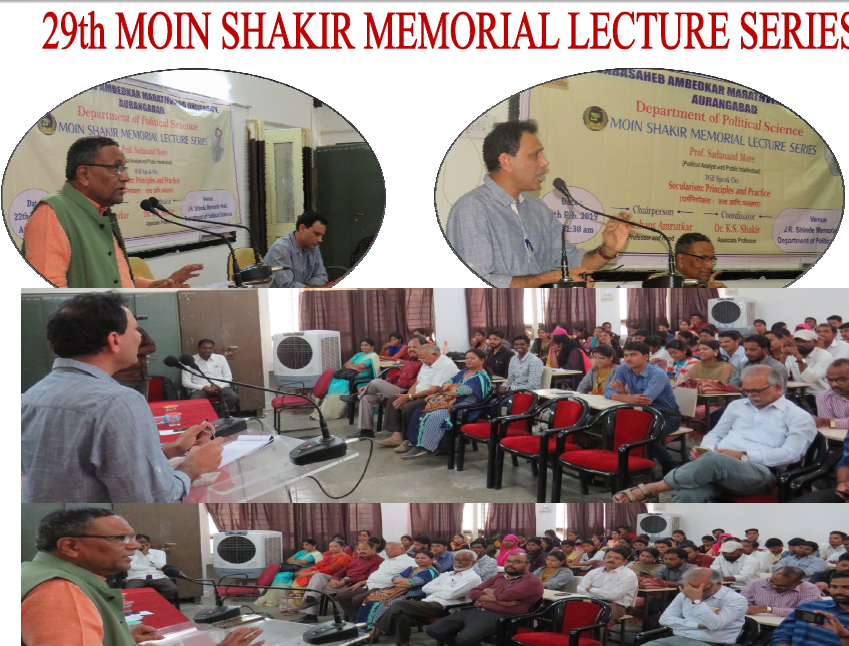
The Department regularly conducts seminars and workshops and is highly regarded for organizing the Moin Shakir Memorial Lecture Series, which has been held annually since 1989. This distinguished lecture series has hosted internationally renowned scholars such as Prof. Randhir Singh, Prof. Ejaz Ahmed, Prof. Prabhat Patnaik, Prof. Manoranjan Mohanty, Prof. Mushirul Hasan, and many others, who have visited the Department to share their expertise.

Additionally, the Department played a key role in a collaborative effort with the departments of Economics and Sociology to establish the UGC-funded Centre with Potential for Excellence in Particular Areas (CPEPA). This center aimed at promoting integrative research and organizes seminars, conferences, and workshops with a special focus on addressing the various dimensions of backwardness that impact rural Marathwada.

Department insights

History

The Department of Political Science at the then Marathwada University was established in 1962, in response to a strong demand from students across the Marathwada region for postgraduate education in the field. Dr. G. N. Sharma, a distinguished scholar with a profound understanding of the subject, was appointed as the first Head of the Department in 1963. Under his leadership, the department experienced significant growth and development, charting a path of exemplary academic progress.

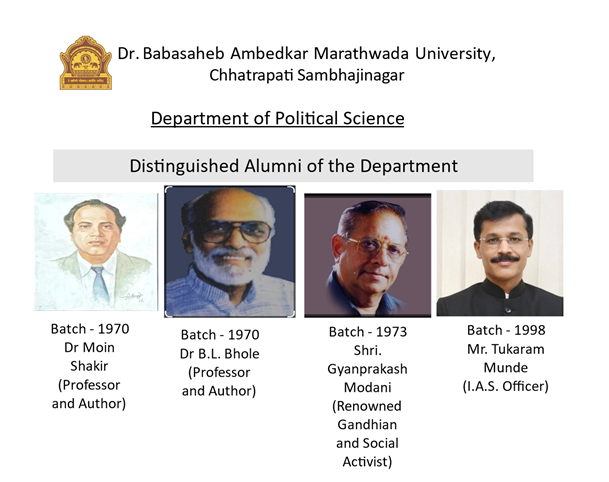
Notably, the first batch of M.A. Political Science students graduated in 1964, which included late Prof. Moin Shakir and late Prof. B. L. Bholey, both of whom later became distinguished figures in their own right. The Department held its first M.A. Part-I examination in May 1963, with 22 students appearing, of which three secured first-class honors. Soon after, the Department introduced a Ph.D. program, with S. A. Bari, R. Jayaram, R. S. Morkhandikar, and Gopal Krishnan being the first four candidates to enroll for doctoral studies.

The Department continued to expand and meet the needs of students and educators throughout the region. In 1970, the faculty welcomed Prof. Moin Shakir, an eminent scholar whose intellectual rigor earned him the prestigious title of National Professor (ICSSR, New Delhi) at the young age of 38, highlighting his extraordinary academic contributions.

As the discipline of Political Science evolved, so did the Department, with new faculty members contributing to its growing academic reputation. Among the prominent scholars to join were Dr. Adi, Dr. P. M. Bora, Dr. A. Y. Darshankar, Dr. J. R. Shinde, Dr. A. B. Sawant, Dr. H. A. Gani, Dr. B. S. Waghmare, Dr. S. N. Datye, Dr. S. S. Nikam, and Dr. K. Y. Daud. Their collective efforts helped shape generations of exceptional students.

Currently, the Department is strengthened by the addition of two professors in 2009: Dr. K.S. Shakir (head) and Dr. Prashant Amrutkar, supported by three assistant professors, who continue to uphold the Department’s legacy of academic excellence.

Vision and Mission

Vision

To structure the Dr. Babasaheb Ambedkar Marathwada University to be an Epitome of Excellence by creating and imparting time responsive Quality Education to address Changing Scenario, keeping Research and Development at its core, for 'Anyone' at 'Anytime' and 'Anywhere'.

Mission
  • To promote political science education among students from Marathwada, many of whom belong to disadvantaged groups.
  • To develop students' research potential in a learner-friendly environment.
  • To help learners stay updated with the latest developments in the discipline through internet-enabled classrooms and the use of ICT.
  • To foster a healthy two-way relationship between teachers and the taught by strengthening the academic feedback mechanism.
  • To provide value-added courses that complement the routine syllabi to achieve overall excellence.

Objectives

Objectives
  • To cultivate a robust professional environment for the study of political science.

  • To foster and promote scholarly research on diverse issues within the discipline.

  • To encourage the application of rigorous intellectual standards in both academic and professional practices.

  • To equip students with the ability to understand advanced concepts in political science, organize and apply ideas to contemporary political challenges, develop analytical and critical thinking, and use their knowledge to help resolve social issues.

HOD's Desk

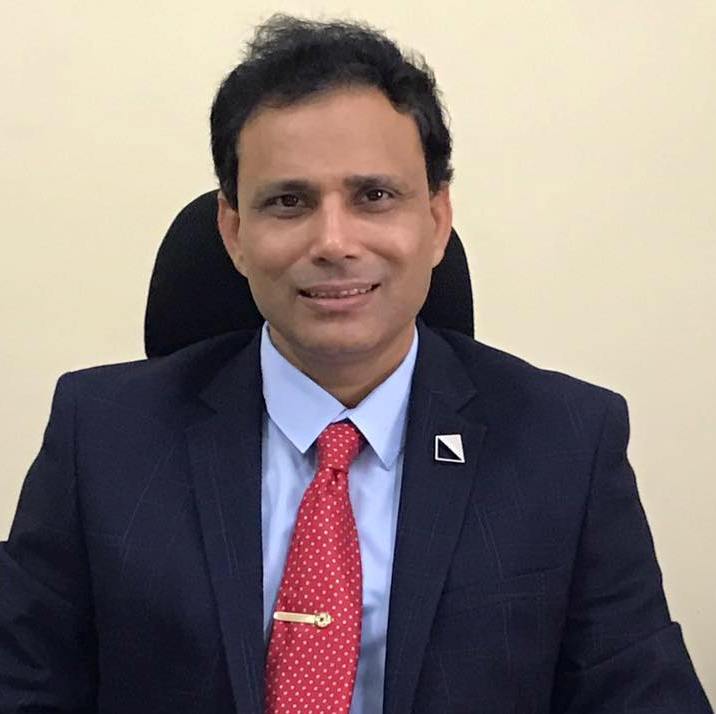
Mr. Khaja Shujoddin Moin Shakir

Professor & Head

View Biodata

Phone No. (office): 0240-240352

Department Phone No. : 0240-240353

Mobile No. : 9158440968 / 8668929259

E-mail : head.politicalsci@bamu.ac.in

Prof Shakir

Courses / Programs

Facilities Available

Contact

Head, Department of Political Science

Dr. Babasaheb Ambedkar Marathwada University, Aurangabad, Pincode - 431 004

Email : head.politicalsci@bamu.ac.in

Head :0240-2403353 (HOD)

Mobile : 9158440968 / 8668929259 (HOD)

Office : 0240-2403352

Courses/Programs
Admissions
Faculty / Staff
Facilities
Research
Alumni
Achievements
Photo Gallery

M.A. Political Science

Name of the Program Program Type Seats Allotted Maximum Completion Duration (years)
Masters in Political Science (M.A) Degree 70 2

Diploma in Parliamentary Studies
Name of the Program Program Type Seats Allotted Maximum Completion Duration (years)
Diploma in Parliamentary Studies Diploma 40 1

M.Phil.

Any candidate who has obtained Master Degree in any Faculty of this University or any other University recognized as equivalent to a Bachelor’s Degree. Of this University in any Faculty. The minimum percentage of marks at the Bachelor’s Degree shall be as prescribed by the University Norms applicable to the Department

Name of the Program Program Type Seats Allotted Maximum Completion Duration (years)
Master of Philosophy (MPhil in Political Science) (Up to 2021) Degree 20 2
Ph.D
Name of the Program Program Type Seats Allotted Maximum Completion Duration (years)
Doctor of Philosophy (Ph.D.) Degree As per UGC norms 5
Admissions:

The Political Science Department invites applications for CET-Admission to the M.A. Political Science in Post Graduate Degree Course for the academic year 2024-25.

Pattern of CET

As per University CET rules

Eligibility:

Any candidate who has obtained Bachelor’s Degree in any Faculty of this University or any other University recognized as equivalent to a Bachelor’s Degree. Of this University in any Faculty. The minimum percentage of marks at the Bachelor’s Degree shall be as prescribed by the University Norms applicable to the Department.

Eligibility For M. Phil

Any candidate who has obtained Master Degree in any Faculty of this University or any other University recognized as equivalent to a Bachelor’s Degree. Of this University in any Faculty. The minimum percentage of marks at the Bachelor’s Degree shall be as prescribed by the University Norms applicable to the Department.

Intake
  • M.A. Political Science-- 70 Four Semester
  • Ph.D (Political Science)-As per UGC norms
  • Category wise Reservation will be as per the Govt. of Maharashtra and Dr. B. A. M. University guidelines.
  • M.A.(First Sem) - 70 Students for M.A (First Sem) - 02 Sem
  • M.A.(Second Sem) - 70 Students for M.A (Second Sem) - 02 Sem
  • M.Phil.(Up to 2021) - 20 Students - 1.5 Year
  • Ph. D. - As per UGC norms
Schlorschip
Facility for son I daughter! ward of Secondary Teacher (S.S.T.)

Candidates who are son / daughter / ward of Secondary Teachers & seeking the tuition fees facility should submit their application to the concerned departments. The forms should be carefully filled in.lt should be complete in all respect.

Facility for son [daughter] ward of Ex-serviceman I Freedom Fighter

Candidates who are son / daughter / ward of Ex-serviceman I Freedom fighter and seeking the tuition fees facility should submit their application signed with the seal of District Ex-serviceman Welfare Board to concerned department. The forms should be carefully filled in and complete in all respect. Application for BBC. facility must be submitted before the last date in the ooncemed departments. Applications received after the last date will not be entertained.

Schedule of application procedure for candidates of E.B.C., P.S.T., S.S.T. and Ex- Serviceman will be communicated to Departments through circular by P.G. section EBC, PST, SST. facility for non granted courses is subject to decision of GovemmentAuthority.

Scholarship Govt. of India Scholarship (G.O.I.)

The Government of Indian (G.O.|.) gives scholarships for students belonging to the reserved categories. Online application form in properformat and supported by following documents must be submitted to Post-Graduate Section (Admission Unit) before the last date. The applications received after the last date will not be entertained in any condition. AADHAR CARD No. is compulsory for Scholarship holder students. Management Quota Students are not eligible for GOl and Freeship Scholarship (Ex. MBA. MCA. B.Tech. Students of Management Quota are not eligible forthis facility.)

A.New scholarship application form with passport size photograph of the student must be duly signed by the competent authority.

B.Application for scholarship forms must be submitted with attested copies of following documents.

  • Transfer Certificate (Photocopy of original T.C.)
  • Caste Certificate
  • Income Certificate of the father/guardian (original) (issued by the Executive Magistrate)
  • Attested Copy of Death Certificate in case of death of the father.
  • March Salary Certificate of parents in case of service.
  • Photocopy of Mark Memo.
  • Certificate from hostel in case of student staying at hostel.
  • Income Certificate of the husband must be given in case of married gin student.
  • District change certificate must be given in case of student coming from other district.
  • Incase of Duplicate T.C. no concession! scholarship will be given. Such students will have to pay full fees.
  • Scholarship will be issued to the students who have fulfilled 75% attendance.
  • Income of the guardian of the student should be less than limit declared by Govt. time to time.
  • Caste of the student (Schedule caste, Schedule Tribe. Nomadic and De notified Tribe. Other Backward Special Backward Categories) must be included in the list as per the govt. policy for reservation.
  • Students or parents of students belonging to Erstwhile Schedule Caste who have later converted to Buddhist religion (Buddhism) are entitled for obtaining scholarship.
  • Candidates applied for the vocational courses can obtain scholarship eitherthey passed or failed in the course (Degree/ Diploma) from Arts. Commerce and Science faculty. But such students can not further change their course.
  • Candidate who have once accepted scholarship for vocational course are not allowed to get scholarship for the next vocational course.
  • Candidates working in the full time job are not eligible for scholarship. But the candidate learning on leave without salary will be eligible for scholarship.
  • Scholarship will not be given to more than two children in the same family. (This condition is not applicable in case of girls) (Third will not get the scholarship.) (Exception If Second child is as twins or more than two consider as one unit.)
  • Candidate should fill new application form for scholarship in case of his/ her first admission. Second year candidates do process as per directed by Social Welfare office. New application form should be filled in case of any gap.
Important notes about scholarships /Fellowships
  • Exam appearance is for GOI. Freeship. EBC, PST, SST, Ex-Serviceman, Freedom fighter and other scholarship facility holder. Otherwise student must have to pay total tuition fees.
  • Scholarship facility is not for Certificate, Diploma courses.
  • In some scholarships' Tuition Fees is not transfer to university /college account. Student must have to pay their tuition fees. (for ex. Minority Scholarship, Handicapped Scholarship etc.)

About Other Scholarships:

1.Vidyavetan Facility:

  • Application form should be submitted in P.G. Section Within the period of 15 days after completion of admission. Govt. Hostel Certificate is necessary to fulfill this form.
  • This facility is only for SC. ST. DNT students who had completed their admission for professional Courses ST Students must attached attested caste validity certificate with scholarship form and if Student is living in hostel then he must furnish Hostel Certificate.

2.Important Note about Scholarship:

  • Candidate is not eligible for GOI, EBC. PST, SST, Freedom fighter or any governmental scholarship. if he/she does not attend exam, and will have to pay full fees.
  • Governmental Scholarship is not given for Diploma/ Certificate Courses.

3.Other Scholarships:

Candidates of University campus can get following scholarships by Govt. of Maharashtra and University as stated below:

4.Eklavya Scholarship:

This Scholarship will be given to the candidate who has secured 60% marks in Degree Exams in Art Faculty and 70 % Marks in Science Faculty Degree Examination. After submitting application form in proper format, Eklavya Scholarship will be approved by the Director of Higher Education. Govt. of Maharashtra. Pune. The Annual Income of the parents of an applicant must be prescribed by Government.

5.University Merit Scholarship:

After completing the admission procedure of the University Scholarship will be granted to the applied candidates ranking 1st and 2nd as per merit in each subject. Three candidates of M.Phil. can get this Scholarship as per merit list in each subject.

6.Post Matriculation Scholarship:

Post Matriculation Scholarship for students 'belonging to Minority communities. The students belonging to the Minority communities (Muslim, Parshi. Shikh. Christian, Buddha, Jain learning in the university.

7.Scholarship for Non-Hindi Language Speakers:

Non-Hindi Language speakers, who are doing study in Hindi language, could submit their applications in proper format for Scholarship for Non-Hindi language speakers. Scholarship for Non-Hindi Language speakers will be given to four candidates only.

The scholarship holders of any kind are supposed to abide the following rules:

  • Candidate will get only one scholarship at a time. Legal action will be taken against a candidate accepting two scholarships at a time. Student must furnish form in Hindi Department.
  • It is mandatory to submit the application form for scholarship within the stipulated time.
  • The amount of scholarship will be given only after its approval and acceptance of the amount of scholarship by the University.
Important Dates:

Academic Calender -(academic year-2024-25) (click here)

Name Specialization
Professor K. Shujauddin Shakir

Professor K. Shujauddin Shakir

Professor & Head

M.A.Ph.D.

E-mail: shujashakir@rediffmail.com

Contact: +9158440968 / 8668929259

Resume

Professor Prashant S.Amrutkar

Professor Prashant S.Amrutkar

Senior Professor

M.A., B.Ed., Ph.D. (S.E.T.)

E-mail: dramrutkar@gmail.com, amrutkarbamu@gmail.com

Contact: +919822955053

Resume

Dr.Satyapal Haribhau Kamble

Dr.Satyapal Haribhau Kamble

Assistant Professor(contractual)

M.A M Phil, Ph.D., NET, SET in Political Science (ICSSR Fellow)

E-mail: satyapal.kamble85@gmail.com

Contact: +9404568646 / 9970092823

Resume

Rohit Balkrishna Thosar

Rohit Balkrishna Thosar

Assistant Professor(contractual)

M.A, NET, SET

E-mail: rohitthosar2311@gmail.com

Contact: +9990409685

Resume

Dr Savita Bhausaheb Nage

Dr Savita Bhausaheb Nage

Assistant Professor(contractual)

M.A. Ph.D. SET in Political Science, M.A. English, B.Ed. M. Ed (Education)

E-mail: aryanpatil2536@gmail.com

Contact: 9970147701

Resume

Sr. No Facility (Name of the Equipment)
01 Smart Board
02 LCD Projector
03 K-Yan Projection System
04 Personal Computers
05 Digital Classrooms

Research Activity

Under Construction

Selected Research Articles
The Changing Perspective of Indian Society and the Vision of Gandhiji.

Author - Dr.Shriram Nikam

Abstract - The process of social nationalism which was occupied 19th century Indian society turned into political nationalism by the newly borne militant nationalists at the cost of  social reforms and condemned the Indians into the dichotomy of social vs. political reforms, secularism vs. religion. On this background Gandhiji emerged as national leader   to emancipate the nation from the clutches of foreign yoke. On the eve of an introduction of democratic institutions in the country by the alien rule, Gandhiji has obliged to extend his association with the newly borne democratic process on one hand and to mobilize the masses against the colonial rule on the other. However,  he has to undertake the social problems simultaneously as the cries of suppressed and oppressed  people may not be shut up. Hence Gandhiji started to undertake the social problems by using  the liberal idiom of religion on varna and caste.  

View More


Sri Lanka : Ethnic Conflict and Conflict Management Process.

Author - Dr.P.S.Amrutkar

 Abstract - South Asia is the region of conflicts in various manners. Ethnic Conflict is one of the important forms of conflict which affects peace and stability of the region.The complexity and magnitude of the Sri Lankan conflict have grown over the last five decades, making it one of the most protracted and devastating conflicts in the world today. With the prolongation of conflict, the chances for establishing peace have become distant, the gap between two communities (Sinhalese and Tamils) has widened and new elements have been introduced to the conflict. The case of Ethnic Conflict in Sri Lanka is much more complex business than a simple straight forward confrontation between a once well entrenched minority the Tamils and powerful but insecure majority the Sinhalese. It is a classic case of a sense of relative deprivation.

View More


Backwardness among Indian Muslims: A need to go beyond Sacchar

Author - Dr.K.S.Shakir

Abstract -.This paper seeks to address two important issues pertaining to problem of Muslims in India: backwardness among Indian Muslims and the need for a change in their attitude in the changing socio-political context of the country. After independence, even as the country embarked on a definite path of growth and its myriad communities joined the bandwagon to progress, the Muslims have tended to remain comparatively stagnant and underdeveloped. On all possible parameters – social, educational and economic – Sacchar Commission found them lurching at the bottom with their condition being worse than that of Dalit. Sacchar Commission did not, however, say anything new when it said Muslims were seriously lagging behind. It only confirmed what the hordes of Muslim scholars – M. Mujeeb, A.A Engineer, Moin Shakir, Rafiq Zakaria, Wahiduddin Khan, Mushirul Hasan and others - had been saying for long about the Muslims who were increasingly being marginalized and ghettoized in the independent India.

View More


Publication Output
Books :
Dr. Prashant Amrutkar
डॉ. प्रशांत अमृतकर , आंतरराष्ट्रीय संबंध , चिन्मय प्रकाशन , औरंगाबाद , जुलै २००४  Dr. Prashant Amrutkar, International Relations(Marathi)   Chinmay Publication, Aurangabad  , July 2004
 डॉ. प्रशांत अमृतकर , पाश्चिमात्य राजकीय विचार , चिन्मय प्रकाशन , औरंगाबाद , जुलै २००५    Dr. Prashant Amrutkar ,Western Political Thought (Marathi)   Chinmay Publication, Aurangabad , July 2005
 डॉ. ज. रा. शिंदे , डॉ. प्रशांत अमृतकर , समकालीन जागतिक राजकारणातील प्रमुख समस्या , चिन्मय प्रकाशन , औरंगाबाद , जुलै २००५ Dr. Prashant Amrutkar and Dr.J.R.Shinde, Major Issues In Contemporary World         Politics. (Marathi­), Chinmay Publication, Aurangabad , July 2005
Dr. Prashant Amrutkar  and Dr. S.T. Shirsath (Ed.), Good Governance Chinmay Publication, Aurangabad , Dec. 2007    ISBN  978-81-905495-3-9
डॉ. प्रशांत अमृतकर , स्त्री आणि राजकारण , चिन्मय प्रकाशन , औरंगाबाद , जुन २०१४ Dr. Prashant Amrutkar, Women and Politics(Marathi), Chinmay Publication, Aurangabad ,  June 2014     ISBN 978-93-81948-69-9
डॉ. प्रशांत अमृतकर , आंतरराष्ट्रीय साम्भांदाचे सिद्धांत , चिन्मय प्रकाशन , औरंगाबाद , ऑगस्ट २०१४ Dr. Prashant Amrutkar, Theories of International Relations (Marathi) Chinmay Publication, Aurangabad, Aug.  2014 ISBN 978-93-84593-13-1
Dr. S. S. Nikam
style="border-collapse: collapse">
Sr.No Title of the Book Publisher ISBN
1 Destiny of Untouchables in India Deep & Deep Publications, New Delhi, 1998 ISBN 81-7629-050-5
2 Gandhi-Ambedkar Asprushyamukti Sangharsh (Marathi) Lokwagmaya Gruha, Mumbai, 2017 (III Edition) ISBN 978-93-82789-97-0
3 Poona Pact, 1932 : A Critical Study   Universal Publishing House, Ulhasnagar-4, 2017 ISBN 978-93-8342-36-5


Thrust Area
  • International Relations
  • Political Theory
  • Gender Studies
  • Studies of Backward Region


Research Projects
Completed Research Projects:
Dr.Prashant Amrutkar
1. The study of political socialization of tribal panchayat leaders in Maharashtra(2010-2012) Submition on 2014 Rs.413600 (U.G.C.-M.R.P.)
Dr.Shuja Shakir
1.Relevance of Dr,Babasaheb Ambedkar to the agrarian distress in Maharashtra (2017-18) Rs. 300000/- (BARTI.)
Ongoing Research Projects:
Dr.Prashant Amrutkar
1.Changing cropping pattern and water crisis in marathwada : confronting inter regional water issue (2017-18) Rs.7500000/- (UGC-CPEPA.M.R.P.)
Dr.Shuja Shakir
1.Social development of scheduled castes in maharashtra differential impact of affirmative action(2016-17) Rs.500000/-(UGC-CPEPA.M.R.P.)

Research Scholar

Under Construction

Alumni
Research Icon
Achievements By Faculty
  • Dr.Prashant Amrutkar Elected as Member of Executive Committee of Indian Political Science Association.(IPSA)
  • Dr.Prashant Amrutkar Elected as a Vice Presidents of Indian Institute of Public Administration, Aurangabad Regional Branch.
  • Dr.Prashant Amrutkar, Member of Board of Studies of Political Science of this university, North Maharashtra University, Jalgaon, MIT University, Pune
Image 43
Image 44
Image 45
Image 46