Department of Zoology

Dr. Babasaheb Ambedkar Marathwada University | Official Website

Department of Zoology

About Department

The Department caters to the needs of students from rural and backward areas of Marathwada, as well as others, making them valuable assets to society. Being one of the oldest and largest departments established right from the inception of the University, it serves to inculcate social responsibilities and serve society by not only producing teachers, scientists, and zoologists but also responsible citizens who bridge the gap between science and the common man. The Department has linkages with many national and international institutes, universities, and centers of excellence in different disciplines, both within and outside the country. The Department was selected by the University Grants Commission under the Special Assistance Programme in the thrust areas of Animal Physiology and Invertebrate Endocrinology. Special papers in Applied Parasitology were also introduced during this period.

The Department was again selected by the University Grants Commission under the Special Assistance Programme, which is being continued under the Coordinatorship of Dr. U.H. Mane. Recently, the Department has been recognized by DST under the FIST program. Simultaneously, research work in other areas, viz., Entomology, Protozoology, Fishery Science, and various aspects of Helminthology, including Phytonematology & Physiology, was intensified. The system of rotation in the Headship was introduced, and the following were the Heads for respective durations from 1997 onwards after the superannuation of Professor R. Nagabhushanam. In the department, along with core and specialized courses, some service courses have also been introduced by considering the present-day needs of the local area.

Department insights

More about the department

Memorandum of Understanding (MoU)
International National
University of Santiago Compostala, Spain K.S.K. College, Beed
Warsaw University of Life Sciences, Warsaw, Poland Arts, Science and Commerce College, Tasgaon
Ambo University, West Shoa, Ambo, Ethiopia
Ben Gurion University of the Negev, Israel
Lincoln University, New Zealand
Limoges University, France
Innovative practices of the department. Induction of Meetings:

The fresher’s are accorded welcome at the beginning of each session to inculcate a sense of duty and responsibility in them. The Academic schedule, examination system, hostel facilities and rules and regulations of the university/department are explained to them.
For outgoing students there will be fare well programme and it will help them to carry bad and good memories of Department for their whole life.

Counseling Support

To take care of the emotional, moral and mental well being of our students, a counseling centre was set up. The counselor visits the college twice monthly and meets the students personally. Timely help advice and support is provided, which affords relief to the students from pressures that disturb them.

Project work:

Every student has to under gone the project work to learn the research techniques and also the scientific writings on their respective syllabi and the topic of their interest.

Teaching Staff Club:

It’s for a common get together every day in mid break time and exchanges idea on intellectuals and academic topics, other programmes for the teaching staff to develop a sense of unity and brotherliness. It will help to know the problems and to find out the solution at the Department level.

Employment generating guidance and technical knowhow:

The teachers are engaged to teach to the students and inculcate the skills , among them which help them to earn by self employment.

Merit Scholarships, Awards and Prizes:

Scholarships from university, Awards, Medals and prizes etc. are awarded by various agencies and persons to deserving students.
1.Highlight the participation of students and faculty in extension activities.

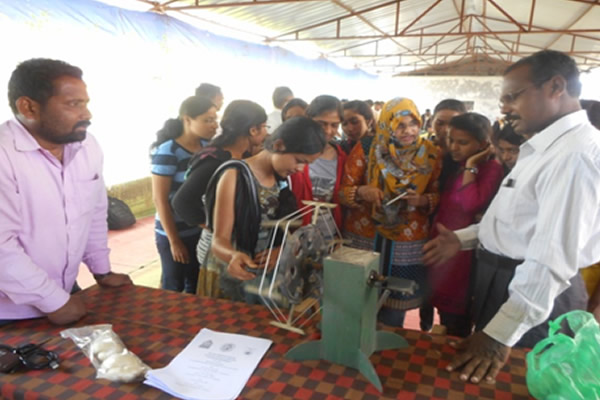
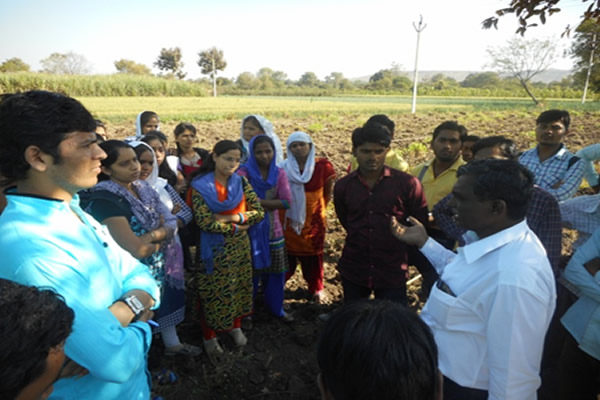
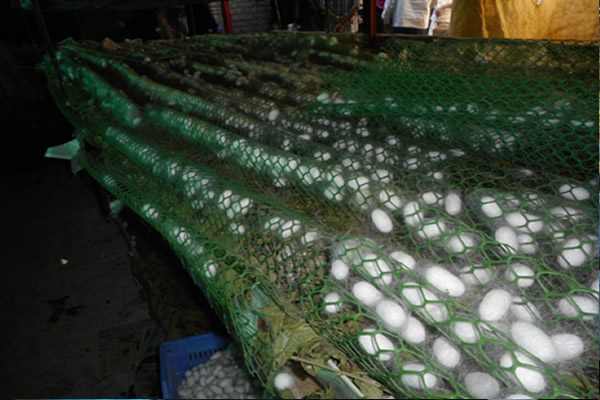
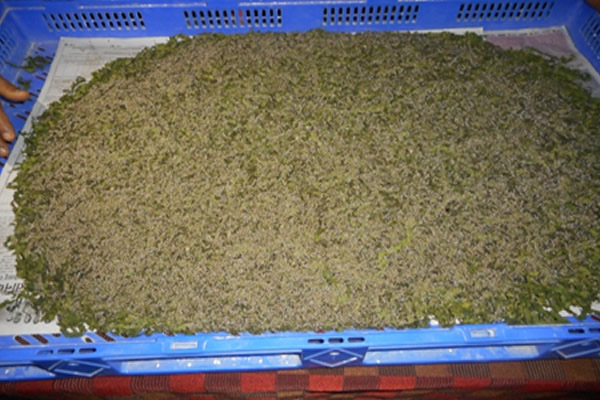
Students Participates in NSS and some of teachers are actively associated with community development activity like Sericulture, Apiculture, Fisheries Etc. Deliver lectures and participate in all activities.


Future plans of the department:
(Long term)
  • Establishment of additional laboratory building.
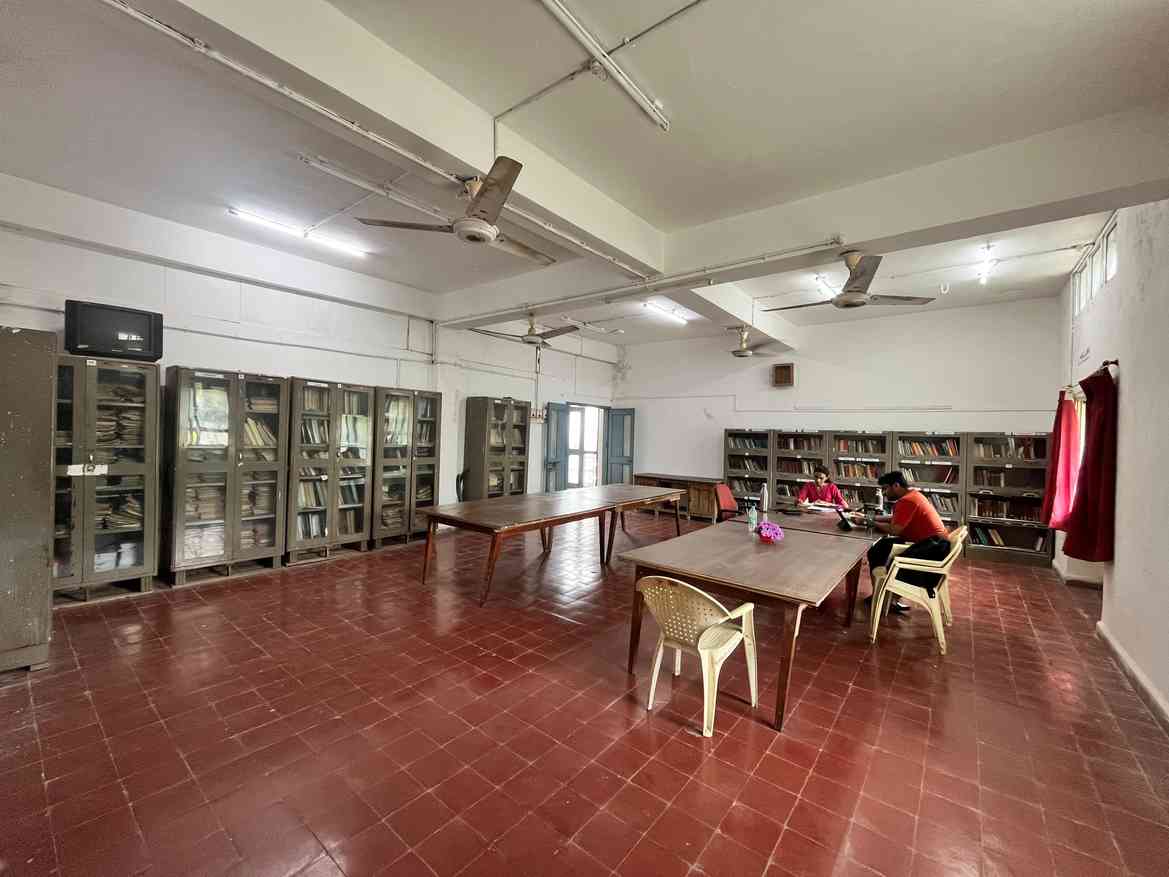
  • Enrichment of Departmental library.
  • Construction of ladies and boys common room
  • Construction of Store and shed for two, four wheeler parking.
  • Promotion for international collaborative research projects.
(Short term)
  • Sorting out the needs of our region and designing the research projects and submission of research proposals to different funding agencies.
  • Renovation and modernization of the present museum and cellar rooms.
  • Undertaking of the need based courses and innovative programmes.
  • Promotion to provide consultancy and laboratory services on hire basis and generation of funds.
  • Organize refresher course.
  • Transfer of scientific knowledge from laboratory to field and providing field training for the ec

History

Established in the year 1959, with Fishery science as a main specialization. Zoology was one of the subjects in which Post-graduate teaching was initiated soon after the foundation of the University. Teaching at the M.Sc. level commenced in 1959 with the help of contributory teachers from local colleges. The department was temporarily located at Milind College, Aurangabad. Dr. D. D. Narawne was the in-charge Head of the department, and the department was shifted to a temporary campus in Aurangabad. The completion of permanent buildings and the shifting to the present campus in 1965 enabled rapid development of the department.

In 1962, Helminthology was introduced as a special subject, in addition to Fishery Science/Biology, which was the only special subject offered until then. Dr. Mehdi Ali also initiated research activities in Helminthology almost simultaneously. In addition to developing his own area of interest, Dr. Ali dynamically built up a multidisciplinary setup by initiating three more fields of specialization: Animal Physiology in 1965, Entomology in 1966, and Protozoology in 1968.

Vision and Mission

Vision

To structure the Dr. Babasaheb Ambedkar Marathwada University to be an Epitome of Excellence by creating and imparting time responsive Quality Education to address Changing Scenario, keeping Research and Development at its core, for 'Anyone' at 'Anytime' and 'Anywhere'.

Mission

  • Provide inexpensive educational services, inspiring all sections of society to gain expertise/skills at the P.G. and above level in biological sciences.
  • To develop research aptitude and scientific advancement.
  • Inculcate high values through a liberal education and also provide a platform for non-formal educational services.
  • To bring about awareness regarding nature and biodiversity and help solve different problems to establish a sound and peaceful environment and life for the community and society.
  • Provide a broad range of opportunities to transform society through the empowerment of youth.
  • Reinvent ourselves in response to the changing demands of society with high moral values as a good citizen.

Objectives

Objectives

The primary objective of the department is to impart quality education in the subject of Zoology as a basic science and its applied branches to students from rural Maharashtra with very minimum fees.

The Department has the following objectives:

  • To provide quality education in a branch of Biological sciences, i.e., Zoology, with different specializations.
  • To facilitate higher education & research in zoology.
  • To provide quality education offering skill-based programs and motivate students for self-employment in applied branches of Zoology.
  • To inculcate value-based education and entrepreneurial skills among the students.
  • To inculcate the spirit of resource conservation and love for nature.
  • To conduct field studies and different projects of local and global interest.
  • To provide opportunities for professional and personal development through curricular and co-curricular activities.
  • Provide consultancy and organize extension activities.

HOD's Desk

Dr. S. N. Borde

Professor & Head

View Biodata

Mobile No. : 9421429599

E-mail : head.zoology@bamu.ac.in

Dr. Borde

Courses / Programs

Facilities Available

Contact

Department of Zoology

Dr. Babasaheb Ambedkar Marathwada University,
Aurangabad, Pincode - 431 004

Email : head.zoology@bamu.ac.in

Head : 91-240-2403393

Mobile : 91-9420345020 (HOD)

Office : 91-240-2403394

Courses/Programs
Admissions
Faculty / Staff
Facilities
Research
Alumni
Achievements
Photo Gallery

M.Sc. (Zoology)

Course Structure
Syllabus of M.Sc. Zoology
  • Admission Courses: M.Sc. (Zoology)
  • Intake Capacity: 60
  • Specialisation: Aquaculture, Fisheries, Helminthology, Entomology, Protozoology, Animal Physiology, Endocrinology
  • Service Courses: Pisciculture, Apiculture, Sericulture, Wildlife Studies
PO and CO:
Sr. No. Year First Year Second Year
1. 2018-19 I and II Sem III & IV Sem
2. 2019-20 I and II Sem III & IV Sem
3. 2020-21 I and II Sem III & IV Sem
4. 2021-22 I and II Sem III & IV Sem
5. 2022-23 I and II Sem III & IV Sem

Ph. D. (Zoology)

Course Structure
  • Admission Courses: Ph.D. (Zoology)
  • Intake Capacity: As per UGC Norms
  • Specialisation:
    • Aquaculture
    • Fisheries
    • Helminthology
    • Entomology
    • Protozoology
    • Animal Physiology
    • Endocrinology
  • Service Courses:
    • Piciculture
    • Apiculture
    • Sericulture
    • Wild Life Studies
View course structure of M.Sc. Zoology
View Syllabus of M.Sc. Zoology
Admissions
  • In response to the advertisement for registration (in newspapers and the University Website in the last week of May), interested students will have to register themselves.
  • A duly filled Application Form (available on the University website) should be filled in the prescribed format and submitted to the office.
  • Admission will be done based on the performance of students at the Common Entrance Test (CET). The number of students called for the written test may be finalized on a merit basis if the number of applications is high. The Entrance test will be conducted in June every year.
  • Selected candidates will have to go through the MKCL registration process.
  • Procedure for Registration: Interested candidates are required to fill in the online registration form provided on http://bamua.digitaluniversity.ac and submit the printout of the filled form along with the necessary attested documents & the prescribed fees to the department.
  • Original and/or Attested copies of the following documents are essential at the time of admission:
    1. Photo ID proof as per Govt. of India norms (Voter ID/Aadhar card/Driving License)
    2. All semesters' Grade/Mark sheets of the qualifying examination (Degree)
    3. Degree/Provisional certificate (if any) if the degree is completed
    4. Transfer Certificate (Original) of Degree
    5. Degree Certificate
    6. Caste Certificate and Validity Certificate (if applicable)
    7. Income Certificate of parent(s)
    8. Domicile Certificate
    9. Non-Creamy Layer Certificate (for NT-2, NT-3, and OBC candidates)
    10. Students who come under the jurisdiction of other Universities should submit a Migration Certificate in original.

Pattern of CET

Pattern of CET
1. MSc. Zoology

Students seeking admission to the said course have to go through the CET Examination.

Eligibility Criteria: Those who have completed/appeared for the Final Semester Exam. B.Sc. with Zoology as one of the optional subjects at the graduate level.

Fees for Entrance Examination: Rs. 400/- (For Open Category) and Rs. 200/- (For Reserved Category) DD Drawn in favor of Registrar, Dr. Babasaheb Ambedkar Marathwada University, Aurangabad. The payment can also be paid in cash in the Office of the Department.

Syllabus for CET:

  • Non-Chordates – Classification, Structure, and Function
  • Chordates- Classification, Structure, and function
  • Biochemistry- Carbohydrate, Proteins, Fats, Vitamins, Enzymes, Hormones
  • Evolution- Theories of evolution, Evidences of Evolution, Human evolution
  • Cell biology – General structure of cell, Organisation of cell, Methods in Cell Biology, Cell organelles (Plasma membrane, Endoplasmic reticulum, Ribosome, Mitochondria, Nucleus, Chromosomes)
  • General Animal physiology
  • Genetics - Elements of heredity & variation, Gene interaction, Multiple Alleles, Cytoplasmic inheritance, Sex Determination Mutation.
  • Ecology- Abiotic and biotic factors, Population, Community structure, Ecosystem
  • General applied Zoology

Note :*Syllabus of entrance will be based on Dr. Babasaheb Ambedkar Marathwada University, Aurangabad syllabus of B.Sc. Subject- Zoology available on the University Website.

General Instructions:

  1. The entrance examination will be of 100 Marks of 50 MCQs, and there will not be negative marking.
  2. Please download the application form from the university website: bamu.ac.in and submit a scanned copy of the filled-in application form on or before May 22, 2017, in the Departmental office. The blank application forms are also available in the department. It is compulsory to submit a hard copy of the application form along with the requisite cash receipt/demand draft to the department on or before May 22, 2017, up to 3 P.M.
  3. After completion of the registration procedure, the final merit list will be prepared based on 50% weightage to B. Sc Subject percentage and 50% weightage to CET, and the final merit list will be displayed on the university website: bamu.ac.in and on the notice board of the department.
  4. A copy of the application form and the Syllabus for CET is appended herewith.
Ph.D. Program (Zoology)

The admission for PhD is through the PET Examination and as per the University rule. Seats are allocated as per the available Guide’s quota.

List of Extra Curricular activities Healthy Practices:

EXTRA-CURRICULAR ACTIVITIES: The main motto of extracurricular activities is personality development. The Extracurricular activities help in the development of intellectual, emotional, and moral development.

  • Field trips and Tours organization.
  • Preparation for other examinations.
  • Programmes of Personality development.
  • Wildlife and photography exposures.
  • Apiculture/Sericulture/Aquaculture know-how to students.
  • All the above activities as mentioned in the Co-curricular section.

HEALTHY PRACTICES:

Induction of Meetings:

The fresher’s are accorded a welcome at the beginning of each session to inculcate a sense of duty and responsibility in them. The Academic schedule, examination system, hostel facilities, and rules and regulations of the university/department are explained to them.

For outgoing students, there will be a farewell program, and it will help them to carry bad and good memories of the Department for their whole life.

Counseling Support:

To take care of the emotional, moral, and mental well-being of our students, a counseling center was set up. The counselor visits the college twice monthly and meets the students personally. Timely help, advice, and support are provided, which afford relief to the students from pressures that disturb them.

Academic Calendar:

The Academic Calendar provided to the students at the beginning of the academic session makes them aware of teaching and examination schedules of various courses. Normally, the schedule is strictly adhered to.

Eligibility

Eligibility For M.Sc. Zoology

Those who have completed/appeared for the Final Semester Exam. B.Sc. with Zoology as one of the optional subjects at the graduate level.

Intake/Reservations

Intake

M.Sc. I-70 M. Sc . II - 70. Total= 140 For Ph .D as per UGC Norms.

Result analysis: passing percentage-

Year Class Appeared Students Passed Students Passing %
2018-2019 M.Sc. Ist Year 67 43 64%
2018-2019 M.Sc. IInd Year 52 43 82%
2019-2020 M.Sc. Ist Year 67 65 97%
2019-2020 M.Sc. IInd Year 29 26 89%
2020-2021 M.Sc. Ist Year 68 62 91%
2020-2021 M.Sc. IInd Year 53 48 90%
2021-2022 M.Sc. Ist Year 40 05 12.5%
2021-2022 M.Sc. IInd Year 46 13 28%
2022-2023 M.Sc. Ist Year 42 28 66.6%
2022-2023 M.Sc. IInd Year 36 22 61%

Student Reservation:

Year Class Open OBC SC ST SBC NT-D NT-B NT-C VJ/DT EWS Total
2018-2019 M.Sc. Ist Year 41 11 09 02 00 08 00 02 01 00 74
2018-2019 M.Sc. IInd Year 24 11 10 03 00 02 00 01 01 00 52
2019-2020 M.Sc. Ist Year 25 12 12 04 04 05 03 01 04 00 70
2019-2020 M.Sc. IInd Year 41 11 09 02 00 08 00 02 01 00 74
2020-2021 M.Sc. Ist Year 21 15 13 05 02 03 02 02 01 00 64
2020-2021 M.Sc. IInd Year 25 12 12 04 04 05 03 01 04 00 70
2021-2022 M.Sc. Ist Year 15 09 24 02 01 08 00 00 00 09 68
2021-2022 M.Sc. IInd Year 21 15 13 05 02 03 02 02 01 00 64
2022-2023 M.Sc. Ist Year 11 08 23 04 01 04 01 01 02 00 55
2022-2023 M.Sc. IInd Year 15 09 24 02 01 08 00 00 00 09 68
Reservation

Student admission: As per intake capacity and as per reservation rule

Year Class OPEN SC ST OBC NT-1 NT-2 NT-3 Total
2012-13 M. Sc. I 25 2 0 3 48
2012-13 M. Sc. II 20 18 0 1 0 2 41
2013-14 M. Sc. I 32 26 0 2 0 6 0 69
2013-14 M. Sc. II 21 11 0 4 1 37
2014-15 M. Sc. I 28 22 0 2 0 8 61
2014-15 M. Sc. II 27 22 0 2 0 8 60
Overall result analysis of Department
Year M.Sc. Ist, IInd, IIIrd, and IVth Appeared Passed Passing %
2012-2013 Ist, IInd, IIIrd, IVth 55 22 38.18%
45 21 53.33%
21 10 44.45%
21 17 80.95%
153 89 Rs.-136259/-
2013-2014 Ist, IInd, IIIrd, IVth 41 20 48.78%
33 28 84.84%
42 30 71.42%
36 30 83.33%
153 106 Rs.-162286/-
2014-2015 Ist, IInd, IIIrd, IVth 64 27 42.18%
58 44 75.86%
31 21 67.74%
30 25 83.33%
153 121 Rs.-185251/-

Course/Program Fees

Type of Course

PG & Ph.D. (M.Sc. & Ph.D.)

Course Name

Master of Science in Zoology, Doctor of Philosophy in Zoology.

Duration

02 years and Max. 03 years for Master's and for Ph.D. 03 yrs and Max 05 yrs, after that re-registration is essential. It is as per UGC norms.

Fees

As per University norms. P.G. Course Fees - ₹2000 + Exam Fees - ₹111 - Total - ₹2111/-

Reservations

For M.Sc. Zoology: Category-wise Reservation will be as per the Govt. of Maharashtra and Dr. B. A. M. University guidelines.

Scholarships

Scholarships

GOI
EBC
Merit Scholarships
Different National scholarships like UGC-CSIR INSPIRE University, BARTY, MUSF.
Descendants of Farmers fellows, Project Fellows, etc. are also available.

Important notes about scholarships:

  • Exam appearance is required for GOI Freeship, EBC, PST, SST, Ex-Serviceman, Freedom fighter, and other scholarship facility holders. Otherwise, students must pay the total tuition fees.
  • Scholarship facilities are not available for Certificate and Diploma courses.
  • In some scholarships, Tuition Fees are not transferred to the university/college account. Students must pay their tuition fees. (for example, Minority Scholarship, Handicapped Scholarship, etc.)
  • Fellowships are made available for meritorious students from different agencies, including the university, upon their selection.

Important Dates

Important Dates (Tentative)

The CET dates will be displayed on the website of the University/Department/Newspapers. The dates are strictly followed for the admission process.

Sr. No. Event Tentative Date
1 Call for applications First week of May
2 Last Date for Online Registration Third week of May
3 Last Date for Hard copy submission 3 days after last date of online registration
4 Date of Entrance Test, GD & PI 3-4 days after last date of hard copy submission
5 Display of first list of provisionally selected candidates First week of June
6 Display of second list of selected candidates Second week of June
7 Spot Admission if seats are available Fourth week of June
8 Commencement of teaching First week of July
Faculty/Staff
Name Specialization
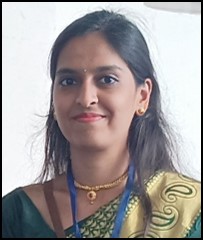
Borde Madam

Dr. Mrs. S. N. Borde

Professor & Head

Qualification: M.Sc., Ph.D

Email: borde.sunita@gmail.com

Contact: 9421429599

Resume

Molecular & Biochemical aspects of Taxonomy of Helminthes
Prof martin

Dr. R. E. Martin

Retired Professor

Qualification: MSc. Ph.D.

Resume

Invertebrate Immunity & Animal Physiology
Prof Waykar

Dr. B. B. Waykar

Retired Professor

Qualification: MSc. M.Phil. Ph.D.

Email: bbwaykar@gmail.com

Contact: 909423902347

Resume

Apiculture, Toxicology & Physiology
Prof Chavan

Dr. R. J. Chavan

Professor(on lien)

Qualification: M.Sc., Ph.D., F.I.A.A.B., F.S.L. Sc.

Resume

Insect Taxonomy, Insect Ecology
Prof Khedkar

Dr. G. D. Khedkar

Professor

Qualification: MSc. Ph.D.

Resume

Molecular Genetics, Evolutionary Biology, Genomics
Prof Choundekar

Dr. R. P. Choundekar

Professor

Qualification: MSc. NET, Ph.D.

Resume

Taxonomy, Diversity of Birds, Animal Physiology
Dr. Nimbalkar

Dr. N. D. Nimbalkar

Assistant Professor (Contractual)

Qualification: MSc. SET, NET, GATE, Ph.D.

Resume

-
Ms. Gadekar

Ms. S. B. Gadekar

Assistant Professor (Contractual)

Qualification: MSc. BEd, SET

Resume

-
Mr. Muley

Mr. E. D. Muley

Assistant Professor (Contractual)

Qualification: MSc. NET, MA, BEd

Resume

-
Ms. Shedolkar

Ms. T. S. Shedolkar

Assistant Professor (Contractual)

Qualification: MSc. SET

Resume

-
Ms. R. S. Bhitre

Ms. R. S. Bhitre

Assistant Professor (Contractual)

Qualification: MSc. GATE, NET

Resume

-
Mr. A. B. Ramteke

Mr. A. B. Ramteke

Assistant Professor (Contractual)

Qualification: MSc. SET, NET

Resume

-
Ms. M. V. Pawar

Ms. M. V. Pawar

Assistant Professor (Contractual)

Qualification: MSc., SET

Resume

-
Facilities Available

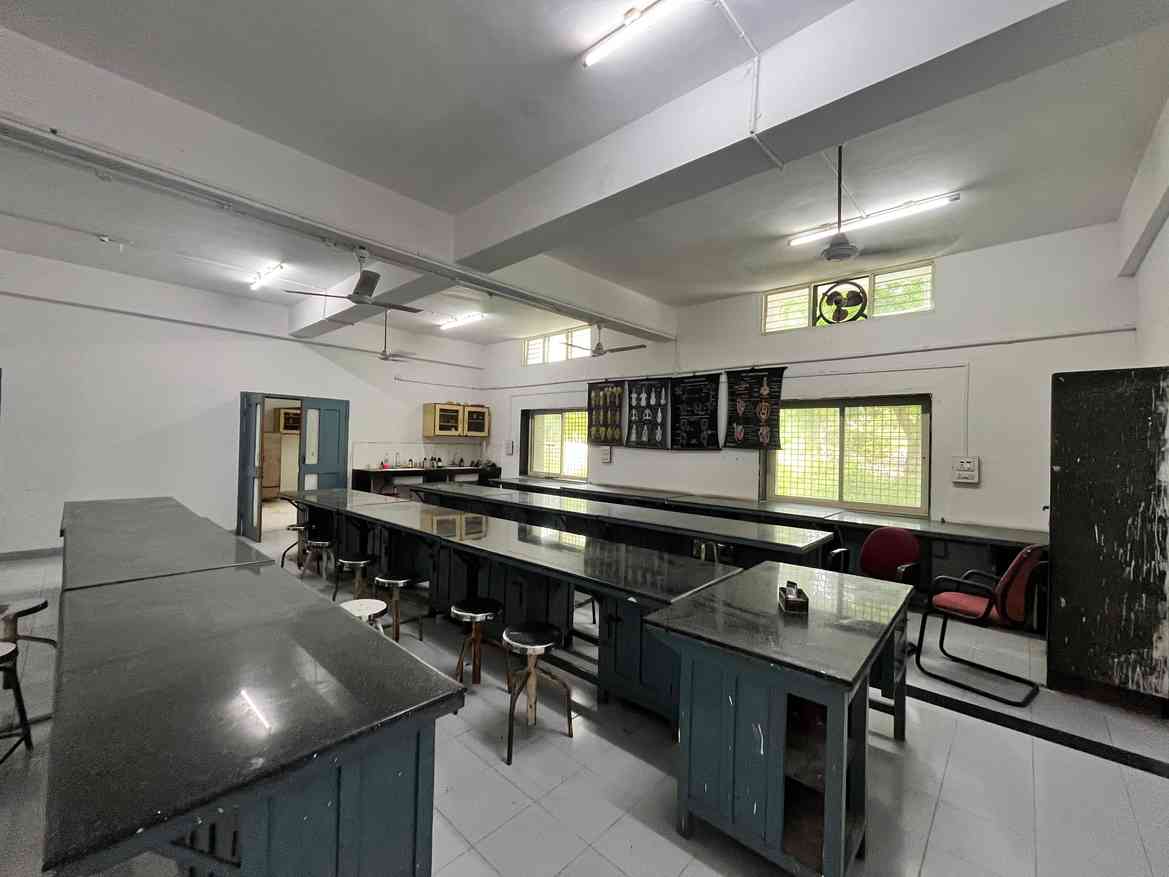
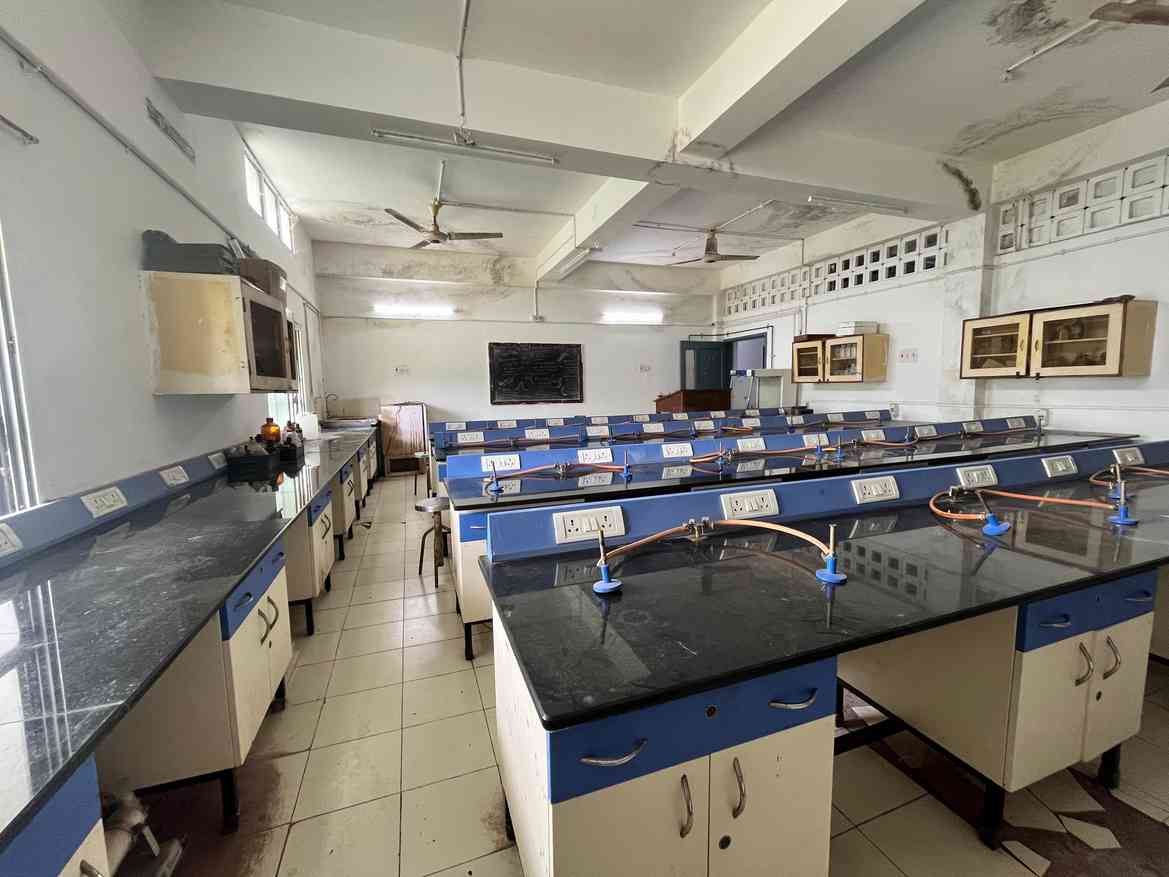
Infrastructure: The department is furnished with very good lecture theatres, auditorium, spacious laboratories, museum and infrastructure for practical learning and also promoting the use of ICT. The department has accumulated a store house of knowledge, with various books and journals. There is an internet access to all for updating their knowledge and skills. Apart from the lecture method, the interactive method, project-based learning, computer-assisted learning, experiential learning, seminars and other methods of teaching are also practiced in the department. Infrastructure facilities available for teaching / research.

  • Total number of class rooms:03
  • Class rooms with ICT facility:02
  • Students’ laboratories with all facilities:06
  • Computer Laboratory with net facility 01
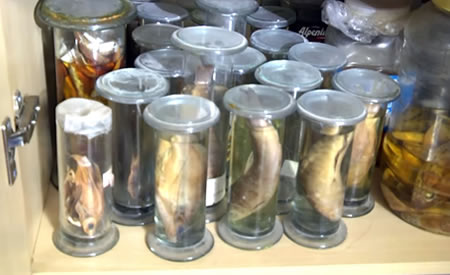
  • Unique Zoological Museum
Unique Zoological Museum
  • Paintings-18
  • The number of specimen present – 620
  • Total number of skeletons of various animals – 103
  • Models – 25
  • Stuffed animals-: i. Birds-39 ii. Mammals-16; Alizarine stained animals – 5; Microslides
  • Research laboratories with equipments:21
Research Equipments
  • Cooling centrifuge
  • HPLC
  • Atomic Absorption Spectrophotometer
  • Electrical microtome
  • Automatic stainer
  • BOD incubators
  • UV-Visible spectrophotometer
  • Microphotography Unit with Image Analysis Software
  • Flame photometer
  • Lyopholizer
Research Activity

The Marine Research Laboratory of this University Department at Ratnagiri, on the west coast, was established in 1970 under the PL-480 project of the Office of Naval Research, Washington, under the supervision of Prof. R. Nagabhushanam. This Research Laboratory was then continued under various funding agencies like DST, DOD, UGC, ICAR, etc., on a temporary basis under the supervision of Dr. U.H. Mane, presently Director of the Marine Research Laboratory. Many research students and staff of the department have carried out research work for Ph.D. degrees as well as for high-level research. The most significant contributions on prawns, crabs, oysters, mussels, and clams, carried out on these species, are widely recognized in India and abroad. About thirty research students have received Ph.D. degrees, and currently, six students are working toward the degree in this Marine Research Laboratory on the main areas of some toxicological aspects of the species belonging to Crustacea and Mollusca. In addition, a few research students have also worked on the helminth and protozoan parasites of edible fishes from the Ratnagiri Coast. A few staff members have also carried out research on barnacles and polychaetes from the Ratnagiri Coast. Many staff and research students of this department are being invited to present their research data at National and International conferences/symposia/seminars and have also contributed quantitatively. The research contribution in marine living invertebrates made by this department is far greater than other University departments located on the west coast of Maharashtra State.

Selected Research Articles

Research Related Articles

Effects of Exposure to Electromagnetic Fields (EMFs) on Biological Systems
Author - Madhuri G Pawar, Reymend Encily Martin
Abstract
Electromagnetic Field (EMF) is a natural phenomenon; however, anthropogenic activities have significantly shifted its equilibrium, leading to potential deleterious effects on biological systems. As technology becomes more integrated into daily life, the increased use of electronic devices has contributed to a rise in man-made EMF exposure. This exposure can affect biological systems on physiological and molecular levels, raising concerns about its potential effects on animal development, reproductive systems, and overall ecosystem health. The review explores the physiological effects of exposure to static, extremely low-frequency (ELF), and radiofrequency (RF) fields, analyzing how EMF impacts oxidative stress, reproductive physiology, cardiovascular function, brain and nervous system activity, and DNA/RNA integrity. It also acknowledges the emerging concern of EMF in aquatic environments, where underwater power supplies and extensive underwater cable networks are sources of EMF exposure that may affect marine and freshwater species. The potential effects on marine life include disruptions to migratory patterns, altered reproductive cycles, and changes in aquatic biodiversity. The review acknowledges that research on EMF has improved over time, but significant gaps and information remain. It emphasizes the need for immediate attention to address the challenges and opportunities in this field.
Download Link

Partial purification and characterization of lectin from serum of American cockroach, *Periplaneta americana*
Author - Yogita Raosaheb Channe, Reymend Encily Martin
Abstract
The partial purification and characterization of haemagglutinin (lectin) were carried out from the hemolymph of the adult American cockroach, *Periplaneta americana*. The hemolymph was drawn from the cockroach, and lectin was purified by a single-step method, using ammonium sulfate (NH4)2SO4 salt fractionation and gel filtration. Gel filtration showed two peaks. The Hemagglutination Activity (HA) was observed in the 20th fraction of the second peak. The purified lectin showed a molecular weight of 26.8kDa on Sodium Dodecyl Sulfate-Poly Acrylamide Gel Electrophoresis. The purified lectin showed an increase in HA at pH 7.5 and, subsequently, a sharp decline at pH 8. This indicates that HA was specific to a certain pH level. Similarly, an increase in HA was observed until 30°C, followed by a decline at 40°C. This indicates the heat-labile nature of lectin. The HA showed higher specificity to divalent Ca2+ and showed no specificity for Ba2+. It also showed a higher inhibition for sugar D-galactose and the least inhibition for D-lactose. The HA to vertebrate blood groups showed the highest activity to goat Red Blood Cells (RBCs). The study concludes that carbohydrate-binding-specific lectin is important for the recognition of the cell surface carbohydrate of invading pathogens.
Link

Investigations on In Vivo Pharmacokinetic/Pharmacodynamic Determinants of Fosfomycin in Murine Thigh and Kidney Infection Models
Author - Chavan, Rajesh & Naphade, Bhushan & Waykar, Bhalchandra & Bhagwat, Sachin
Abstract
Investigations on In Vivo Pharmacokinetic/Pharmacodynamic Determinants of Fosfomycin in Murine Thigh and Kidney Infection Models. Microbial drug resistance (Larchmont, N.Y.). 29. 10.1089/mdr.2022.0119. Background: Amidst the era of widespread resistance, there has been a renewed interest in older antibiotics such as fosfomycin, owing to its activity against certain resistant Gram-negative pathogens, including multidrug-resistant variants expressing extended-spectrum β-lactamases or carbapenemases. The goal of the study was to investigate the pharmacokinetic/pharmacodynamic (PK/PD) index and PK/PD targets of fosfomycin in murine thigh and kidney infection models, employing clinical isolates of *Escherichia coli* (*E. coli*) and *Klebsiella pneumoniae* (*K. pneumoniae*). Methods: Seven isolates of *E. coli* (one wild-type and six clinical isolates) and five isolates of *K. pneumoniae* (one wild-type and four clinical isolates) were utilized for in vivo PK/PD studies. Single-dose plasma PK studies were conducted in infected mice by the subcutaneous route. The PD index was determined from exposure-response analysis employing 24-hr dose fractionation studies in a neutropenic murine thigh infection model, while pharmacodynamic targets (PDTs) were derived from both thigh and kidney infection models. Results: Dose fractionation studies demonstrated that the in vivo efficacy of fosfomycin best correlated with AUC/MIC for *E. coli* (R2 = 0.9227) and *K. pneumoniae* (R2 = 0.8693). The median AUC/MIC linked to 1 log10 kill effects were 346.2 and 745.2 in the thigh infection model and 244.1 and 425.4 in the kidney infection model for *E. coli* and *K. pneumoniae*, respectively. The mice plasma protein binding of fosfomycin was estimated to be 5.4%. Conclusions: The in vivo efficacy of fosfomycin against Enterobacterales was best described by AUC/MIC. The PDTs derived from this study may help define the coverage potential of fosfomycin at the clinical doses approved.
Link

Study The Genetic Diversity Of Honey Bee Species In Nashik District Of Maharashtra, India
Author - Sonawane A, Waykar B
Abstract
This study was planned to estimate the genetic diversity of honeybee species in the Nashik district. Because of climatic variation, different crops are taken all over the district. In this study, genetic diversity between *Apis dorsata*, *Apis cerana*, *Apis florea*, and *Apis mellifera* is estimated from the study area. For this, DNA barcoding of samples was performed. Sequences were uploaded to NCBI, and accession ID numbers were generated. Data was subjected to MEGA X software, which was used for computing the evolutionary divergence, transition/transversion bias. The Kimura 2 model is used for data analysis. Divergence between honeybee species in the Nashik district ranges from 0.00479 to 0.148774. Maximum divergence is observed in *Apis dorsata* and *Apis florea*, i.e., 0.148774. The Neighbor-joining phylogenetic tree revealed close relatedness between *Apis dorsata* - *Apis mellifera* and *Apis cerana* - *Apis florea*. Estimated evolutionary divergence in Triambakeshwar tehsil ranges from 0.102 to 0.130. *Apis dorsata* and *Apis mellifera* show minimum divergence, i.e., 0.102, and *Apis dorsata* and *Apis florea* show maximum divergence, i.e., 0.130. From this, we can conclude that *Apis dorsata* and *Apis mellifera* are closely related, while *Apis dorsata* and *Apis florea* are distantly related. From Malegaon tehsil, the maximum divergence is 0.149, and the minimum is 0.106.
Link

An Evaluation of Antimicrobial, Anticancer, Anti-Inflammatory, and Antioxidant Activities of Silver Nanoparticles Synthesized from Leaf Extract of *Madhuca longifolia* Utilizing Quantitative and Qualitative Methods
Authors - Pooja Salve, Aruna Vinchurkar, Rajesh Raut, Ramesh Chondekar, Jaya Lakkakula, Arpita Roy, Md Jamal Hossain, Saad Alghamdi, Mazen Almehmadi, Osama Abdulaziz, Mamdouh Allahyani, Anas S Dablool, Md Moklesur Rahman Sarker, Mohd Fahami Nur Azlina
Abstract
In the current decade, nanoparticles are synthesized using solvents that are environmentally friendly. A number of nanoparticles have been synthesized at room temperature using water as a solvent, such as gold (Au) and silver (Ag) nanoparticles. As part of nanotechnology, nanoparticles are synthesized through biological processes. Biological methods are the preferred method for the synthesis of inorganic nanoparticles (AgNPs) as a result of their simple and non-hazardous nature. Nanoparticles of silver are used in a variety of applications, including catalysts, spectrally selective coatings for solar absorption, optical objectives, pharmaceutical constituents, and chemical and biological sensing. Antimicrobial agents are among the top uses of silver nanoparticles. In the current study, silver nanoparticles were biologically manufactured through *Madhuca longifolia*, and their antibacterial activity against pathogenic microorganisms, anticancer, anti-inflammatory, and antioxidant activities were assessed. UV-Vis spectroscopy, XRD (X-ray diffraction), transmission electron microscopy, Zeta Potential, and FTIR were used to characterize silver nanoparticles. The current work describes a cheap and environmentally friendly method to synthesize silver nanoparticles from silver nitrate solution by

Research Groups

The thrust areas of research in the department include:

  • Fishery Science
  • Animal Physiology
  • Molecular Biology
  • Applied Parasitology
  • Invertebrate Zoology
  • Helminthology
  • Protozoology
  • Entomology
  • Applied Zoology

Thurst Areas

  • Fishery Science
  • Animal Physiology
  • Molecular Biology
  • Applied Parasitology
  • Invertebrate Zoology
  • Helminthology
  • Protozoology
  • Entomology
  • Applied Zoology

Research Projects

Ongoing Research Projects
Sr. no. Name of investigator Title of project Agency Amount Duration Status
1 Dr. S. N. Borde Diversity study of parasites and their effects on domestic cattle host from Aurangabad district (MS) India University grants 2,00,000/- 2022- 2024 Ongoing
2 Dr. S. N. Borde Study of genetic diversity and Anoplocephalidean cestode parasites from Mammalian host in Aurangabad district (MS) India University grants 2,00,000/- 2019-2021 Completed
3 Dr. B. B. Waykar Sustainable rural development through Bee-keeping DBT 34,85,290/- 2016-2019 Completed
View More Research Papers
Project/ Research Fellow:
Sr. No. Name of Fellowship No. Of Students Name of the Fellow
1 DST INSPIRE 3 Lokhanda Sunanda C.
Jawalkar Nilesh B.
Arak Gunwati V.
2 RGNF (UGC) 11 Zankek Sunita P.
Khillare Chhaya A.
Lohat Sapna S.
Magre Mandakini R.
Kamini Bhanudas Rokade
Trishala L. Kharat
Shejwal Priyanka Motilal
Wagh Dharmpal Chokhoba
Santosh Thrat
Pavar Mangal
Paikrao Satish
3 MANF (UGC) 3 Khan Lubna A.
Syeda Hina Kausar
Soni Shaikh Ansuddin
4 SPNRF 1 Pawar Mangala B.
5 BANRF 1 Jadhav Pallavi Sunil
6 Golden Jublee 8 Misal Ganesh S.
Thosar Amol S.
Sontakke Tejswini A.
Rokade Kamini B.
Humbe Ashok
Baviskar Rahul K.
Pawar Poonam S.
Patil Kalpana M.
7 DST Project 5 Khillare Kiran R.
Lakwal Vijay R.
Subugade Sharad
Umesh Y. Wagh
Swami Pavankumar S.

Ph. D Students

Ongoing Research Projects

Sr.No. Name of Investigator Title of the project Agency Amount Duration Status
1 Dr. Y.K.Khillare Reproductive impairment in freshwater fishes due to heavy metal pollution in Godavari river in Maharashtra DST 50,00,000/- 2012-2015 On going
2 Dr.(Mrs)Meena Patil A comparative study on morphological, physiological and ecological adaptations in freshwater and land habitat crustaceans. UGC 1003800/- July-2012 to 2015 On going
3 Dr.S.P.Zambare Nucleolus of the developing oocytes of the freshwater pelecypod mollusk as biomarkers to screen replications and transcription inhibitions UGC RS-8,07,800/- July 2011 to 2014 Completed
View More Research Papers
Alumni
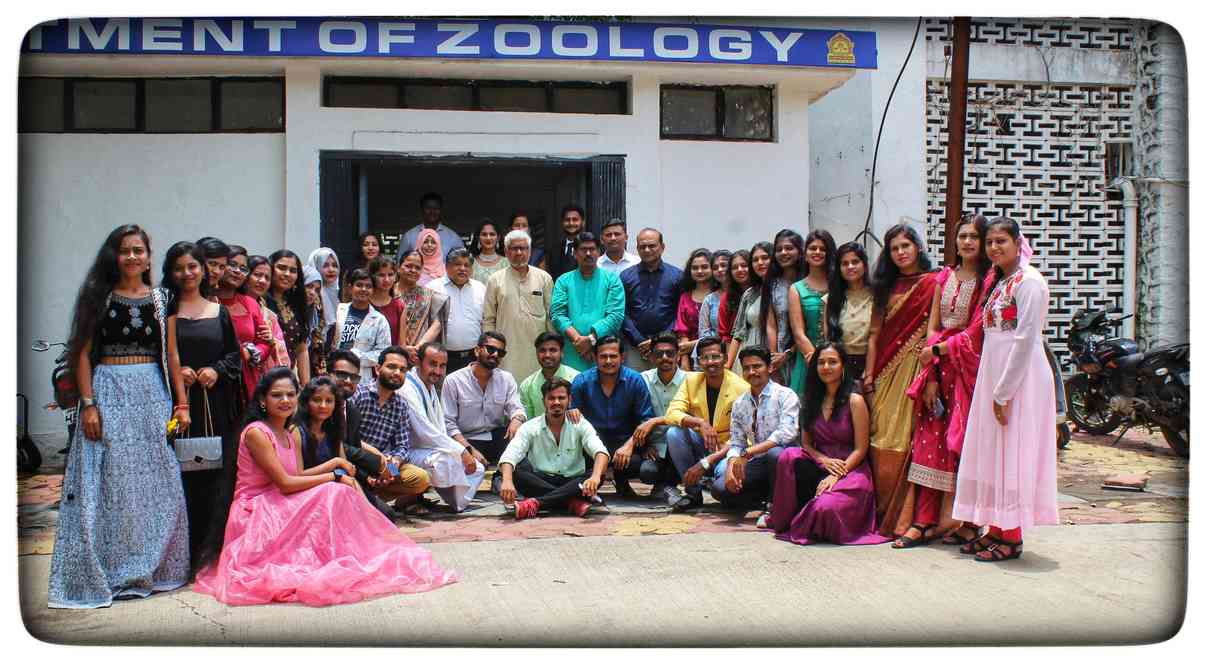
Alumni Image
Academicians
  • Dr. S. B. Adwant, Principal S. B. College of Science, Aurangabad.
  • Dr. A. D. Mohekar, Principal, S.M.D.M College, Kallam Dist. Osmanabad and Dean, Faculty of Science Dr. Babasaheb Ambedkar Marathwada University.
  • Dr. M.A. Wahul, Principal, Milind College of Science, Aurangabad
  • Dr. J.S. Mohite, Principal, Yeshwantrao Chavan College, Tuljapur
  • Dr. P.B. Dawale, Principal, Arts, Science and Commerce College, Umerkhed.
  • Dr. D. P. Vaidya, Principal, N. S. B. College, Nanded.
  • Dr. (Mrs.) A. G. Pathrikar, Principal, Foster B.Ed. College, Aurangabad.
  • Dr. S. B. Wagh, Prof. and Head, Department of Env. Science. Dr. B. A. M. U. Aurangabad.
  • Dr. A. L. Deshmukh, Principal, Yeshwantrao Mohite College, Akluj.
  • Dr. Shingare, Principal, Government B. Ed. College, Kolhapur.
  • Dr. P. G. Jadhav, Ex- Principal, Shivaji Mahavidyalaya, Udgir and Registrar, Swami Ramanand Teerth Marathwada University, Nanded.
  • Dr. B.B. Sankaye, Principal, Udaigiri Mahavidyalaya, Udgir, Dist. Latur
  • Dr. T. V. Sathe, Professor, Department of Zoology Shri Shivaji University, Kolhapur.
  • Dr. G. T. Bhavane Professor, Department of Zoology, Shri Shivaji University, Kolhapur
  • Dr. G. Gyananath, Professor, Department of Biotechnology. S. R. T. M. University, Nanded
  • Dr. N.B.Bhusari, Principal, Shivaji Mahavidyalaya, Chikali
Administrators
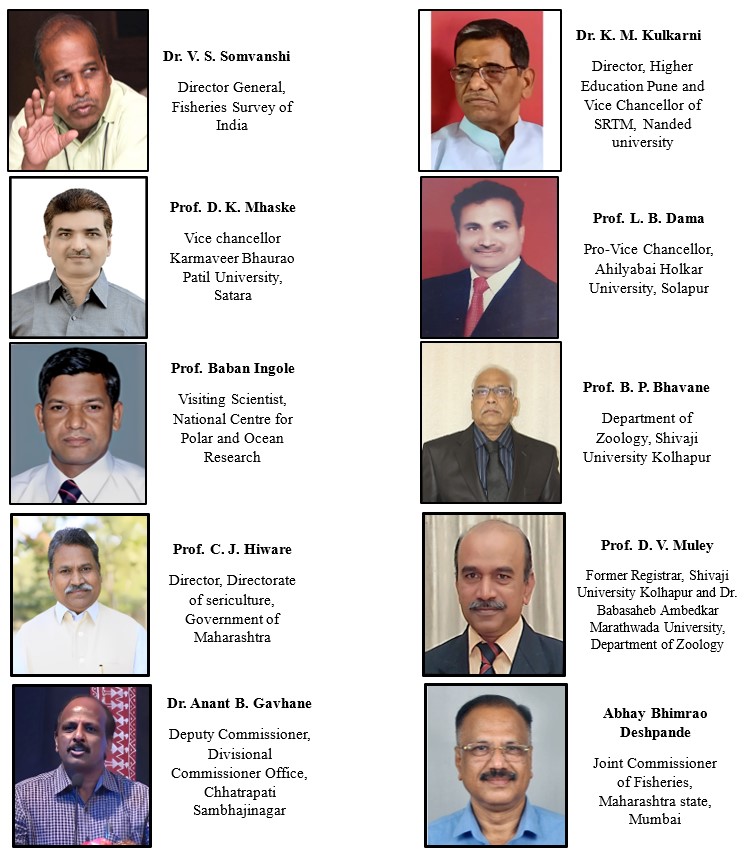
  • Dr. M. V. Suryawanshi Former Chairman MPSC, Mumbai.
  • Dr. V. S. Somwanshi, Director General, Fishery Survey of India, Mumbai.
  • Dr. E. V. Muley, Director, Ministry of Env. and Forests, Govt .of India, New Delhi.
  • Dr. A. D. Diwan, Assistant Director General, ICAR, New Delhi.
  • Dr. C. D. Lohekar, Former Director, Sarabhai Chemicals. Vadodara.
  • Dr. R. H. Kamble, Deputy Director, ZSI, Govt. of India, Pune
  • Dr. V.N. Rayudu, Director, Pollution Control Board of Tamilnadu, Chennai.
  • Dr. Ranjana Patidar, Member, Marathwada Regional Dev. Corporation, Aurangabad.
  • Dr. V. D. Palladwar, Chief Manager, Planning section, MSRTC, Mumbai.
  • Dr. B. B. Waghmode, Deputy Director State Fisheries, Aurangabad.
  • Dr. Sunil Kulkarni Deputy Director State Fisheries, Mumbai.
  • Dr. Parmeshwar, Deputy Director State Fisheries, Mumbai.
  • Dr. R. M. Sharma, Scientist, ZSI Government of India, Pune.
  • Dr. Sunil Ambekar, Scientist, Wockhart, Aurangabad.
  • Dr. K. M. Kulkarni, ( Ret.) Director, Higher Education, Maharashtra Govt, Pune.
  • Dr. Kirdak R. V., Director, Higher Education, Maharashtra Government, Pune.
  • Dr. Ingole Baban, Assistant Director, National Institute of Oceanography, Goa
  • Dr. D. V. Muley Registrar, Shri Shivaji University, Kolhapur.
  • Dr. M. L. Jadhav, Registrar, Pune University, Pune
  • Dr. Nitin Mokashe, Forest Range Officer
Achievements

Awards and Recognitions to Faculty:

  • GB Shinde award (2018-19) – Dr. S. N. Borde

Role in Government and University Administration by faculty:

  • Prof. Martin R. E.
    Chairman of Board of Studies in Zoology 2017-2022
    Member of Academic Council
    Member of Board of Research
  • Prof. B. B. Waykar
    Dean, Faculty of Science and Technology 2020-2024
    Director, Atal Incubation Center
  • Prof. R. J. Chavan
    Senate Member 2017-2022
  • Prof. S. N. Borde
    Chairman Board of Studies in Zoology 2022-2027
    Academic Council
  • Prof. G. D. Khedkar
    Director, Paul Herbert Center for DNA Bar-coding and Biodiversity
    Director, Center for Coastal and Marine Biodiversity
  • Prof. R. P. Chondekar
    Coordinator, Science Gallery.

AWARDS FOR STUDENTS:

  1. Mr. Vikas Kalyankar, Awishkar-2007 (Inter State level competition for research projects), first prize and Gold Medal).
  2. Mr. Vikas Kalyankar, Young Scientist Award, University of Allahabad, Allahabad during National Conference, 2008.
  3. Mr. Rahul Jamdhade, Young Scientist Award, University of Allahabad, Allahabad, during National Conference, 2009
  4. Mr. Kudnar P. S.. Best paper presentation in Animal, Veterinary and fishery science of 97th, Indian Science Congress held at Trivandrum, 2010.
  5. Miss. Rumana Siraj Shaikh (Gold Medal)-Young scientist award by ZSI, at the National Conference at Guvahati University, Guvahati,2010.
  6. Mr. Atul Chourpagar, Best Oral presentation award at National Seminar on Vision 2025 at Mumbai, 2011.

There are also different awards with Gold Medals for the students standing First in Subjects every year. Prof. R.Nagabhushnam and Prof.G.B.Shinde Gold Medal along with cash prizes are instituted.