Dharashiv Department of Microbiology

Dr. Babasaheb Ambedkar Marathwada University | Official Website
  • Home
  • Academics
  • Dharashiv Subcampus
  • Department of Microbiology
Dharashiv Sub-Centre | Department of Microbiology
About Department

Brief History of Department

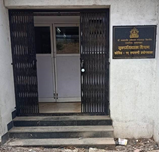
The department of M.Sc. Microbiology was started from the academic year 2005-06 in Ayurvedic college campus, Tuljapur road, at sub-campus Dharashiv on grant basis. The department is now shifted in new science building in MIDC area Dharashiv. Presently 20 granted and 20 non-grant seats are available for M. Sc. Microbiology Admission. The department is having sophisticated instruments and well equipped laboratories required in the field of Microbiology. The Department is not only working academically but also performing many Co-Curricular and extension activities useful for the students and society. The department has introduced NEP -2020 syllabus from the academic year 2023 to cater the need of skill based education. Many students are pursuing their Ph. D. degree in the department.

Vision
  • To provide quality education and training in Microbiology, fostering innovation, excellence, and cutting-edge research in the field, while producing skilled professionals who contribute to advancements in healthcare and environmental sustainability. Make them enable to contribute to science in general and nation economy in particular.
  • Research activities in the department would be strengthened. For this, the department is planning to emphasis on research activities with the support from the head of the university. The faculty members will undertake Minor/Major research projects with financial assistance from UGC, DBT, DST and other funding agencies. For this, we would make the maximum use of research activities. The department is planning to sign MoUs with Indian Universities/Institutions to establish cooperation in the areas of teaching, research and training.
Mission
  • To impart knowledge and microbiology skill for making student ready for future,
  • To develop the attitude of analytical thinking in students through various activities throughout the programme, such as seminar, group discussion, blended learning, research projects and practical.
  • To provide a comprehensive and rigorous education in Microbiology, equipping students with a deep understanding of microbial life, its interactions, and applications. Through state-of-the-art research, interdisciplinary collaborations, and experiential learning, to cultivate a community of scientists capable of addressing global challenges, promoting scientific discovery, and improving the quality of life through microbiological advancements.
Core values of the Departments
  • To develop skill based students through teaching –learning and research activity.
  • To develop collaboration with institute and industries.
  • To become an advanced center of microbiology and to serve the society.

Courses / Programs

Eligibility

Intake

Contact

Head, Department of Dharashiv Sub-Centre

Dr. Babasaheb Ambedkar Marathwada University,
Dharashiv

Email: subcampus.office@bamu.ac.in

Head: (07588190281, 07588190282, 07588190283)

Syllabus
Faculty
Student List
Research
Facilities
Library
Alumni
Extracurricular Activities
Syllabus

View OBE Syllabus Msc Microbiolog

View Syllabus Msc Microbiology

Revised Syllabus for M. Sc. Microbiology

Paper No. Title Credits Marks Nature
SEMESTER-I
MICC 111 Biostatistics, Computer Applications and Research methodology 4 100 Core
MICC 112 Bioenergetics and Enzymology 4 100 Core
MICC 113 Bioinstrumentation Technique and Applications 4 100 Core
MICC 114 Industrial food and Dairy Microbiology 4 100 Core
MICC 115 Research methodology in Microbiology 4 100 Foundation
MICCP-I Based on MICC 111 + MICC 112 2 50 Core
MICCP-II Based on MICC 113 + MICC 114 2 50 Core
MICC-Com Constitution of India 2 50 Foundation
SEM-I -TOTAL 650
SEMESTER-II
MICC 211 Recent Trends in Virology 4 100 Core
MICC 212 Molecular Immunology 4 100 Core
MICC 213 Microbial Physiology 4 100 Core
MICC 214 Microbial Diversity and Extremophiles 4 100 Core
MICC 215 Research design and review of literature 4 100 Core
MICCP-III Based on MICC 211 + MICC 212 2 50 Core
MICCP-IV Based on MICC 213 + MICC 214 2 50 Core
MICC 216 Seminar (Paper Presentation) 2 50 Foundation
SEM-II -TOTAL 650
SEMESTER-III
MICC 311 Enzyme Technology 4 100 Core
MICC 312 Bioprocess Engineering and Technology 4 100 Core
MICC 313 Molecular Microbial Genetics 4 100 Core
MICC 314 Environmental Microbial Technology /Medical Microbiology 4 100 Generic Elective
MICC 315 Dissertation Part –I 4 100 Core
MICCP-V Based on MICC 311 + MICC 312 2 50 Core
MICCP-VI Based on MICC 313 + MICC 314 2 50 Core
MICC-OE Open elective course for other department-Agriculture Microbiology 4 100 Open Elective
SEM-III -TOTAL 700
SEMESTER-IV
MICC 411 Recombinant DNA technology 4 100 Core
MICC 412 Fermentation Technology 4 100 Core
MICC 413 Bioinformatics, Microbial Genomics and Proteomics 4 100 Core
MICC 414 Pharmaceutical Microbiology/ Understanding Microbiology 4 100 Generic Elective
MICC 415 Dissertation Part –II 8 200 Core
SEM-IV -TOTAL 500
NEP -2020 Syllabus for M. Sc. Microbiology

Class: M.Sc. First Year Semester: First Semester Subject: MICROBIOLOGY

COURSE CODE COURSE TITLE Teaching Scheme (Hrs./week) Credits Assigned NATURE OF COURSE MODE OF INSTRUCTION
I SEMESTER
MIC- UD/MJ/500 T General Microbiology and Microbial Diversity 2 2 Core/Mandatory Theory
MIC- UD/MJ/501 T Bioenergetics and Enzymology 2 2 Core/Mandatory Theory
MIC- UD/MJ/502 T Techniques in Microbiology 2 2 Core/Mandatory Theory
MIC- UD/MJ/503T Basic Biostatistics 4 2 Core/Mandatory Theory
MIC- UD/MJ/500 P Lab Course Based On MIC-UD/MJ/500 T 4 2 Core/Mandatory Practical/Lab work
MIC- UD/MJ/501 P Lab Course Based On MIC-UD/MJ/501 T 2 2 Core/Mandatory Practical/Lab work
MIC- UD/MJ/502 P Lab Course Based On MIC- UD/MJ/502 T 2 2 Core/Mandatory Practical/Lab work
MIC- UD/DSE/504 A/B/C A-Microbial Taxonomy
B-Biological Database Systems
C-any Online certification course from NPTEL/SWAYM/MOOC of equivalent credits { with biology basis }
2/4/4 2/2/4 DSE/ELECTIVE Theory/Practical/Online
MIC- UD/RM/505 Research Methodology 4 4 RESEARCH METHODS/Mandatory Theory
Class: M.Sc. First Year Semester: Second Semester Subject: MICROBIOLOGY
COURSE CODE COURSE TITLE Teaching Scheme (Hrs./week) Credits Assigned NATURE OF COURSE MODE OF INSTRUCTION
II SEMESTER
MIC- UD/MJ/550 T Virology, Bacteriology, Parasitology 2 2 Core/Mandatory Theory
MIC- UD/MJ/551 T Microbial Physiology 2 2 Core/Mandatory Theory
MIC- UD/MJ/552T Food Microbiology 2 2 Core/Mandatory Theory
MIC- UD/MJ/553T Applied and Industrial Microbiology 2 2 Core/Mandatory Theory
MIC- UD/MJ/550 P Lab Course Based On MIC-UD/MJ/550 T 4 2 Core/Mandatory Practical/Lab work
MIC- UD/MJ/551 P Lab Course Based On MIC-UD/MJ/551 T 4 2 Core/Mandatory Practical/Lab work
MIC- UD/MJ/552 P Lab Course Based On MIC-UD/MJ/552 T 4 2 Core/Mandatory Practical/Lab work
MIC- UD/DSE/554 A/B/C Pharmaceutical Microbiology
Bioethics, Biosafety and IPR
any Online certification course from NPTEL/SWAYM/MOOC of equivalent credits { with biology basis}
2/4/4 2/2/4 DSE/ELECTIVE Theory/Practical/Online
MIC- UD/OJT/555 On The Job Training/ Field Project 4 4 Core/Mandatory (CHOICE BASED) INDUSTRIAL TRAINIG/FIELD WORK/Practical/Lab work
Pattern of CET

M.Sc.(Microbiology)

Students seeking admission to M. Sc. (Microbiology) in the Department for the Academic Year 2016-2017 have to go through the CET Examination. The final merit list of provisionally selected candidates will be prepared based on 50% Marks from Qualifying Degree Score and 50% Marks from CET Score. Students appearing in their Final Year (B.Sc. Microbiology) or who have previously passed are eligible for the CET Examination.

Exam Pattern of CET

The CET question paper is of 100 marks, based on multiple-choice questions of one-hour duration, which includes Basic Microbiology, Fundamentals of Microbiology, and Advanced Microbiology.

Ph.D. Program (Microbiology)

Admission for Ph.D. is through the PET Examination and as per University rules.

Faculty
Name Specialization
Dr. R. M. Khobragade

Dr. R. M. Khobragade

Professor & Head

Microbiology

View Profile

Microbiology
Dr. P. P. Dixit

Dr. P. P. Dixit

Professor

Microbiology

View Profile

Microbiology

Student Lists


View Student Lists
Research

Total number of Ph. D. students Awarded:

Faculty Awarded Ongoing
Dr. P. P. Dixit 04 04
Dr. R. M. Khobragade 01 06
Research Related Activity

Faculties are actively involved in research activities. Two projects financially assisted by UGC have been completed. Research is mainly focused on environmental pollution-related problems and applications of biomolecules originated from microorganisms.

The Major project entitled “Studies on textile dye decolouration by Actinomycetes” was sanctioned to Dr. A. M. Deshmukh by UGC (Rs. 9.21 lakhs) and completed in the year 2009-12. The Minor project entitled “Studies on textile dye decolouration by Streptomyces species” was sanctioned to Dr. R. M. Khobragade by UGC (Rs.1.65 lakhs) and completed in the year 2010-12.

University projects were sanctioned and completed successfully by Dr. R. M. Khobragade and Dr. P. P. Dixit (Rs. 0.30 lakhs). The Agricultural Technology Management Agency (ATMA), D.R.D.A., Z.P., Osmanabad, has provided grants of Rs. 1,50,000/- for a project entitled “Effect of Biofertilizers on crop yields” to promote organic farming.

The thrust area of research is textile dye decolorization, Enzymes, and Biomolecules from microorganisms.

Research Interests:
Faculties are actively involved in research activities. They have a keen interest in working in the field of enzymology, protein chemistry, the diversity of microorganisms, isolation, purification and characterization of compounds obtained from microbial origin, exploring the microbial world for the products of human welfare, and environmental pollution-related problems.

Number of students pursuing / completed Ph. D. degree in the department
Sr. No. Name Fellowship Status
1 Ms. Naziya Rehman DST INSPIRE Completed
2 Ms. Shaikh Afshaan UGC -MANF Pursuing
3 Ms. Shaikh T. A. DST-WOSA Pursuing
4 Ms. Madhurima Kolkar SARTHI Pursuing
5 Mr. Chavan Suresh SARTHI Pursuing
6 Mr. Narawade Sumedh BARTI Pursuing
7 Ms. Dhaware Dikasha BARTI Pursuing
8 Ms. Sonwane Kranti BARTI Pursuing
9 Ms. Choudhari Sulabha Mahajyoti Pursuing
10 Mr. Puri G. Mahajyoti Pursuing
11 Ms. Survase Madhuri SARTHI Pursuing
Research Article
  1. Bhagat S.S., Ghotekar D.S., Badadhe P.V., Chavan N.M., Dixit P.P. and Gill C.H. “Synthesis and antimicrobial screening of pyrazolines and benzothiazepines incorporated with thiophene” Indian Journal of Heterocyclic Chemistry Vol. 20, April-June 2011, pp. 355-358 ISSN: 0971-1627 (Impact Factor 250)
  2. Dixit P.P., Kashale S.A. and Deshmukh M. “Studies on thermostable alkaline protease from Bacillus sp.” Journal of Biotechnology and Bioinformatics, 2011, Vol. 3(1), pp. 201-212 ISSN: 0974-9438
  3. Shaikh Afshaan, Mankale K.K., Dixit P.P. and Deshmukh A.M. “Studies on production and purification of penicillin acylase produced by alkaophilic bacteria isolated from Lonar lake” Journal of Basic and Applied Science Vol.10, Feb. 2014 (Special Issue)pp. 199-203 ISSN: 2229-3302
  4. Rehman Naziya M.A., Shete M. B., Dixit P.P. and Deshmukh A.M.” Screening of biosurfactant producing microorganisms from oil contaminated soils of Osmanabad region, Maharashtra, India” International Science Journal, 2014, Vol.1, Issue 1, pp. 35-39 ISSN: 2348-6058 (On Line)
  5. Panchal S.L. and Dixit P.P. “Studies on cysteine protease inhibitor production by Nocardia” International Journal of Current Research in Science, Social science and Languages Vol.- II, Issue I April 2014 ISSN: 2319-7579 (Impact Factor 1.02)
  6. Rehman Naziya M.A., Shete M. B., Dixit P.P. and Deshmukh A.M.” Studies on production of biosurfactant produced by bacteria isolated from oil contaminated soils of Osmanabad region, Maharashtra, India” Journal of Basic and Applied Science Vol.10, Feb. 2014 (Special Issue) pp.259-264 ISSN: 2229-3302
  7. Shaikh Afshaan, Mankale K.K., Dixit P.P. and Deshmukh A.M. “Isolation and screening of penicillin acylase producing alkaophilic bacteria from Lonar lake water sample” International Journal of Current Research in Science, Social science and Languages Vol.- II, Issue I April 2014 ISSN: 2319-7579 (Impact Factor 02)
  8. Panchal S.L. and Dixit P.P. “Isolation and screening of alkline protease inhibitor producing actinomycetes” Proceedings of National Conference on Biodiversity: Prospects and Potentials – 2012, S.M.D.M. Mahavidyalaya, Kallam (MS), India.pp.175-178 ISBN: 978-81-925586-1-5
  9. Hatagale S.B., Awashank A.S., Rehman Naziya M.A. and Dixit P.P. “Production of extracellular laccase from white rot fungus Fusarium sp.” Frontiers in plant diseases and it’s control for agricultural development, pp.172-182 ISBN: 978-81-930533-1-7
  10. Lognathan V., Dixit P., Shingare M. and Mane D. “Synthesis and biological evaluation of fused ring Benzomorpholine monofluoroaniline derivatives” Am. J. PharmTech. Res. 2015; 5(1) pp. 443-453 ISSN: 2249-3387 (Impact Factor 9832)
  11. Lognathan V., Dixit P., Shingare M. and Mane D. “Synthesis and biological evaluation of (3S)-3-[4-Methoxymethoxy) Benzyl] morpholine derivatives from L-Tyrosine.” Indo American Journal of Pharmaceutical Sciences. IAJPS, 2015, Vol.2, Issue 3, pp. 722-730 ISSN: 2349-7750 (Impact Factor 437)
  12. Pujari S.G., Kadam N.R., Choudhari S.G., Dixit P. P. and Deshmukh A. M. “Studies on isolation of antimicrobial actinomycetes from Osmanabad soil.” Int. J.Curr. Microbiol. App. Sci.(IJCMAS) 2015, 4(4): pp. 123-126 ISSN: 2319-7706 (Impact Factor 015)
  13. Lognathan V., Dixit P., Shingare M. and Mane D. “Synthesis and biological evaluation of morpholine and salicylamide nucleus based derivatives” European Journal of Pharmaceutical and Medical Research (ejpmr), 2015, 2(3), pp. 269-282 ISSN: 3294-3211 (Impact Factor 026)
  14. Rokade D.D., Vaidya S.L., Rehman Naziya M.A. and P. Dixit “ Screening of pectinase producing bacteria isolated from Osmanabad fruit market soil” International Journal of Interdisciplinary and Multidisciplinary Studies (IJIMS), 2015, Vol.2, No. 6, pp. 141-145 ISSN: 2348-0343 (Impact Factor 1.95)
  15. Pavase L., Dixit P., Chaudhari B. and Mane D. “Synthesis and antibacterial activities of 1-phenyl-5-(1H-pyrrol-1yl)-1H- pyrrole-4-carboxylic acid N acyl hydrazides” Am. J. PharmTech. Res. 2015; 5(3) pp. 444-451 ISSN: 2249-3387 (Impact Factor 9832)
  16. Dixit P.P. and Deshmukh A.M. XYLANASE from STREPTOMYCES HYGROSCOPICUS under Solid State Fermentation, International Journal of Advanced Biotechnology and Research (IJBR)Vol-7, Issue-1, 2016, pp.38-46 ISSN 0976-2612, Online ISSN 2278–599X
  17. Prasad P. Dixit, Prashant P. Dixit and Shivaji N. Thore Hybrid triazoles: Design and synthesis as potential dual inhibitor of growth and efflux inhibition in tuberculosis, Europian Journal of Medicinal Chemistry Vol. 107 (Elsvier), 2016, pp. 38-47 ISSN: 0223-5234 (Impact Factor : 4.816)
  18. Innus K. Shaikh, Balasaheb Pawade, Prashant P. Dixit and Mugdha Lele-Potnis Assessment of Cultivable Oral Bacterial Flora from Important Venomous Snakes of India and Their Antibiotic Susceptibilities, Current Microbiology (Springer), 2017, pp. 1278-1286 ISSN: 0343-8651 (Print) 1432-0991 (Online) (Impact Factor 1.32)
  19. Innus K. Shaikh, Balasaheb Pawade, Prashant P. Dixit and Mugdha Lele-Potnis Development of dot-ELISA for the detection of venoms of major Indian venomous Snakes, Toxicon (Elsevier), Vol. 139, 2017, pp. 66-73ISSN: 0041-0101 (Impact Factor 2.352)
  20. Babasaheb Zine, Sunil Jadhav, Prashant Dixit and Mazhar Farooqui, Thiazolo[3,2-a] pyrimidin-5-ones: Design, Synthesis and Antimicrobial Evaluation, JOURNAL OF ULTRA CHEMISTRY Vol. 13(2), (2017) pp. 30-34 ISSN: 0973-3450 (Print) ISSN: 2319-8036 (Online) (Impact Factor 2.48)
  21. Innus K. Shaikh and Prashant P. Dixit PRODUCTION AND OPTIMIZATION OF THERMOSTABLE ALKALINE PROTEASE FROM BACILLUS SP-APP-07 ISOLATED FROM LAUNDROMAT SOIL, INTERNATIONAL JOURNAL OF SCIENTIFIC RESEARCH, ISSN No 2277 – 8179 (Impact Factor 4.176)
  22. Rehman Naziya Nishat Md. Aziz and P.P. Dixit OPTIMIZATION OF PIGMENT PRODUCTION USING PLACKET BURMAN AND SURFACE RESPONSE METHODOLOGY, International Journal of Recent Scientific Research Vol. 8, Issue, 7 July, 2017 pp. 18477-18481 ISSN: 0976-3031(Impact Factor 7.383)
  23. Mane R.S. and Dixit P.P. Production of Chitinase by Solid State Fermentation, Asian Journal of Multidisciplinary Studies, 5(7) July, 2017 pp.1-4 ISSN: 2321-8819 (Online) 2348-7186 (Print) (Impact Factor 1.498)
  24. I.K. Shaikh, P.P. Dixit and T.N. Shaikh Purification and characterization of alkaline-soda-bleach stable protease from Bacillus sp. APP-007 isolated from Laundromat soil Journal of Genetic Engineering and Biotechnology Vol. 16 (Elsevier)pp. 273-279 ISSN: 1687-157X (Impact Factor 1.78)
  25. Vyenkatesh Joshi, Neha Shah, PrashantWakte, Prashant Dhakephalkar, Anita Dhakephalkar, Rahul Khobragade, BhushanNaphade, Sajid Shaikh, Arvind Deshmukh, NitinAdhapure.2017.Comparative bioleaching of metals from pulverized and non-pulverized PCBs of cell phone charger: advantages of non-pulverized PCBs. Environmental Science and Pollution Research. 24 (36). 28277-28286.
  26. Rajesh C Patil, Abhishek D Mule, Gajanan V Mali, Rajmahammad R Tamboli, Rahul M Khobragade, Sanjay K Gaikwad, Vasanti I Katchi, DhanashreePatil.2011.Isolation of Marine Actinomycetes from the Mangrove Swamps for Biotechnological Exploration. Journal of Life Sciences.5.1030-1036
  27. Khobragade R M &Deshmukh A M.2011.Degradation of reactive blue herd by thermophilic Streptomyces species. International Journal of Biotechnology and Biosciences.1(2). 319-323
  28. Meghshyam. K. PatilSharekhShaikh, Rajendra D. Joshi, Rahul. M. Khobragade.2015.Synthesis of ag-ta2o5 powder and its antibacterial activity against Staphylococcus auerus. Journal of Advances in Applied Sciences and Technology.2(1). 01-05
  29. Afshaan Naaz ShaikhKhaleed, R. M. Khobragade. 2016.Screening and Optimization of L– Asparginase Produced by Bacteria Isolated from Soil of Solapur Region. International Journal of Science and Research (IJSR).5(9). 231-235
  30. R. M. Khobragade & A. M. Deshmukh.2013.Studies on melanin pigment production by actinomycetes species. Thematics journal of microbiology.2(2). 9-12
  31. Chaudhari S.G., Chaudhari S.D. Khobragade R.M. and Deshmukh A.M.2013.studies on production of alkaline proteases from bacillus species and its application in detergent industry. DAV Internatioal Journal of Science. 2(2). 44-49.
  32. AM Deshmukh, RM Khobragade, PP Dixit.2007.Oxford Book Company.
  33. RC Patil, VN Waghmare, SD Wavhal, RM Khobragade, RC Patil, VN Waghmare, SD Wavhal, RM Khobragade.2011. Isolation of bacteria from hot springs
  34. Amarja HarishchandraBhosale R. M. Khobragade .2018.BIOREMEDIATION OF TEXTILE AZO DYE ORANGE F2R BY BACTERIAL ISOLATES. International Journal of Pharmacy and Biological Sciences. 66-69
Facilities

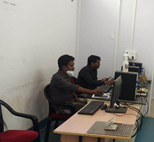
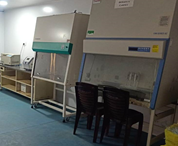
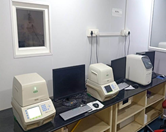
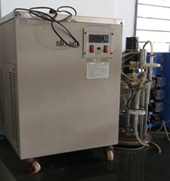
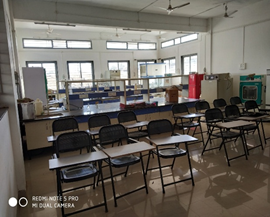
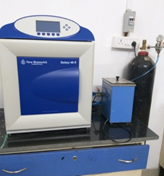
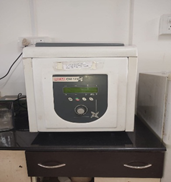
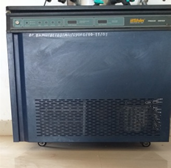
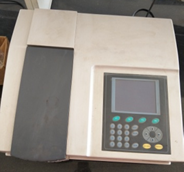
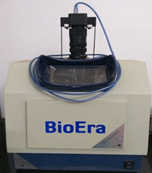
The Department of Microbiology has a well-established laboratory equipped with sophisticated instruments required for research. The department has a UV Spectrophotometer, gel electrophoresis unit, high-speed centrifuge, electronic balance, laminar air flow, incubators, shakers, UV chamber, pH meter, colorimeter, deep freeze, ultra-sonicator, and computers, etc. The department library has many basic and advanced books used by students for the M.Sc. course syllabus and research work. Internet facility is also available for students. Students use this facility for collecting information on the syllabus and research-related material. The internet facility is very useful for students doing dissertation work.

Details of ICT facilities and Learning resources:

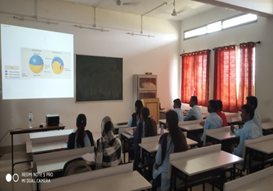
  1. Smart Classroom-01
  2. Classrooms-02
  3. Laboratories-04
  4. Computers-12

Detail of PG laboratories and Infrastructure:

Facilities:

  1. Classrooms and well-equipped Laboratories
  2. Internet facilities for both students and faculty members
  3. Instruments and Experimental setups

Instruments and Experimental setups:

  1. Laminar Air Flow
  2. Compound Microscopes
  3. Autoclave
  4. Incubators
  5. Hot Air Oven
  6. BOD Incubator
  7. pH Meter
  8. Water Bath Incubator Shaker
  9. Colorimeter
  10. Spectrophotometer
  11. Hot Plate
  12. Electrophoretic Apparatus
  13. Orbital Incubator Shaker
  14. High-Speed Refrigerated Centrifuge
  15. Distillation Apparatus (Single & Double)
  16. Refrigerators
  17. Paper Chromatography Cabinet
  18. Digital Weighing Balances
  19. Bacterial Filtration Assembly
  20. General Purpose Centrifuge
  21. Vortex Mixers
  22. Magnetic Stirrers
  23. UV Cabinet
  24. TLC Apparatus
  25. Water Bath Shakers
  26. Rotary Shaker
  27. CO2 incubator
  28. PCR machine
  29. RNA Extractor
  30. Fermenter
  31. Lyophilizer
  32. RTPCR machine
Facilities Photos
Image 111
Image 112
Image 113
Image 114

Image 111
Image 112
Image 113
Image 114

Image 111
Image 112
Image 113
Image 114

Department is actively involved in conducting many activities which credits awareness in societies.

  • Department had organized one day workshop for farmers on Biofertilisers and Biopesticides.
  • One day lecture on ‘Dengue fever and Chicken guinea.
  • Poster presentation on organic farming at Siddheswar –Wadgaon village.
Academic Activity:

In the last two years, the department has organized many academic activities for the development of students. The department has organized the following activities:

  • One –day workshop on ‘Molecular Biology’ on 18 Aug 2005.
  • One-day lecture on ‘Tissue culture and floriculture’ delivered by Mr. Kishor Nirmal.
  • A national conference on ‘Biofertilizer and Biopesticides’ on date 19-21 Feb 2006.
  • One –day lecture on ‘Environment’ delivered by Dr. Shejule on 5th June 2006.
  • One –day lecture on ‘Quality Control and Quality Assurance’ by Mr. Pravin Kulkarni.
  • One –day lecture on ‘Tissue Culture’ delivered by Dr. S.P.Govindwar
  • One –day lecture on ‘Opportunities in Biotechnology’ delivered by Dr.(Mrs.) Chafalkar
  • One –day lecture on ‘Biofertiliser and Biopesticides’ delivered by Mrs. More R.
  • One –day lecture on ‘ Recent trends in Biotechnology’ on dated 25 March 2007.
Achievements

By Teachers

The Biotech Research Society of India has awarded a fellowship to Dr. A. M. Deshmukh in 2005.

By Students

Every year students qualify for CSIR-NET/SET/GATE/ICAR-NET etc. examinations.

More than 13 students have qualified for CSIR-NET/SET/GATE/ICAR-NET etc. examinations.

Sr.No. Name of candidates Exam qualified
1. Shyam More CSIR-NET
2. Chauhan Laxman CSIR-NET
3. Rakesh Uttarkar CSIR-NET
4. Pandurang Powar CSIR-NET, SET, ICAR-NET
5. Rehman Naziya Mohammad aziz CSIR-NET
6. Madhuri Shinde CSIR-NET
7. Adhapure Nitin CSIR-NET, SET, ICAR-NET
8. Shaikh Afshaan Naaz ICAR-NET
9. Sumedha Vaidya CSIR-NET
10. Rohit Mane ICAR-NET
11. Joshi Samruddhi ICAR-NET
12. Awashank Avinash CSIR-NET
13. Karpude Tushar SET

09 Students passed in NET, SET examination.

Ambadas Kadam and Ms. Madhuri Shete Participated in the youth forum Programme on All India Radio AIR (August – 2012)

Ms. Afshaan shaikh and Ms. Naziya Rehman got 1st prize in Expression-2013 District  level presentation competition arranged by Dept. Of Management Science Dr. B.A.M.U. Sub-Campus, Osmanabad.

Major Achievements
  • Completed UGC Major Project (Rs. 9.21 lakhs)
  • Completed UGC minor project(Rs. 1.65 Lakhs)
  • Completed University Minor Project (Rs. 0.30 Lakhs)
  • Agricultural Technology Management Agency (ATMA), D.R.D.A., Z.P., Osmanabad has provided grants of Rs. 1,50,000/- for a project entitled “Effect of Biofertillizers on crop yields” to promote organic farming. This project was successfully implemented in villages near by Osmanabad.
  • Carried out Biofertilizer awareness program among farmers from Osmanabad region.
Library

24 hour study room facility

Alumni

Details of Students Placements (Alumni)

Following students are working (got jobs) in reputed organizations and institutes.

Name Of Candidate Name of Company/Institute Academic Year
Dnyaneshwar Shinde Serum Institute of India, Pune 2017-2019
Prajakta R.Sonwalkar Kate Food Industries Pvt.LTD,Pune 2017-2019
Tanaji Dhawane Serum Institute of India, Pune 2017-2019
Giri Reshma B. JB Ventures,Pune 2018-2020
Kishore G.Honde FDC limited,Auranagabad 2018-2020
Komal Aglave M.J. Biopharma Pvt. Ltd. Pune 2018-2020
Krishna Magar Cipla Pharma, Goa 2018-2020
Mahesh Lakshman Deshmukh Serum Institute of India, Pune 2018-2020
Mangesh Kamble Dr. Lal’s Patho Labs, pune 2018-2020
Neha B.Vedpathak Shree Ravishankar Vidya Mandir school 2018-2020
Padurang Biradar Serum Institute of India, Pune 2018-2020
Rohit Hukire M.J. Pharmaceuticals Ltd. Pune 2018-2020
Samruddhi Joshi Assistant Editor, Springer Nature 2018-2020
Shailesh Gaikwad Serum Institute of India, Pune 2018-2020
Uttreshwar Haribhau Surwase Serum Institute of India, Pune 2018-2020
Janhavi Ramdasi Reliance Life Sciences Ltd. 2019-2021
Pandurang Birajdar Serum Institute of India, Pune 2019-2021
Rahul Jadhav M.J. Biopharma Pvt. Ltd. Pune 2019-2021
Rushikesh Betalse Gennova Biopharmaceuticals Ltd. Pune 2019-2021
Sarika Sutar Leaf’s Biosis, Junnar , Pune 2019-2021
Shraddha Mohite Lab Incharge at Symbiosis Pvt. Ltd. Pune 2019-2021
Shubhangi Soundatte Defiant Renewables Pvt. Ltd., Chinchwad, Pune 2019-2021
Vitthal Dawle M.J. Biopharma Pvt. Ltd. Pune 2019-2021
Ashutosh Alane Swiss Parenterals Ltd. 2020-2022
Ravi Kokate Swiss Parenterals Ltd. 2020-2022
Sayali Raut Centaur Pharmaceuticals Ltd. Hinjewadi, Pune 2020-2022
Akshay Jeure M.J. Biopharma Pvt. Ltd. Pune 2021-2023
Onkar Mane Cipla Pharma, Goa 2021-2023
Pralhad Bothe FDC Pvt. Ltd. Walunj, Aurangabad 2021-2023
Vishal Salgare Serum Institute of India, Pune 2021-2023
Extracurricular and Extension Activities

COVID -19 TESTING LABORATORY

After the onset of novel corona virus SARS CoV-2 department has conducted awareness camps about COVID -19. This was followed by establishment of COVID-19 testing Laboratory through collaborative efforts of University officials and District Administration. This lab was established through public contribution. Industries and other major establishments in the district have provided a helping hand in establishment of this laboratory. 1.25 cr funding and instruments were received from ICMR and UNICEF. More than 2 lack samples were tested in the laboratory during COVID infection period.

Following table indicates the list of instruments donated to establish this laboratory.

Sr. No. Name of the Instrument Cost Donated by
1. RTPCR 12,26,000/- Osmanabad Janta Bank
2. Biosafety Cabinet (BS II) 10,30,000/- Natural Sugar and Allied Industries, Ranjani,
3. Automatic RNA Extraction Machine 15,75,000/- Balaji Amines Ltd. Tamalwadi, Tuljapur
4. Laboratory Refrigerator 1,88,000/- Osmanabad District Cooperative Bank Ltd., Osmanabad
5. Deep Freeze 6,80,000/- Cooperative Society’s Bank, Osmanabad
6. Cooling Centrifuge 3,70,000/- Teachers Association, Osmanabad

Till date 2, 01,598 samples have been tested in this laboratory. Laboratory is working efficiently and has taken care of COVID testing of Osmanabad district for last Two years as this is the only laboratory in district.