RUSA - Centre for Advanced Sensor Technology

Dr. Babasaheb Ambedkar Marathwada University | Official Website
  • Home
  • Campus
  • About RUSA-Centre for Advanced Sensor Technology

About RUSA-Centre for Advanced Sensor Technology

About Department

The economic globalization has been ruling Indian markets from 2000 onwards. Undoubtedly, this has created ample opportunities for our products to reach the global village; yet, in comparison to the quantum of import of technology and business development, our indigenous concepts and products have enjoyed miserably low rate of market acceptance, apart from very few exemplary exceptions. Further, there has been multiple fold growth in the number of cream level employment seekers in foreign MNCs located in India.

Consequently, we are losing the diverse talents that are available with the outgoing feedstock of technical institutions and Universities, numbered in tens of thousands, in our country. As a result, the education sectors, on which, the country has highest economic thrust after the defense sector, has very marginal to offer back to the economic development of the country.

Dr. Babasaheb Ambedkar Marathwada University, through its on-campus Departments as well as Departments running in sub-centers of the University has always nurtured a holistic and congenial atmosphere for sustained escalation in frontier level research and development in sectors of technical and economic significance. For example, the Department of Physics of the University has established state-of-the art platform for cutting edge research in materials science with quality research outcome the Department of Computer Science and Information Technology has well established track record in human-machine interface, the Department of Zoology has set up a unique infrastructure for research in DNA barcoding technology and established a ‘ Paul Hebert Centre for Barcoding Technology and Biodiversity Studies’ , the University Department of Chemical Technology has a long record of quality research in pharmaceuticals and food processing, the Department of Botany has come up with innovative research in tissue culture which is truly encouraging for agricultural applications. Likewise, spectrum of technical and science colleges have come up with quite a lot of ideas/ prototype implementations that bear significant scientific and technological value.

Proper guidance, channelized efforts and a centralized tool in formulation of a well architectured roadmap, at this point, is now required to mitigate the gap between ‘paper’ and ‘product’.

Department insights

About RUSA

Rashtriya Uchchatar Shiksha Abhiyan (RUSA) - Overview

Rashtriya Uchchatar Shiksha Abhiyan (RUSA) is a Centrally Sponsored Scheme (CSS), launched in 2013, aimed at providing strategic funding to eligible state higher educational institutions. The central funding (in the ratio of 60:40 for general category States, 90:10 for special category states and 100% for union territories) would be norm-based and outcome-dependent. The funding would flow from the central ministry through the state governments/union territories to the State Higher Education Councils before reaching the identified institutions. The funding to states would be made on the basis of critical appraisal of State Higher Education Plans, which would describe each state’s strategy to address issues of equity, access and excellence in higher education.

Objectives
  • Improve the overall quality of state institutions by ensuring conformity to prescribed norms and standards and adopt accreditation as a mandatory quality assurance framework.
  • Usher transformative reforms in the state higher education system by creating a facilitating institutional structure for planning and monitoring at the state level, promoting autonomy in State Universities and improving governance in institutions.
  • Ensure reforms in the affiliation, academic and examination systems.
  • Ensure adequate availability of quality faculty in all higher educational institutions and ensure capacity building at all levels of employment.
  • Create an enabling atmosphere in the higher educational institutions to devote themselves to research and innovations.
  • Expand the institutional base by creating additional capacity in existing institutions and establishing new institutions, in order to achieve enrolment targets.
  • Correct regional imbalances in access to higher education by setting up institutions in unserved & underserved areas.
  • Improve equity in higher education by providing adequate opportunities of higher education to SC/STs and socially and educationally backward classes; promote inclusion of women, minorities, and differently abled persons.

Vision and Mission

Vision

To structure the Dr. Babasaheb Ambedkar Marathwada University to be an Epitome of Excellence by creating and imparting time responsive Quality Education to address Changing Scenario, keeping Research and Development at its core, for 'Anyone' at 'Anytime' and 'Anywhere'.

Mission

‘To convert findings of laboratory research to low cost sensor technology and application’

Objectives

A. Generic Objectives:
  • Commit to the core values constituted for the Centre.
  • Obtain harmony on a project that defines the Centre’s involvement with the stake holders (students, faculties, individual and entrepreneurs) and develop a strategic plan containing convincing objectives to achieve the program mission.
  • Structure for financial sustainability by developing and implementing a realistic short term and long term business plan to ensure perennial sources of funding.
  • Recruit and appropriately compensate human resource capable of achieving the mission of the Centre and having the ability to help in overall growth of budding ideas, trainees and young entrepreneurs.
  • Develop an R & D facility, resources, methods and tools that contribute to the effective delivery of research assistance to clients and that address the sustainable developmental needs.
  • Develop stakeholder support, including a resource / mentor network that helps the researchers /clients and supports their mission and operations.
  • Maintain a management information system and collect statistics and other information necessary for ongoing program evaluation, thus improving a program’s effectiveness and allowing it to evolve with the needs of the clients.
B. Strategic Objectives:
  • Motivation towards idea generation, product development and commercialization in the field of Sensors.
  • Creation of state-of-the-art facilities for encouraging and augmenting research.
  • Understanding the market niche for research design.
  • Industry participation in demand analysis and product development.
  • Generation of awareness to protect development.

News & Announcements

- No events available -

Courses / Programs

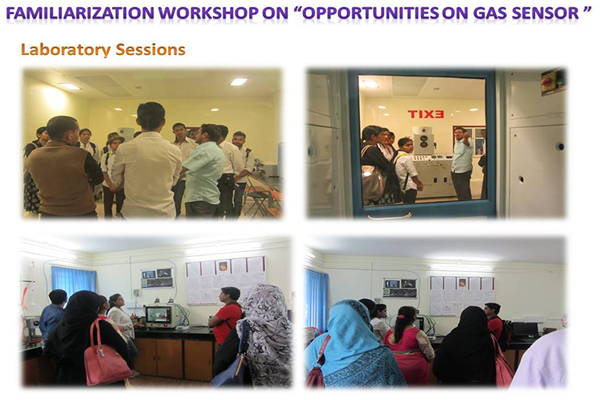
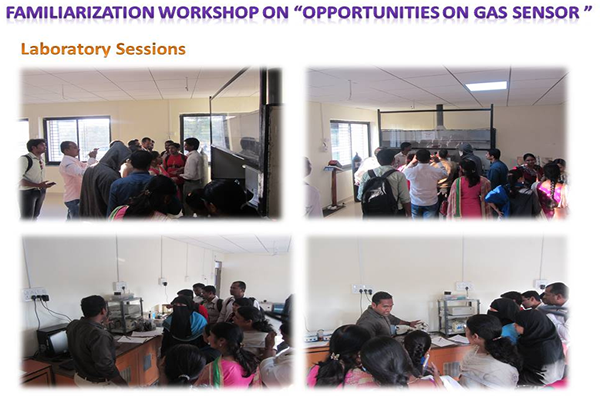
Facilities Available

Contact

RUSA Centre for Advanced Sensor Technology

Dr. Babasaheb Ambedkar Marathwada University,
Chhatrapati Sambhajinagar, Pincode - 431 004

Email : rusacast@bamu.ac.in

Office : 0240-2403290

Facilities
Achievements
Research
Director Desk
Photo Gallery
Facilities Available
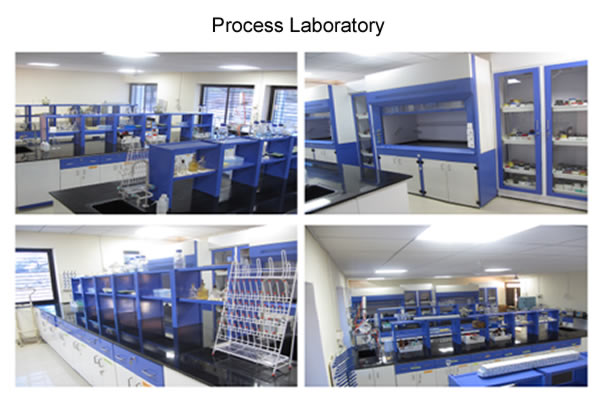
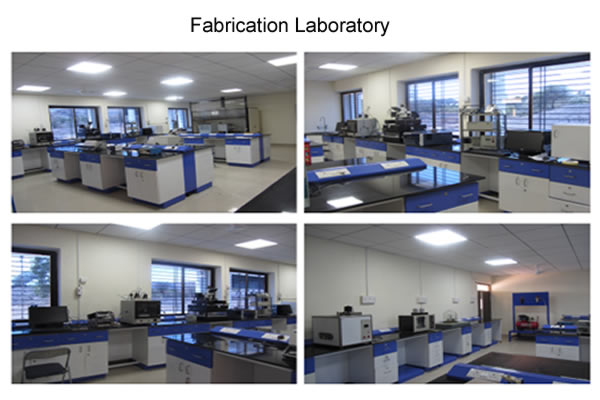
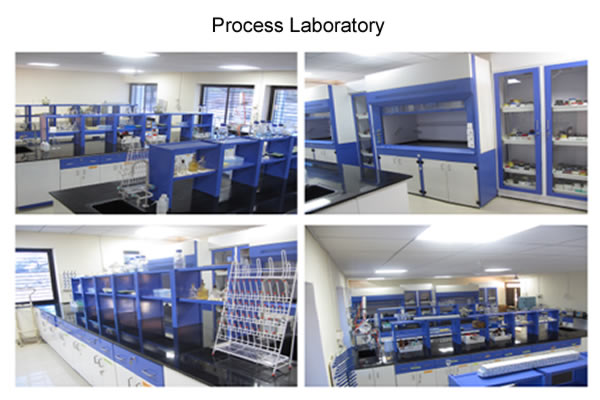
Fabrication Lab Process Lab
Sr. No. Equipment Name Make & Model Sr. No. Equipment Name Make & Model
1. Electrochemical Workstation CH Instruments; 660C, 1120 1. Chemical Vapor Deposition (CVD) Machine Indigenous
2. Probe Station with Optical Microscope Ecopia 2. Fume-Hood Indigenous
3. Semiconductor parametric Analyzer Keithley 4200A-SCS 3. Annealing furnace Indigenous
4. Wire Bonder West Bond 4. Distillation Plant Iab India
5. Automated Source-Measure Unit Keithley 5. Weighing Balance A&D
6. Computerized Dynamic Gas Sensing System Indigenous 6. Conductivity Meter Systronics
7. 16 Channel DAQ National Instruments 7. Low Temperature Mantles Indigenous
8. Variable Power Ultrasonicator VWR 8. Cyclomixer Remi
9. Hyperspectral Imaging Spectrometer Pika L 9. Chemical Wet Bench Indigenous
10. Centrifuge Machine REMI; R-24
11. Desiccation Cabinets Rankem
12. Constant Temperature Bath Indigenous
13. Computerized Static Gas Sensing System Indigenous
14. BET Surface Area Analyser CAD Instruments, France
15. Quartz Crystal Microbalance (QCM) CHI 400C, CH Instrumnets, USA
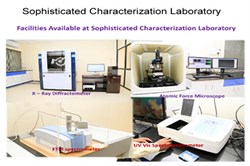
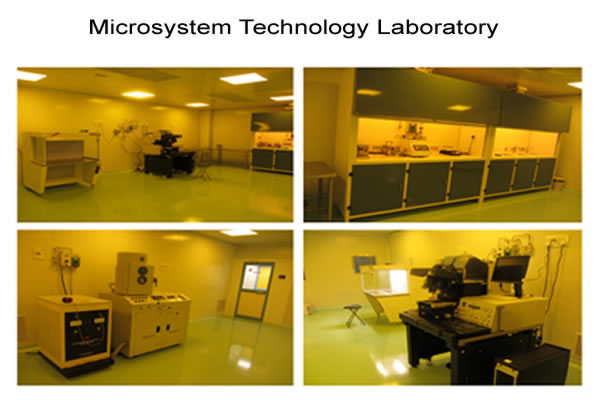
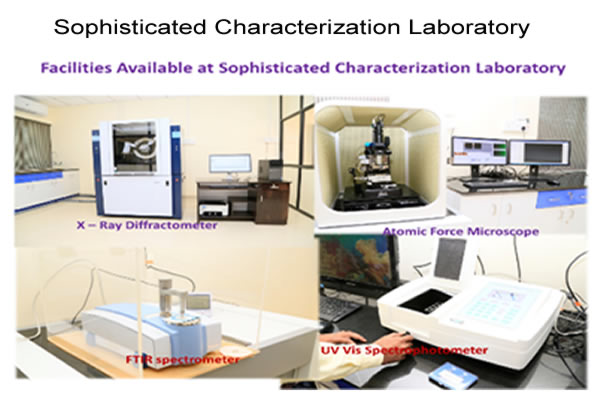
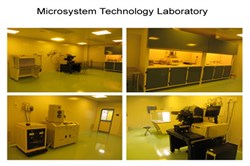
Sophisticated Characterization Laboratory Microsystems Technology Laboratory (Yellow Room/ Clean Room class10000)
Sr. No. Equipment Name Make & Model Sr. No. Equipment Name Make & Model
1. Atomic Force Microscopy (AFM) with STM and EFM and Electrochemical Cell attachments Perk Systems; XE-7 1. E-beam evaporator Hind Hvac; BC 300
2. X-Ray Diffractometer BRUKER D8 Advance 2. Thermal evaporator Hind Hvac; BC 300
3. Fourier Transfer infrared Spectrophotometer (FTIR) with ATR attachment Bruker; ALPHA-T 3. Mask Aligner SUSS Microtech MA/BA6
4. Ultraviolet Spectrophotometer (UV) Jasco-V-750, Jasco, Japana 4. Class 100 Laminar flow station SSD Enterprises
5. Spin Coater APEX; NXG 1000
DST-FIST Laboratory, Department of Physics
Sr. No. Equipment Name Make & Model
1. Raman Spectrometer Xplora Plus, Horiba, France
Achievements
A) M.Sc Electronics Students selected for Ph.D. Admission in a Foreign University:
Sr. No Student Name Year of joining for phd Country/Designation University/Lab/Institute name Department Guide/Supervisor Name
1 Nobel U Hajare 2023 PhD. Program, Taiwan National Dong Hwa University, Taiwan Department of Physics Prof. Yuan Ron Ma
2 Swapnil Prakash Nikalje 2022 PhD. Program, Taiwan Epitaxial Growth of Optoelectronic Materials Laboratory Yijia chen
3 Vikas Nagnath Kendre 2023 PhD. Program, Taiwan Energy and Opto-electronic Materials Program (EOMP) National Taipei University of Technology, Taipei, Taiwan Prof. Sea-Fue Wang
4 Prashant keshav kasare 2023 PhD. Program, Taiwan PhD. Program at Department of EOMP Taiwan National taipei university of technology President Prof. Sea fue wang
5 Siddiqui yahhya 2023 PhD. Program, Taiwan NDHU EE Professor Shieh
6 Madhuri S Birare 2021 PhD. Program, Taiwan National Dong Hwa University, Taiwan Department of Material Science and Engineering Prof. Yen-Pei- Fu
7 Rameshwar Prakashrao Bongane 2023 PhD. Program, Taiwan National Cheng Kung university, Taiwan Ph.D Program on Smart and Sustainable Manufacturing
8 Pranav Mohan Jambhale 2023 PhD. Program, Taiwan National Cheng Kung university, Taiwan Department of Material Science and Engineering Ph.D Program on Smart and Sustainable Manufacturing
B) M.Sc Physics Students selected for Ph.D. Admission in a Foreign University:
Sr. No Student Name Year of joining for phd Country University/Lab/Institute name Department Guide/Supervisor Name
1 Kiran Sudhakar Sontakke 2022 PhD. Program, Slovakia (Europe) Comenius University in Bratislava Department of Nuclear Physics and Biophysics Prof. RNDr. Tibor Hianik DrSc
2 Dhanashri Dattatraya Khandagale 2022 PhD. Program, Taiwan National Taipei University of Technology EOMP Professor Sea-Fue Wang (President)
3 Vaishnavi Balasaheb Dhisale Feb 2022 (Spring Semester) PhD. Program, Taiwan National Dong Hwa University Hualien City, Taiwan. Department of Physics Prof. Wen Ping Peng
4 Gita Babasaheb Bhanuse Feb 2022 PhD. Program, Taiwan National Dong Hwa University Material science and Engineering Prof. Yen- Pei-Fu
C) Ph.D. Students selected for PDF:
Sr. No Student Name Qualification Department Year
1 Dr. Gajanan A. Bodkhe M.Sc., Ph.D. (Physics) International Research Professor (Asst. Professor) Food Science and Technology, Yeungnam University, Gyeongsangbuk-do, Gyeongsan, 38541, Country: South Korea. 2022
2 Dr. Megha A. Deshmukh M.Sc., Ph.D. (Physics) Nanotechnology Centre VŠB Technical University, Country: Czech Republic Guide: Prof. Zboril Radek 2023
3 Dr. Pasha Wajir Sayyad M.Sc., Ph.D. (Physics) Electronic Materials Engineering Kwangwoon University, Country: Seoul, Korea Guide: Tae-Jun Ha 2023
Research Activities
Research Scholars
Sr. No Student Name Google Scholar Profile Research Area
1 Mayuri More Google Scholar Profile
2 Yogita Waghmare Google Scholar Profile
3 Abhaysinh Khune Google Scholar Profile
4 Sumita Gaikwad Gas sensor
5 Mahesh Takte Google Scholar Profile Gas sensor
6 Shubham Patil Google Scholar Profile Havey Metal Ion Sensor
7 Kamlesh Deore Google Scholar Profile Havey Metal Ion Sensor
8 Prinaka Zine Havey Metal Ion Sensor
Director's Desk'
RUSA-CAST Director

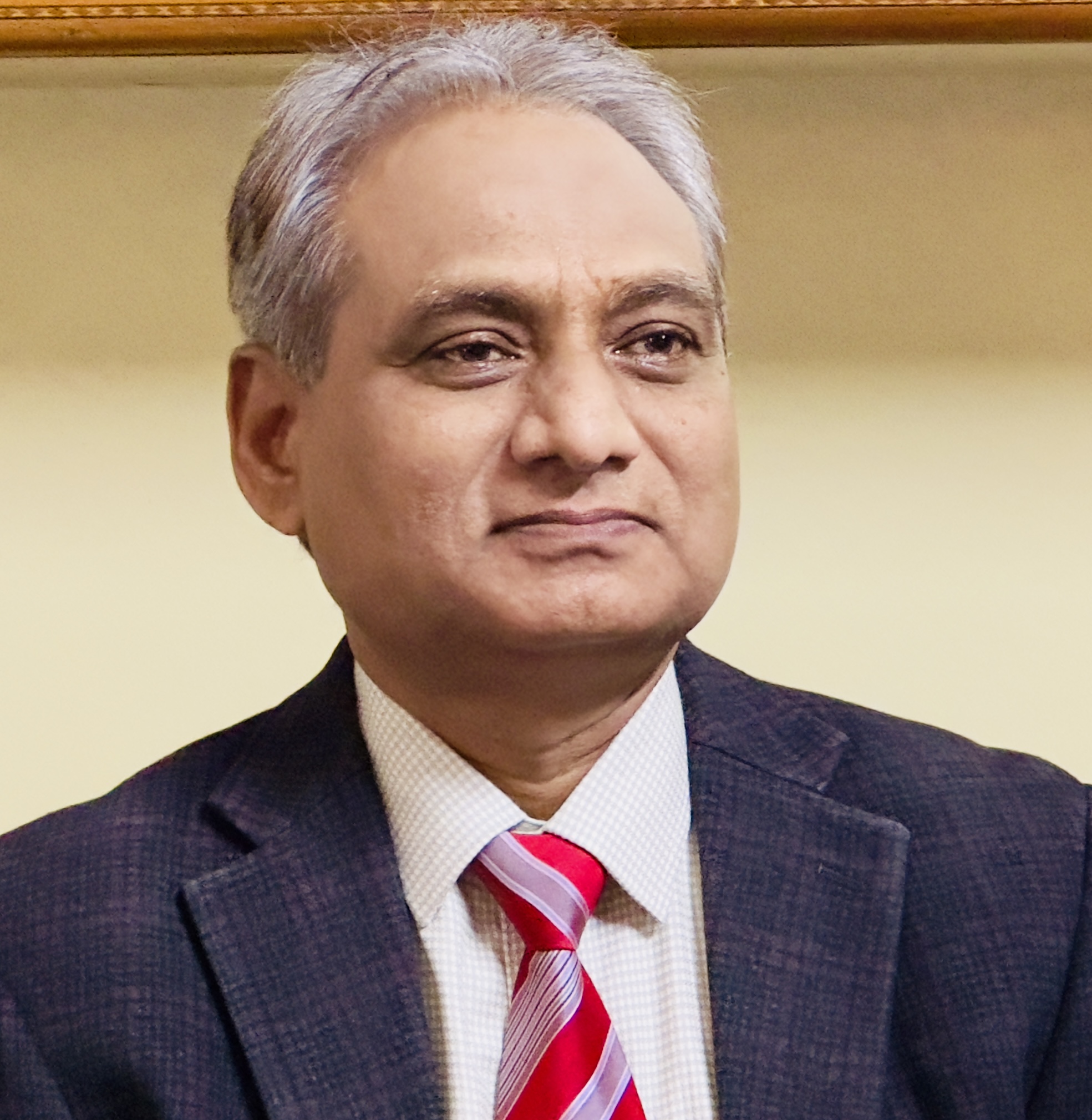
On behalf of Rashtriya Uchchatar Shiksha Abhiyan (RUSA) – Centre for Advanced Sensor Technology at Dr. Babasaheb Ambedkar Marathwada University, Aurangabad, it gives me immense pleasure to welcome you. Looking at the potential and long pedigree of research and development in the area of Sensor Technology at Dr. Babasaheb Ambedkar Marathwada University, Aurangabad, the State Directorate of RUSA has sanctioned to establish a dedicated R & D facility in the University domain with thrust on sensor technology that will cater the vital necessity to identify a potential idea, right at the beginning phase and expedite the process of getting it patentable and/or commercially feasible in due course through proper grooming as per the demand of industry and commercial market.

The Centre aims to be a common platform for the students and faculties of the Universities / Colleges across the state of Maharashtra and their underneath institutions, individuals and established entrepreneurs to hone the necessary skills of research in Sensor Science and Technology, study of economic demands and accordingly shape the ideas to a marketable product. Proper guidance, channelized efforts and a centralized tool in formulation of a well architectured roadmap, at this point, is now required to mitigate the gap between ‘paper’ and ‘product’. Efforts in this direction is not only required by this University but by all academia across the state. The RUSA Center has the core aim to work dedicatedly at this junction.

Through its frame of constitution, on one hand, the Center shall establish state-of- the art inter disciplinary and market - faceted research facilities to allow students and faculties work on their ideas in a congenial environment and on the other hand, through university IPR cell will put the efforts in required track towards - successful property right generation, technology transfer, mass production of prototypes through development partners and incubate entrepreneurship abilities.

Impartation of regular training and provision of state-of-the-art R & D facilities towards methodical development of entrepreneurship skill, at various strategic levels and strengths will ever remain as one mainstay of the Centre activities. Dedicated panels will be set up to - identify potential ideas, time to time monitoring and guidance to shape the ideas to be commercially viable ideas / products. I again welcome researchers all around Maharashtra to utilize facilities available at the RUSA Center so that the center will work as a milestone in research.

With Best Wishes,

Prof. Mahendra D.Shirsat

Professor & Director

View Short Biodata    View Detail Biodata

Ph.D (Physics), PDF (UCR, USA), NIH Fellow (USA), Visiting Scientist (Wollongong University, Australia), MCA (Eng. & Tech.)

E-mail : director.rusa@bamu.ac.in

shirsat
Image 43
Image 44
Image 45
Image 46

Image 47
Image 48
Image 49
Image 50

Image 51
Image 52
Image 53
Image 54

Image 55
Image 56
Image 57
Image 58

Image 59
Image 60
Image 61
Image 62

Image 63
Image 64
Image 65
Image 66