NAAC Re-accredited with grade
महाराष्ट्र शासन | Government of Maharashtra
NAAC Re-accredited with grade
महाराष्ट्र शासन | Government of Maharashtra
NAAC Re-accredited with grade
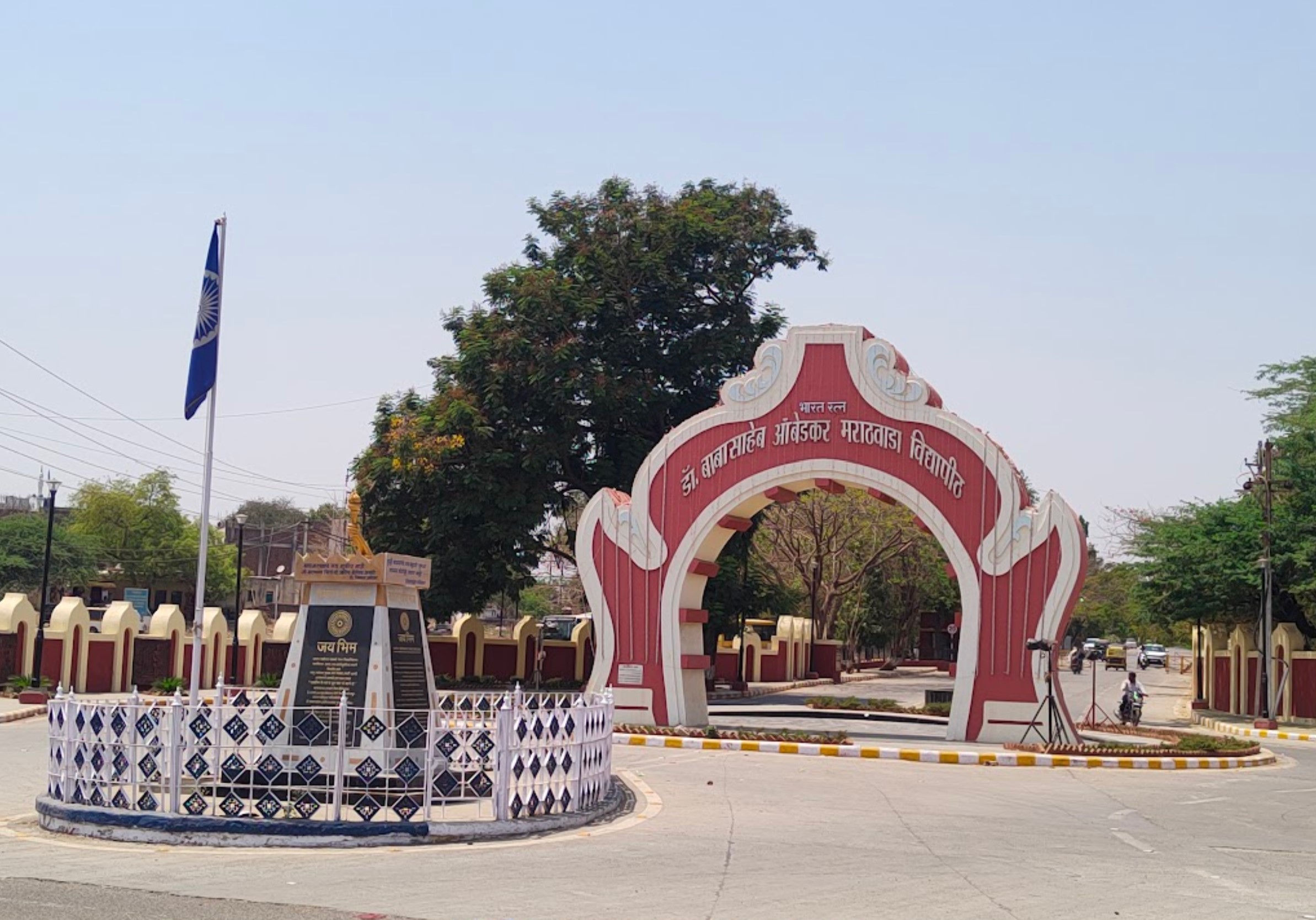
Dr. Babasaheb Ambedkar Marathwada University (BAMU), formerly Marathwada University, is located in Aurangabad, Maharashtra, Republic of India. It is named after Bharat Ratna "Babasaheb" Ambedkar, an Indian jurist, political leader, academic and the chief architect of the Indian Constitution. This university was established primarily on the initiative of Babasaheb Ambedkar so as to fill the huge lacuna of higher education facilities in western Vidarbh, Marathwada and North maharashtra region.The university was established on August 23, 1958. This university has contributed to the progress of adjoining regions and people in innumerable ways.Since its inception, the university has around 428 colleges affiliated to it, which come under four districts (Chhatrapati Sambhajinagar, Jalna, Beed and Dharashiv) of Maharashtra State. The student population exceeds 4,44,336.
To structure The Dr. Babasaheb Ambedkar Marathwada University to be an Epitome of Excellence by creating and imparting time responsive Quality Education to address Changing Scenario, keeping Research and Development at its core, for ‘Anyone’ at ‘Anytime’ and ‘Anywhere’.
Marathwada, part of Maharashtra, India, was under Nizam's rule from the early 18th century until 1948, when police action merged Hyderabad State into India. Initially founded as a military base, Chhatrapati Sambhajinagar, the region's cultural and trading hub, has a rich historical tradition. After India's independence and state reorganization in 1956, Marathwada became part of the Bombay state, later joining Maharashtra on May 1, 1960.
Marathwada is renowned for its rich arts, culture, and literary heritage. The Ajanta and Ellora Caves attract global scholars and visitors. The region is home to notable Marathi literary figures like Dnyaneshwar, Namdeo, and Ramdas, earning it the title "cradle of Marathi Literature." Early Urdu poets Siraj and Wali, the father of modern Urdu poetry, also hailed from Chhatrapati Sambhajinagar. Before Marathwada University was established in 1958, the region had 3686 primary schools, 231 middle schools, and 95 high schools. By 1956, several colleges were set up, including education, medical, agriculture, and science institutions, marking significant educational growth.
The Demand For A University For Marathwada :Marathwada faced significant educational neglect, with only nine intermediate colleges and 95 high schools serving a population of 5.3 million before November 1, 1958. All colleges were affiliated with Osmania University, Hyderabad, requiring students to travel there for higher education, which was unaffordable for many. The lack of postgraduate and research facilities further highlighted the need for an independent university. After the merger of Marathi-speaking areas of Hyderabad into Bombay State, the people of Marathwada freely expressed their aspirations, demanding a university to foster the region's educational, cultural, and overall development.
At Osmania University, established in the Nizam State, Urdu was the medium of instruction. After India's independence in 1947, the regional language was adopted for secondary education. This created a need for higher education in the regional language. Consequently, the people of Marathwada demanded a new university to address this issue and support the region's educational and socio-economic development.
The MovementOn December 12, 1954, the Marathwada Shikshan Samiti organized a meeting emphasizing the need for a separate university for cultural and educational activities. In 1955-1956, two conventions of Members of Parliament and State Legislature strongly supported this demand. On July 29, 1956, a delegation from Marathwada submitted a memorandum to the Chief Minister of Hyderabad State, calling for a new university. The Hyderabad Government appointed a committee, which recommended the establishment of a separate university for the region.
In January 1957, Maharashtra's Chief Minister, Y.B. Chavan, toured Marathwada and received numerous representations urging the creation of a university. On April 27, 1957, the Marathwada Government appointed a committee under Justice S.M. Paluitkar to examine the establishment of a university. The committee's report, submitted on December 1, 1957, recommended the creation of a regional university focusing on the needs of Marathwada.
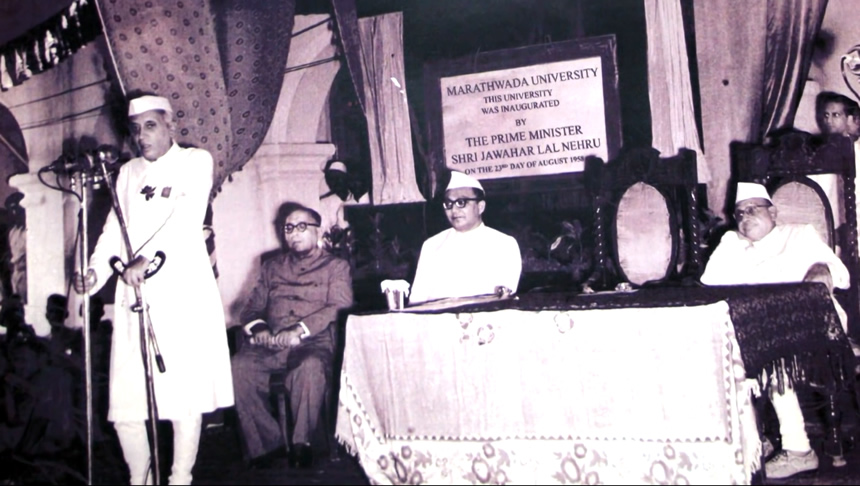
The Marathwada University Act was passed on May 5, 1958, and Shri S.R. Dongerkery was appointed as the first Vice-Chancellor. The university was inaugurated on August 23, 1958, by Prime Minister Jawaharlal Nehru in a ceremony attended by over 3,000 people, including notable figures such as the Governor of Bombay and Minister of Education, Shri Hitendra Desai. Despite being present in Bombay, Chief Minister Yashwantrao Chavan could not attend due to illness. This day marks the foundation of Dr. Babasaheb Ambedkar Marathwada University.
LocationChhatrapati Sambhajinagar was chosen as the seat for the Marathwada University over other suggested locations like Nanded and Mominabad due to its strong cultural and historical significance. The city is close to key historical sites: Deogiri (Daulatabad), the Yadava capital, is just 8 miles away, while the famous Ellora Caves are 12 miles further, and the Ajanta Caves, known for their frescoes, are 64 miles away. Paithan, an ancient city of cultural importance, is 34 miles away. Additionally, Chhatrapati Sambhajinagar had been a division center during the Hyderabad regime, making it a fitting location for the university. The committee, therefore, strongly recommended Chhatrapati Sambhajinagar as the university's seat.
University BuildingsThe Government of Bombay lent the two-storied building belonging to the middle school situated in Aurangpura (New Zilla Parishad) with its annexes. Until such time as the University is able to construct its own buildings on the University campus. It was proposed to utilize the existing building for the office, the meeting of the University bodies, for accommodating the University departments and library and for holding some of the post graduates classes.
AffiliationAll the eight colleges in Marathwada were affiliated to the Osmania University. when the Marathwada University was established in June-1958, one more college at Jalna was affiliated in the month of July of the same year.The affiliation of nine colleges with the Osmania University terminated on October 31, 1958. The nine colleges are as follows:
A Many names were suggested for the proposed University such as Marathwada, Chhatrapati Sambhajinagar, Paithan, Pratishthan, Daulatabad, Deogiri, Ajanta, Shalivahana, Satawahana, Shivaji etc.
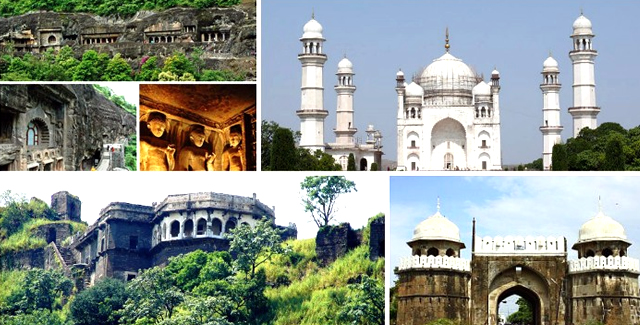
The university was named "Marathwada University" on January 14, 1994, to emotionally connect with the people of Marathwada, as the name Marathwada held cultural significance. Later, it was renamed "Dr. Babasaheb Ambedkar Marathwada University" to honor Dr. Ambedkar's contributions to the educational development of the region. The campus spans over 650 acres, with a scenic approach road from the south, approximately a mile and a quarter long. The hills surrounding the campus provide a picturesque backdrop, with small cascades during the rainy season. The campus houses the famous Chhatrapati Sambhajinagar Caves, with the Suneri Mahal (Golden Palace) at the foot of the hills, and the Bibi Ka Makbara adding charm to the landscape.
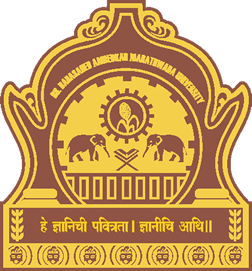
The design adopted for the coat of arms bears the following emblemsThis coat of arms reflects the university's commitment to education, agricultural roots, cultural heritage, and the pursuit of economic and industrial progress. The motto affirms the enduring power of knowledge.
The Strategic plan of the university is multi-layered as well as multi-pronged that focuses on Expansion, Inclusion and Excellence (EIE). It subsumes short term, intermediate and long term policies to cater to the ever growing number of Higher Education aspirants resulting in the enhancement of Gross Enrolment Ratio (GER) that will have positive impact on Human Development Index (HDI). Also, it aims at minimizing the menace of migration. By adopting following steps, the Strategic Plan will be executed to achieve the vision and mission of the University.
The coat of arms may be regarded as fair representation of the aims and ideals of the university, which has been established among, people mainly devoted of the vocation of agriculture, with a rich cultural back ground and a firm determination to pursue knowledge and learning and at the same time to achieve economic and industrial progress. The motto affirms the inviolability of knowledge; a quality that abides is knowledge itself.
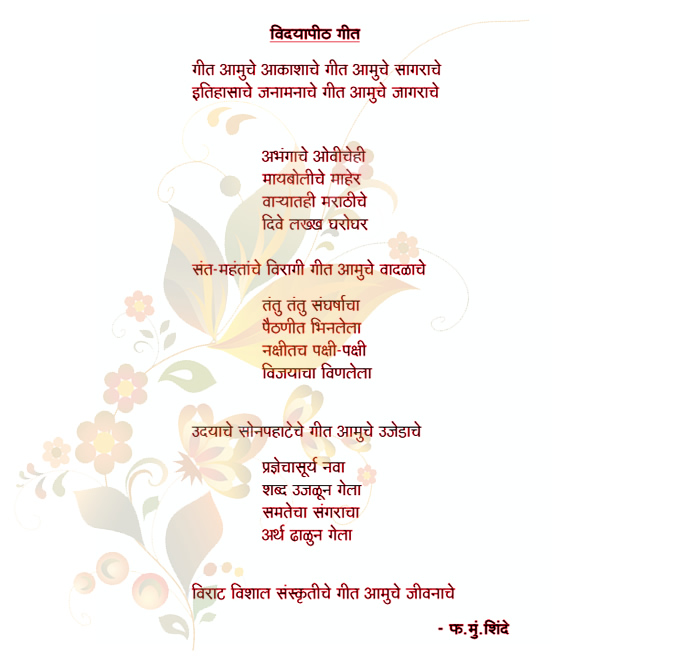
Listen to the official university anthem below:
Dr. Babasaheb Ambedkar Marathwada University (BAMU), formerly Marathwada University, is located in Chhatrapati Sambhajinagar, Maharashtra, Republic of India. It is named after Bharat Ratna "Babasaheb" Ambedkar, an Indian jurist, political leader, academic and the chief architect of the Indian Constitution. This university was established primarily on the initiative of Babasaheb Ambedkar so as to fill the huge lacuna of higher education facilities in western Vidarbh, Marathwada and North maharashtra region.The university was established on August 23, 1958.
This university has contributed to the progress of adjoining regions and people in innumerable ways.Since its inception, the university has around 428 colleges affiliated[1] to it, which come under four districts (Chhatrapati Sambhajinagar, Jalna, Beed and Osmanabad) of Maharashtra State. The student population exceeds 4,44,336.
Under Construction
Chhatrapati Sambhajinagar enjoys excellent connectivity with all major Indian cities through air, rail, and road networks. The city is easily accessible from metropolitan hubs like Mumbai, Delhi, Pune, and Hyderabad.
Chikalthana Airport (IXU) is just 11 km from the city center. Direct flights operate regularly from:
Chhatrapati Sambhajinagar Junction (AWB) offers direct rail connections to:
Chhatrapati Sambhajinagar has excellent road connectivity through national and state highways:
Established on August 23, 1958 by Maharashtra state government, it is one of the oldest university in Maharashtra.
University is located in center of the city and having total 725 acres green land. (2.9339 km²).
Around 410+ colleges Affiliated from four districts (Chhatrapati Sambhajinagar, Jalna, Beed and Osmanabad) of Maharashtra State.
There are more than 4.5 lac students admitted and opted for examinations in university and colleges affiliated to it.
Chhatrapati Sambhajinagar (formerly known as Aurangabad) is a city in the Chhatrapati Sambhajinagar district of Maharashtra, India. The city is a tourist hub, surrounded with many historical monuments, including the Ajanta Caves and Ellora Caves, which are UNESCO World Heritage Sites.
.....
Welcome to
Dr. Babasaheb Ambedkar Marathwada University