Bhagat Singh Study Centre

Dr. Babasaheb Ambedkar Marathwada University | Official Website

Shahid Bhagat Singh Study Centre

About Study Centre

Shaheed Bhagat Singh is one of the most revered figures in India's freedom struggle. Known for his courage, intellectual depth and unwavering commitment to freedom and justice, he became a powerful symbol of youthful resistance to British colonial rule. Although his life was tragically cut short at the age of 23, his ideas and legacy continue to inspire generations. Bhagat Singh's revolutionary journey was shaped by his deep commitment to India's independence and his belief that political freedom must be accompanied by social and economic transformation. His revolutionary thought went beyond the struggle against colonial rule. He envisioned a society based on equality, justice, human dignity and freedom from exploitation and oppression.

Bhagat Singh was also a profound thinker. His ideological development was influenced by revolutionary, socialist, rationalist and humanist traditions. He engaged deeply with the writings of thinkers such as Karl Marx, Friedrich Engels and Vladimir Lenin. The ideas of social equality, class struggle and freedom from economic exploitation significantly influenced his understanding of India's future.

For Bhagat Singh, independence was not merely the transfer of political power. He believed that true freedom required the removal of social and economic inequalities, including exploitation, feudalism, castebased oppression and poverty. He envisioned a society in which workers, peasants and ordinary citizens would have a meaningful role in shaping the nation's future.

The Shaheed Bhagat Singh Study Centre has been established to preserve, study and propagate these intellectual and revolutionary traditions. The Centre seeks to create an academic and social platform through which students, researchers and citizens can engage with Bhagat Singh's ideas and their relevance to contemporary society.

Along with contributing to the preservation of the self-respect and progressive values of the country, the state and the Marathwada region, the Centre seeks to promote education, critical thinking, social responsibility and awareness among young people.

About Shaheed Bhagat Singh

Bhagat Singh's contribution to India's freedom movement cannot be understood only through his revolutionary actions. He was equally significant as a reader, writer, thinker and social critic.

His political thought developed through extensive reading and reflection on revolution, socialism, imperialism, religion, social inequality and human freedom. He believed that the youth had a crucial role in questioning injustice and creating a better society. His vision of revolution was not limited to the overthrow of colonial rule. For him, revolution represented a fundamental transformation of society that would eliminate exploitation, inequality and oppression.

His commitment to rational thought, scientific inquiry and social equality remains particularly relevant in an era of rapid social and technological change.

“Why I Am an Atheist” and Rationalist Philosophy

One of Bhagat Singh's most celebrated writings, “Why I Am an Atheist,” reflects his commitment to rational inquiry and independent thought.

Written during his imprisonment in 1930, the essay demonstrates his willingness to question established beliefs and examine ideas through reason and critical thinking. His rationalism encouraged individuals to take responsibility for their actions and for the transformation of society rather than relying solely on supernatural intervention. Bhagat Singh's atheism was closely connected with his commitment to reason, scientific temper and intellectual freedom. He emphasized the importance of questioning assumptions, examining evidence and developing an independent mind.

The Study Centre seeks to encourage this spirit of inquiry among students and young researchers by creating opportunities for discussion, debate, research and intellectual engagement.

Historical Background of the Study Centre

The Management Council of Dr. Babasaheb Ambedkar Marathwada University decided to establish the Shaheed Bhagat Singh Study Centre at its meeting held on 21 March 2012. The Study Centre was formally launched on 23 March 2012, commemorating Shaheed Bhagat Singh's martyrdom.

Dr. Sudhakar Shendge, Department of Hindi, was appointed as the Director of the Study Centre. The Centre was established with the objective of studying, preserving and propagating the thoughts, writings and revolutionary legacy of Shaheed Bhagat Singh while creating awareness among students and society about freedom, social justice, equality and national responsibility.

The inaugural programme was attended by Mohammed Salim, former Member of Parliament from West Bengal, and was presided over by Justice B. N. Deshmukh. The establishment of the Centre represents an important academic initiative dedicated to the study of Bhagat Singh at the university level in Maharashtra.

Vision and Mission
Objectives
Director
Programmes and Activities
Gallery
Vision & Mission
Vision:

The Shaheed Bhagat Singh Study Centre envisions becoming a dynamic centre of learning, research and social awareness inspired by the intellectual legacy of Shaheed Bhagat Singh.

The Centre aims:

  • To promote awareness about India's freedom struggle and the intellectual legacy of Shaheed Bhagat Singh.
  • To inspire students and researchers to critically engage with contemporary social and economic issues.
  • To promote egalitarian values, social justice and national progress.
  • To empower deprived and vulnerable sections of society through education and awareness.
  • To encourage rational, scientific and independent thinking among youth.
  • To develop the Centre into a premier centre for studies relating to regional development, revolutionary history and social transformation.
Mission:

The mission of the Study Centre is to create an academic environment that connects historical knowledge with contemporary social concerns.

The Centre seeks to:

  • Preserve, catalogue and promote historical documents, oral histories and revolutionary literature.
  • Develop historical and social consciousness among youth.
  • Organize lectures, seminars, workshops, camps and interactive academic programmes.
  • Facilitate research on the Indian independence movement, revolutionary history and regional development.
  • Encourage interdisciplinary research and critical inquiry.
  • Connect academic research with society through community-oriented initiatives.
  • Promote cultural and intellectual engagement with Bhagat Singh's ideas.
  • Encourage students to develop social responsibility and civic awareness.
Objectives

The major objectives of the Study Centre are:

  • To foster a strong sense of national character through the thoughts and ideals of Bhagat Singh.
  • To instil patriotism, equality and democratic values among students.
  • To develop a sense of social responsibility among youth.
  • To promote national integration and social harmony.
  • To propagate the writings, ideas and works of Shaheed Bhagat Singh.
  • To encourage educated youth to contribute to positive social change.
  • To awaken the spirit of inquiry and critical thinking among talented youth.
  • To encourage scientific temper and rational thought.
  • To prepare young people to engage constructively with issues of social justice.
  • To encourage academic research on Bhagat Singh and the broader history of India's freedom movement.
  • To connect historical understanding with contemporary social and economic issues.
  • To promote equality, human dignity and an inclusive social outlook.
  • To create a national character through the thoughts of Bhagat Singh
  • To create a sense of social responsibility in the students
  • To prepare the youth for national integration
  • To propagate the thoughts and works of Bhagat Singh
  • To bring about social change through educated youth
  • To awaken the spirit of inquiry in the talented youth
  • To prepare the youth for the fight for social justice
Co-ordinator
Director
Dr. Padmakar N. Sahare(Dept. Sociology)
Director, Bhagat Singh Study Centre,
Dr. Babasaheb Ambedkar Marathwada University, Aurangabad, Pin: 431004
Phone No : 0240-2403252 (O)
Mobile No : 9764694183
E-mail: pnsahare@gmail.com
Programmes and Activities

The Study Centre undertakes a variety of academic, cultural and student-oriented programmes.

Academic Activities

  • Seminars and conferences
  • Guest lectures
  • Workshops
  • Study camps
  • Research discussions
  • Academic exhibitions
  • Historical documentation activities
  • Research guidance
  • Student Activities
  • The Centre encourages students to participate in:
    1. Essay competitions
    2. Elocution competitions
    3. Workshops
    4. Story-writing competitions
    5. Poetry competitions
    6. Article-writing competitions
  • Quiz and knowledge-based activities
  • Character studies
  • Debate and discussion programmes

Cultural Activities

The Centre also promotes cultural programmes related to India's freedom movement and Bhagat Singh's legacy, including:

  • Patriotic songs
  • Plays and theatrical performances
  • Documentary and film screenings
  • Cultural presentations
  • Poetry programmes
  • Historical character presentations

Publications

The Centre encourages the publication and dissemination of:

  • Research papers
  • Essays
  • Stories
  • Poems
  • Academic articles
  • Research-based studies on Bhagat Singh and revolutionary history

Research and Academic Contributions

The Centre encourages students and researchers to undertake academic work on:

  • Shaheed Bhagat Singh and his ideology
  • Indian revolutionary movements
  • Indian freedom struggle
  • Socialism and revolutionary thought
  • Rationalism and scientific temper
  • Social justice and equality
  • Youth and nation-building
  • Regional development
  • Social transformation in Marathwada
  • Literature and representations of Bhagat Singh

The Study Centre has contributed to creating an academic environment in which students are encouraged to read, discuss and critically examine Bhagat Singh's writings and ideological contributions.

A research work on the portrayal of Bhagat Singh in Hindi and Marathi literature has also been undertaken at the M.Phil. level.

Research and Resource Development

The Centre aims to develop itself as a valuable academic resource for students, teachers and researchers.

Potential and developing resources include:

  • Books on Shaheed Bhagat Singh
  • Revolutionary literature
  • Historical documents
  • Biographical materials
  • Research papers
  • Freedom movement literature
  • Newspapers and journals
  • Photographs and archival material
  • Oral histories
  • Digital academic resources

The systematic preservation and cataloguing of such material can help create a valuable repository for future research.

Lectures by Eminent Persons

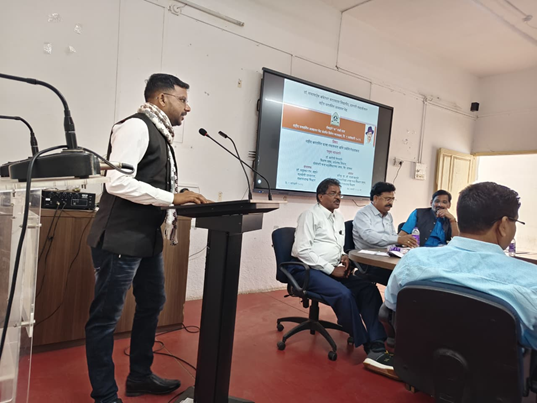
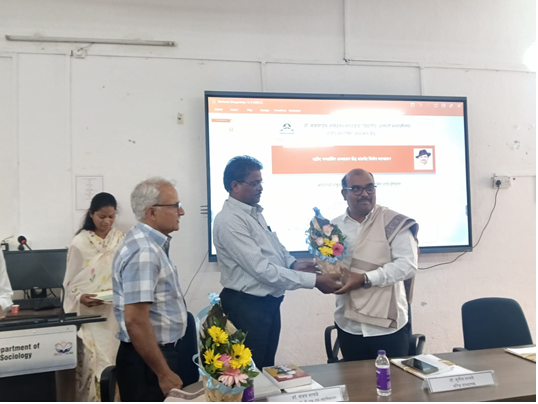
Eminent Persons Eminent Persons
Mohammed Salim, West Bengal Justice B.N. Deshmukh
Comrade Tanaji Thombare Dr. Hamid Dabholkar
Dr. Avinash Patil,Thane Dr. Vitthal More,Latur
Mr.Pradip Solunkhe Prof.Yashavant Patane
Mr. Ajit Abhyankar Capt.Surendra Surve
Prof. Ram Puniyani, Mumbai Chaman Lal, Panjab
Prof. Omprakash Madansure Mr. Nitin Sawant
Comrade Dr. Ashok Dhavale Dr. Jaydev Dole
Principal Shivajirao Devadhe Shaheer Vasudha Kalyankar
Dr. Maruti Tegampure, Ambad (Jalna) Dr. Sanjay Savle, Nashik
Dr. Ingole Adinath, Nanded
Image1
Image2
Image 578
Image 579
Image 579