Department of Economics

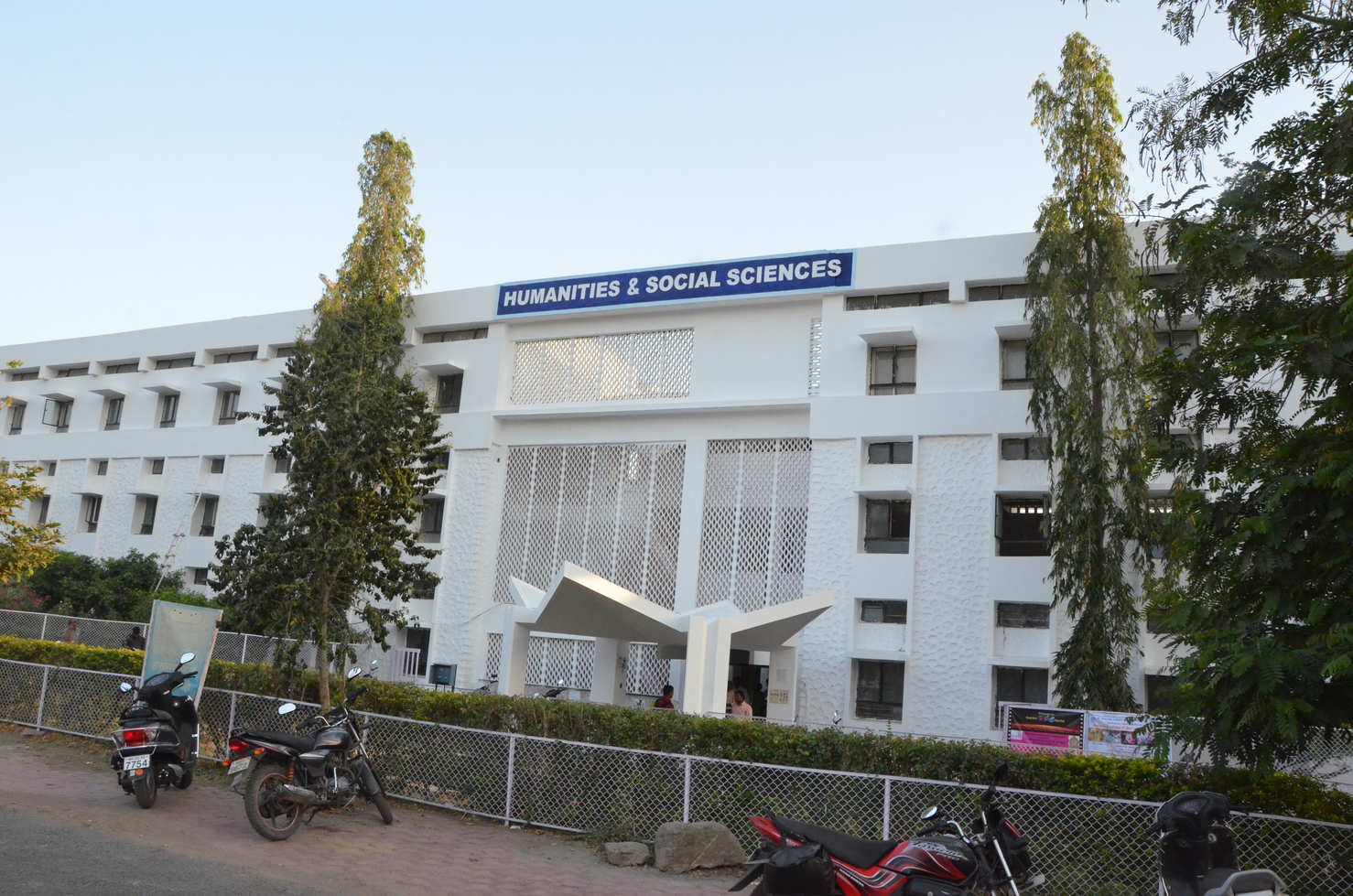
Dr. Babasaheb Ambedkar Marathwada University | Official Website

Department of Economics

About Department

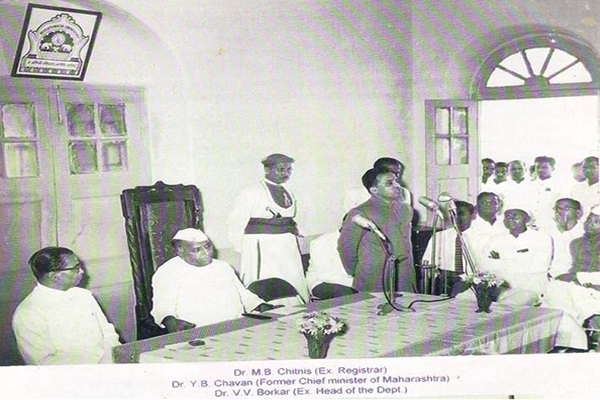
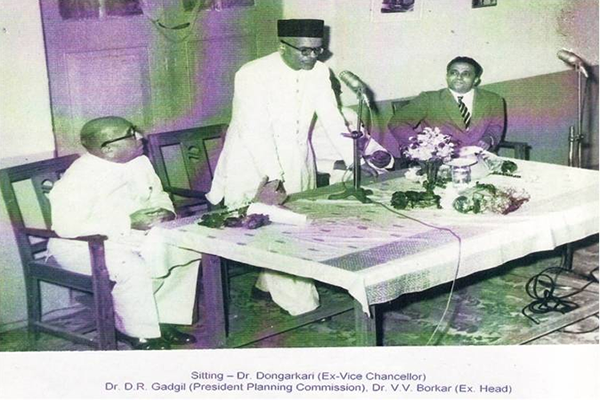
The Department of Economics is one of the first two teaching and research departments that was established in the same year as the establishment of the University. From the beginning, the Department attracted a good number of students, and the main source of attraction was the leadership provided by Dr. V. V. Borkar, the first Head of the Department of Economics. He not only encouraged research activity but himself undertook certain research projects mainly relating to problems of regional development of Marathwada.

The Department of Economics was identified by the UGC for implementing two consecutive phases of the University Leadership Programme during 1982 to 1988. The UGC had sanctioned a Special Assistance Programme to the Department of Economics in 1987 for five years in the first instance and in 1992 for the second instance. The UGC further sanctioned a Special Assistance Programme to the Department of Economics since 2006-2007 in the first phase, and the second phase was sanctioned for the period 2013-2018 (Rs. 60.0 Lacs).

The Department of Economics took the lead to seek the award of Centre with Potential for Excellence status from the UGC in collaboration with the departments of political science and sociology.

The award of the status of Centre with Potential for Excellence to our University is the result of the Special Assistance Programme activities carried out in the Department of Economics. It is also the result of the contribution that the Departments of Economics, Political Science, and Sociology have made to the research related to rural development until today.

The main objective of the UGC's Centre with Potential for Excellence scheme is to encourage and facilitate the chosen departments to collaborate in interdisciplinary research work.

Department insights

More about the department

Centre with Potential for Excellence in Particular Area (CPEPA):

“Rural Development in Backward Districts of Marathwada”

The University Grants Commission has approved the status of Centre with Potential for Excellence in a Particular Area (CPEPA) to Dr. Babasaheb Ambedkar Marathwada University. The main objective of the UGC’s CPEPA scheme is to encourage and facilitate the chosen departments at the selected university to work together in a particular area by associating their faculty members to cooperate and collaborate in their programs and activities on a regular basis, cutting across departmental and discipline barriers. The University Grants Commission has sanctioned Rs. 2.50 crore for five years (2016-21) to establish the center in “Rural Development in Backward Districts of Marathwada” at the university campus. A total of 11 Research Projects were granted to faculty members from the Economics, Sociology, and Political Science Departments of the University, and 16 Research Papers were published based on this project.

NIEPA - Warwick Project

NIEPA - Warwick Project: "Widening Access to Higher Education (2023-2026)" Grant Sanctioned Rs. 2.5 Crore

The Warwick NIEPA project is an incredible initiative aimed at widening access to higher education in India. This collaborative research project between the University of Warwick and NIEPA (National Institute of Educational Planning and Administration) focuses on institutional approaches to increase accessibility. The project explores various aspects, including Feasibility Studies and Program Evaluations, to understand how to better support students from diverse backgrounds. By examining the current higher education landscape, the project identifies barriers and develops strategies to promote inclusivity.

Six state universities from all over India have been selected for the project, of which Dr. Babasaheb Ambedkar Marathwada University is one. Dr. Dhanashri Mahajan is leading the team from the University, and Dr. Krutika Khandare from the Department of Economics and Dr. Vishnu Patil from Deogiri College are members of the team.

Department and SAP DRS - II Conferences / Seminars
Month & Year Title of Conference
8-10 January, 2010 International workshop
The Use and Abuse of Econometrics'
16-18 December, 2014 National Conference
74th Annual Conference of Indian Society of Agricultural Economics in Collaboration with Department of Economics (SAP- DRS-II), Dr. Babasaheb Ambedkar Marathwada University
19 December, 2014 National Seminar
Role of Agriculture and Cooperation for Rural Development
21-23, January 2016 International conference
Climate Change and Rural Development
2016-17 National Seminar
Confronting Development: Perspectives on Marathwada
2017-18 International Conference
Development of Marathwada: Opportunities and Challenges
17-18 February, 2020 National Conference on the Occasion of Diamond Jubilee Celebration of the Est. of Department of Economics
Rural Development in Backward Regions of India
Outcome of Diamond Jubilee Celebration National Conference:

The Department published two volumes of selected research papers presented in the National Conference on 'Rural Development in Backward Regions of India' on the Occasion of Diamond Jubilee Celebration of the Est. of Department of Economics on 17-18 February, 2020.

Maharashtratil Krishi Va Grameen Vikas: Ek Chintan, (edited), Kailash Publications, ISBN 978-81-949560-0-6. (Marathi)

Agricultural and Rural Development in Backward Regions of India, (edited), Kailash Publications, ISBN 978-81-949560-9-9. (English)

CPEPA Conferences / Seminars:
Month & Year Title of Conference
2016-17 National Seminar
Confronting Development: Perspectives on Marathwada
2017-18 International Conference
Development of Marathwada: Opportunities and Challenges
2018-19 National Symposium
Changing Dimensions of Regional Imbalance in India
2019-20 National Seminar
Policy Initiatives and Their Impact on Development of Marathwada
2020-21 Online National Webinar
District Planning for Tapping Development Potential
2021-22 Online National Conference
Appropriate Technology for Rural Development
Outcome of CPEPA
Year Books / Conference Volumes
2021 Development of Marathwada: Opportunities and Challenges
2021 Policy Initiatives and Their Impact on Development of Marathwada
2021 District Planning for Tapping Development Potential
2021 Appropriate Technology for Rural Development
(Proceedings Published in Online Journal) https://knowledgeresonance.com/index.php/special-issue-10/
Unique Features
  • Beneficiary of University Leadership Programme (1982-87) and Special Assistance Programme (1987-97 and 2007-12) of UGC
  • Annex building under SAP
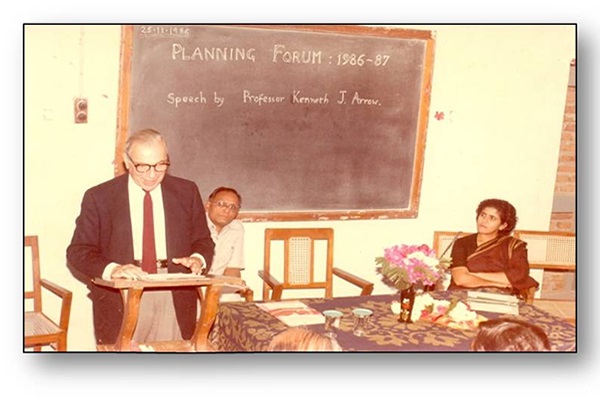
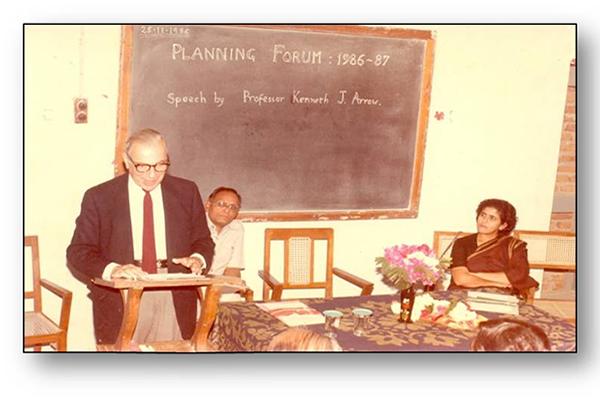
  • Planning Forum – An independent platform for students
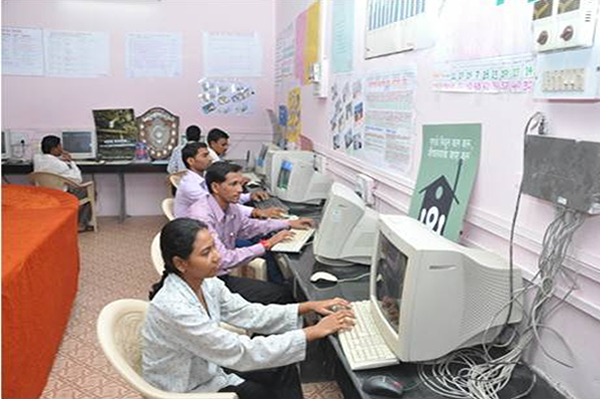
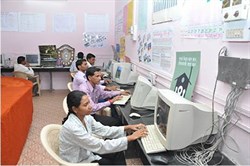
  • Computer laboratory with internet facility
  • Departmental library
  • Four Study / Research Centers
  • Experienced & specialized teaching staff
  • Administrative support to University by faculty
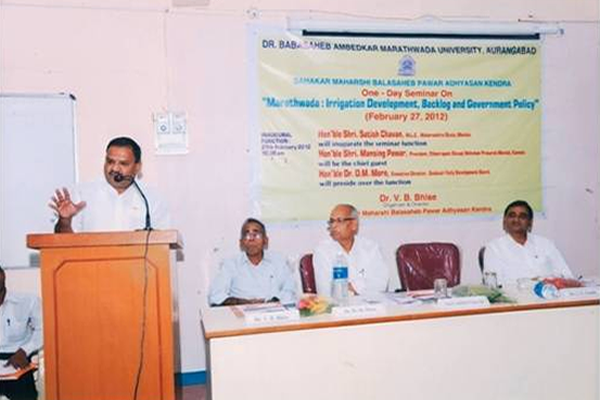
  • Organization of seminar/conference every year
  • Representation of faculty members in almost all committees and Authorities of University
  • Contributed for economic development of Marathwada region
Accolades:
  • The Department of Economics was identified by the UGC for implementing two consecutive phases of the University Leadership Programme during 1982 to 1988
  • UGC had granted the Department Special Assistance Programme (SAP) in 1987 for five years in the first instance and in 1992 for the second instance
  • UGC has further sanctioned an amount of Rs. 24 Lacs under SAP to this Department for the period 2007-2012
  • UGC has further sanctioned an amount of Rs. 60 Lacs under SAP to this Department for the period 2012-2017
  • UGC has Granted Centre with Potential for Excellence in Particular Area (CPEPA) sanctioned an amount of Rs. 2.50 crore to this Department for the period 2016-2021.
  • NIEPA - Warwick Project : " Widening Access to Higher Education (2023-2026)" Grant Sanctioned Rs. 2.5 Crore
Social awareness and extracurricular activities for students

The department organizes the following activities:

  • Blood donation camp
  • Library orientation of M.A. students
  • NSS, sports activities
  • Essay writing & Debate competitions
  • Involvement in group discussions & seminars
  • Presentation by students on Union and State budgets every year
  • Students edit a wall-mount journal on current economic issues every year
  • Educational tour and visit to various research organizations and educational institutions in the country every year
Inception of Tarabai Shinde Women's Studies Center

In 2005, the Department took the initiative to incept the Tarabai Shinde Women's Studies Center under the leadership of Economist Dr. Wandana Sonalkar. The initiative was successful, and the center independently runs an M.A. Programme and one PG Certificate Course in Women's Studies and has been recognized by the UGC since 2009.

History

The Department of Economics is one of the first two teaching and research departments that were established with the inception of the University in 1958. From the beginning, the Department attracted a good number of students. The main source of attraction was the leadership provided by Dr. V. V. Borkar, the first Head of the Department of Economics. He encouraged research activity in the department and himself undertook certain research projects mainly relating to problems of regional development of Marathwada. We are proud to state that his legacy has continued over the years.

The Department of Economics was identified by the UGC for implementing two consecutive phases of the University Leadership Programme during 1982 to 1988. The department introduced the semester system during the academic year 2005-06. In 2005, the Department took the initiative to incept the Tarabai Shinde Women’s Studies Centre. The initiative was successful, and now the center independently runs an MA program and one PG Certificate course in Women’s Studies, and it has been recognized by the UGC since 2009. The University accorded academic flexibility to the PG Departments since June 2007. Under the Academic Flexibility Programme, a credit-based semester system was introduced since 2007 based on a 70:30 pattern. Again in June 2008, a semester system and credit system based on an 80:20 pattern along with Continuous Internal Evaluation were introduced. All the faculty members are actively involved in the revision of curricula every three years. During the academic year 2017-18, the department revised the syllabus of the M. A. course and adopted the Outcome-Based Education Model. The department has introduced one open elective of four credits for P. G. students of all faculties and coursework for Ph. D. students since the academic year 2012-13. The department introduced a choice-based credit system with effect from July 2016 for the M.A. program. A bridge course was added to the course structure of the MA program to strengthen the foundation of economics as admission for the MA program is open for all graduates. Also, a course on the research component has been introduced to enable MA students to handle the research-based project work that they have to submit.

Economics is one of the few departments on the campus of the University that has received generous grants under the UGC University Leadership Programme (1982-88), UGC Special Assistance Programme (1987-1992) in the first instance, UGC Special Assistance Programme (1992-1997) in the second instance, and again UGC Special Assistance Programme was sanctioned to the department in 2006-07 in the first phase, and the second phase was sanctioned as SAP DRS II for the period 2013-18. The Department has now become eligible for the UGC’s Centre for Advanced Studies.

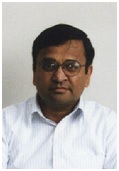
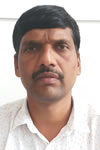
Prof. Bhise

As the University got accredited with an A grade in 2013 and as the department was awarded SAP DRS II, our department became eligible to apply for the UGC’s CPEPA Scheme. In 2016, the Department of Economics took the lead to seek the award of the UGC’s Centre with Potential for Excellence and was successful in getting recognized as a Centre with Potential for Excellence in collaboration with the Department of Political Science & the Department of Sociology.

UGC has Granted Centre with Potential for Excellence in a Particular Area (CPEPA) and sanctioned an amount of Rs. 2.50 crore to this Department for the period 2016-2021.

NIEPA - Warwick Project : " Widening Access to Higher Education (2023-2026)" Grant Sanctioned Rs. 2.5 Crore

Image 1
Image 2

Vision and Mission

To structure the Dr. Babasaheb Ambedkar Marathwada University to be an Epitome of Excellence by creating and imparting time responsive Quality Education to address Changing Scenario, keeping Research and Development at its core, for 'Anyone' at 'Anytime' and 'Anywhere'.

Mission

To prepare students for acquiring applied knowledge of economics to enhance their employability and entrepreneurship.

To undertake quality socio-economic research for regional development and to create socio-economic database on Marathwada.

Objectives

Excellence in teaching-learning and research:

Preparing students for modern-day challenges and global competition and carrying out research with a focus on the issues relevant to the local community is at the heart of the teaching-learning and research process of the department.

Equity and inclusion:

Students enrolled in our department are mainly from deprived sections of society. They are mostly the first in their families to enroll for formal education. Considering this, we are committed to equity and inclusion.

HOD's Desk

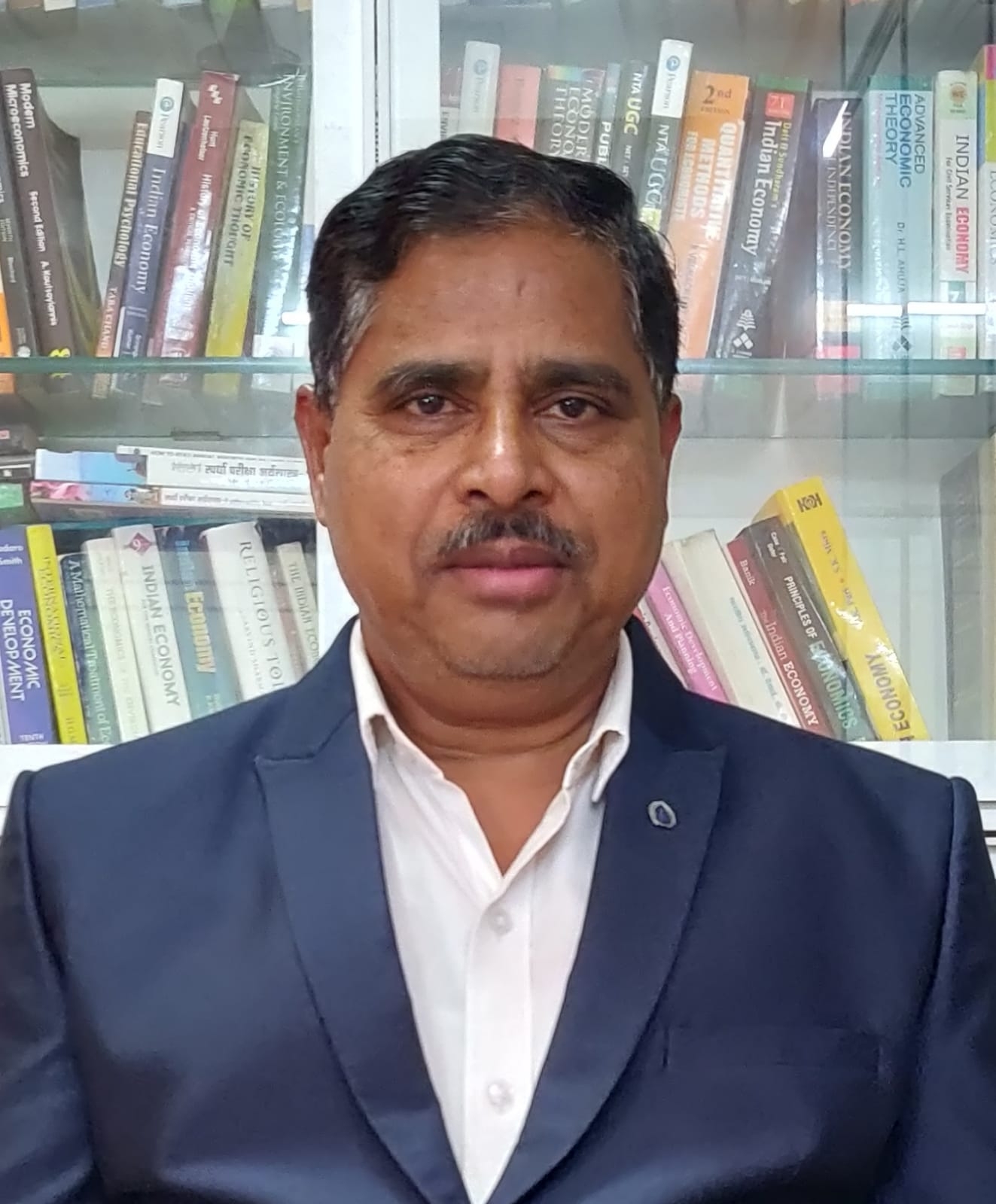
Prof. (Dr.) Ashok S. Pawar

Professor & Head

Phone No. (office): 0240-2403330

Department Phone No.: 0240-2403329

Mobile No.: 9421758357 / 8080891092

e-mail: head.economics@bamu.ac.in

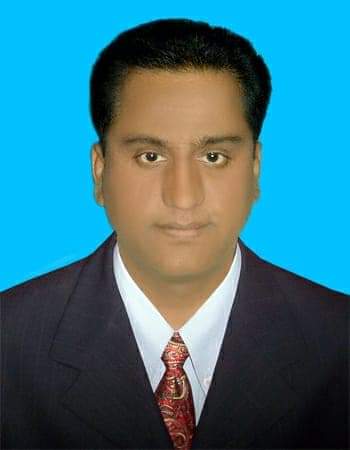
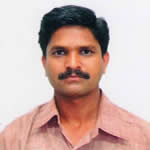
Dr. S.G. Gupta

MOU

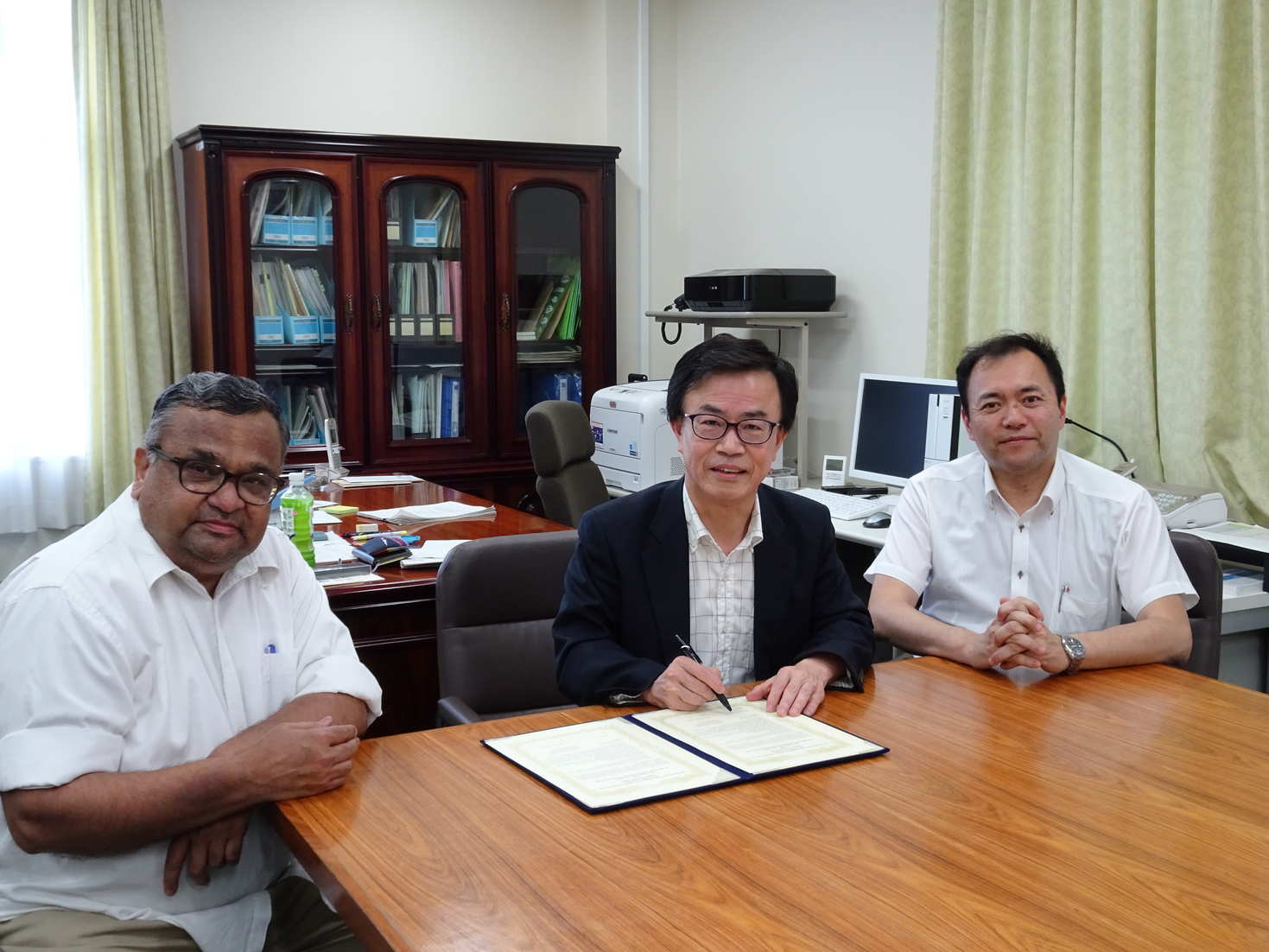
MoU has been signed between the faculty of Economics Kagawa University and our department for the purpose of promoting exchange of faculty members and students, joint research, lectures and symposia.

Image 1

To provide exposure to faculty and students, Prof. Ravindra Ranade, faculty of Economics, Kagawa University, Japan has been appointed as Adjunct Professor to provide exposure to students and to enhance their skills. This is helping the department in development of soft skills and Focusing on ensuring competency based learning outcomes among students and also faculty is getting advice regarding continuous improvement in teaching and research.

Image 1

Department of Economics is in the process of signing an MoU with National Institute of Electronics & Information Technology (NIELIT) to help students seek skills in computer applications in Economics.

Image 1

Courses / Programs

Facilities Available

Contact

Head, Department of Economics

Dr. Babasaheb Ambedkar Marathwada University,
Chhatrapati Sambhajinagar, Pincode - 431 004

Email: head.economics@bamu.ac.in

Head: 0240-2403330 (HOD)

Office: 0240-2403329

Mobile: 9421758357 / 8080891092 (HOD)

Courses/Programs
Admissions
Faculty / Staff
Facilities
Research
Alumni
Achievements
Photo Gallery

Course Structure

M.A. Ist Year Economics Semester (I &II)-NEP-2020 curiculum(click here)

CO Attainment(click here)

Overall Attainment(click here)

Curriculum Review Committee (Head, Faculty members) design the first draft of revision

- Revised curricula is discussed and after making suitable changes, it is approved by departmental committee
- Revised curricula is placed before Board of Studies.
- Industry and academic experts are the members of Board of Studies .
Course Structure
M. A. ( Economics)

MA Programme in economics consists of core courses and generic electives and also dissertation which involves application of economic theory and quantitative analysis to the major areas of study.

After successful completion of MA programme, students become capable of explaining functions of market and prices as allocative mechanism, various theories in macroeconomics and microeconomics, identifying key macroeconomic indicators and measures of economic growth, assessing the role of domestic and international institutions in shaping economies, identifying the role of banking and financial institutions in economic development, identifying role of international trade, and various growth theories, studying various public policies and the success and failure of policies to achieve their intended outcome and applying quantitative reasoning skills to; mention a few.

For getting admitted to the MA programme, the students have to clear a Common Entrance Test.

Program Outcome
Program Outcome of M.A. ( Economics ) (click here)
Admission Process
  • In response to the advertisement for registration (in newspapers and the University Website in the last week of May), interested students will have to register themselves.
  • A duly filled Application Form (available on the University website) should be filled in the prescribed format and submitted to the office.
  • Admission will be done based on the performance of students at the Common Entrance Test (CET). The Entrance test is conducted in the month of June every year.
  1. Procedure for Registration: Interested candidates are required to fill in the online registration form provided on http://bamua.digitaluniversity.ac and submit the printout of the filled-in form along with the necessary attested documents & the prescribed fees to the department.
  2. Original and/or Attested copies of the following documents are essential at the time of admission of M.A.:
    • Photo ID proof as per Govt. of India norms (Voter ID / Aadhar card / Driving License)
    • SSC (High School) Board Certificate as proof of date of birth
    • Mark sheet of SSC and HSC
    • All semesters Grade/Mark sheets of the qualifying examination (Degree)
    • Degree / Provisional certificate (if any) if the degree is completed
    • Transfer Certificate (Original) of Degree
    • Degree Certificate
    • Caste Certificate and Validity Certificate (if applicable)
    • Income Certificate of parent(s)
    • Domicile Certificate
    • Non-Creamy Layer Certificate (for NT-2, NT-3, and OBC candidates)
    • Students who come from the jurisdiction of other Universities should submit a Migration Certificate in original.

Pattern of CET

Students have to appear for common entrance test for admission to M. A. Course as prescribed the the CET Cell of the university.

Eligibility

Eligibility - M.A. ( Economics)
  • Admission to the M.A. course is given according to the social reservation policy of the Government of Maharashtra and as per the following weightage scheme:
    • 50% weightage is given to marks obtained at U.G.
    • 50% weightage is given to marks obtained at CET.
  • Students from B.A. (with Economics) and any graduate degree holder are eligible for getting admission in M.A. Economics.

Intake/Reservations

Intake Capacity
  • Master of Arts (M.A.) - 70 students
  • Doctorate of Philosophy (Ph.D.) – as per UGC and University guidelines.
Pattern of Course

Semester or Annual

M.A. – Semester Pattern (NEP-2020)

Duration

M.A. – Two years (24 months)

Reservations

For Economics:

Category-wise Reservation will be as per the Govt. of Maharashtra and Dr. Babasaheb Ambedkar Marathwada University guidelines.

Distribution
SSC Board HSC Board Degree % of Seats
Maharashtra Maharashtra Dr. BAMU 80%
Maharashtra Maharashtra Other 10%
Other Other Other 10%

Note: 0% Seats in each Course will be reserved for Women Candidates.
3% Seats in each Course will be reserved for Physically Handicapped.

Over and Above Quota
Category No. of Seats
Service Man/ Ex-Service Man/ Freedom Fighter 02
Sports/ Debit Competition/ Youth Festival/ Any other National Level Competition 01
SRTMU 02
Migrated Service Man from Outside the University Region 02
Foreign Students (20% of intake capacity)
Son/Daughter of Martyr Soldier/Officers of Kargil War 01

Important Dates (Tentative)

Academic Calendar for 2024-25

Course/Program Fees

Scholarships

Students can apply for the government scholarships like GoI, EBC, and Merit Scholarship of University scholarships.

Post Graduation
  • His Excellency Honourable Chancellor’s Gold Medal (by rotation)
  • Seth Ratanlal Kabra Prize
  • R. M. Ambewadikar Memorial Prize
  • G. S. Kalyankar Memorial Prize
  • Earn and Learn Scheme
  • GOI Scholarship
  • Eklavya Scholarship
  • Government of Maharashtra Open Merit Scholarship
  • Concession in Tuition Fee for Economically Backward Classes (EBC)
M. Phil.
  • Earn and Learn Scheme
  • GOI Scholarship
  • UGC’s Rajiv Gandhi Fellowship for SC
  • National Fellowship for ST students
  • National Fellowship (NF) for OBC students
  • Maulana Azad National Fellowship
  • UGC Junior Research Fellowship (NET)
Ph. D.
  • Earn and Learn Scheme
  • GOI Scholarship
  • UGC’s Rajiv Gandhi Fellowship for SC
  • National Fellowship for ST students
  • National Fellowship (NF) for OBC students
  • UGC NET Fellowship
  • Maulana Azad National Fellowship
  • ICSSR Research Fellowship
  • Two fellowships instituted by Research Center on Rural Problems
  • Two fellowships instituted by Sahakar Maharshi Balasaheb Pawar Research Centre
  • Two fellowships instituted by Vasantrao Naik Research Centre
  • Earn and Learn Scheme
  • University Scholar Fellowship, Shetkari & Shetmajur Palya Scholar Fellowship
Faculty/Staff
Name Specialization
Dr. A. S. Pawar

Dr. A. S. Pawar

Professor & Head

Qualification: M. A., B.Ed, Ph. D., Rashtra Bhasha Pandit

Resume
Indian Economic Policy, History of Economic Thoughts, Demographic Golden History of Gypsy-Nomadas – Banjara, Agriculture Economics
Dr. Dhanashri J. Mahajan

Dr. Dhanashri J. Mahajan

Senior Professor

Qualification: M.A. Ph.D.

Email: -

Contact: 0240-2372238(R)

Resume
International Economics, Public Economics, Industrial Economics
Dr. S. S. Narwade

Dr. S. S. Narwade

Senior Professor

Qualification: M.A.,NET, Ph.D.

Email: ssnarwade22@gmail.com

Contact: 09423155867

Resume
Macro Economics, Development Economics
Dr. P. V. Deshmukh

Dr. P. V. Deshmukh

Professor

Qualification: MA,BEd, SET, Ph.D.(Eco.)

Email: pvdeshmukh.economics@bamu.ac.in

Contact: 09403761613

Resume
Mathematical Economics, Quantative Techniques, Research Methodology
Dr. C. N. Kokate

Dr. C. N. Kokate

Professor

Qualification: M.A. ,SET, Ph.D.

Email: cnkokate@yahoo.com

Contact: 09921153521

Resume
Agricultural Economics, Financial Markets
Dr. Krutika Khandare

Dr. Krutika Khandare

Associate Professor

Qualification: M.A.,Ph.D.

Resume
Micro Economics, Econometrics, Research Methodology
Dr. Balasaheb Sarate

Dr. Balasaheb Sarate

Assistant Professor (Contractual)

Qualification: M.A.,SET, Ph.D.

Resume
-
Dr. Padmashri S. Patil

Dr. Padmashri S. Patil

Assistant Professor (Contractual)

Qualification: M.A.,SET, Ph.D.

Resume
-
Dr. Nagnath Kolhe

Dr. Nagnath Kolhe

Research Assistant

Qualification: M.A.,SET, Ph.D.

Resume
-
  • Annex Building constructed under UGC’s SAP scheme.
  • One Seminar Hall.
  • Four class rooms
  • Computer lab.
  • Independent cabins for the faculty with computer & internet facility.
  • Independent Office, ladies room.

Learning Resources:
  • Departmental library with more than 900 books.
  • Reading room in the department.
  • Central Library and reading room
  • Access to E- Library.
  • CPEPA Library 900 books.

IT Infrastructure:
  • Computer lab with Internet connectivity
  • Statistical Package for Social Sciences (SPSS) software
  • 27 computers (12 in computer lab, 15 for faculty & office)
  • Two LCD Projectors (one fixed in the class room)
  • One K-YAN system.
  • One smart board, video camera, still camera, voice recorder.
  • One photocopy machine, Scanner, Fax and Printers.
  • Mikes and Public Address System.

  • Indebtedness, agrarian distress, social inclusiveness, social security, food security, financial positions of Panchayat Raj institutions
  • Irrigation water management
  • Unorganised Labour
  • Water conservation in dry areas of Marathwada
  • Empirical testing of trade theory
  • Women and work
  • Socio-Economic conditions of deprived sections of society
  • Bio-gas energy
  • Rural Development
  • Economic Development of Marathwada Region

Selected Research Articles

Dr. A. S. Pawar

1. The Maluki Banjaran: A True Warrior Queen Of Banjara Society - Dr. Ashok Shankarao Pawar

ABSTRACT

Banjaras have a unique culture of their own and spread all over the country. Banjara is one of the indigenous tribes of India. There are diverse opinions about the origin of Banjaras but from the language, dressing pattern, clans, and culture one comes to know that they belong to Rajasthan. The identity of the community is unique due to its culture. There seems to be an impact of modernization and globalization on the age-old culture of the tribe. It is very difficult to state the accurate history of the tribe. Its history goes back to about five hundred years. It is an ethnic nomadic tribe with rich cultural heritage. Being the richest country in the world, we used to call India the golden bird it is true that the Banjaras have contributed a lot to it. The paper focuses on the golden legend of Maluki Banjaran is a true warrior queen of banjara society. The use of history of the Malluki Das has been as a freedom fighter, a role model in different contexts and a symbol, as well as an inspirational source of women empowerment. There is also a political use of the Malluki Das.

KEYWORDS: Banjara, Spirituality, Malluki Das, Non-violent, Copper Plate.

2. Acharya Kotilya : NEP20 Towards the Indian Knowledge System - Dr. Ashok Shankarao Pawar

Abstract:-

More than 75 years have passed since India got independence. However, the sustainable development and higher education rates of some castes and tribes in India are disappointing. It is a matter of concern that some backward tribes are today struggling to achieve their sustainable development and increase the rate of higher education. In this research paper, India's sustainable development and Indian knowledge system has been reviewed.

Keywords:- Indian Knowledge System, Kautilya, NSP 2020, Education Policy.

Dr. D. J. Mahajan

Revealed Comparative Advantage from Trade among SAARC Countries: An Empirical Analysis Authors Sneha Pandit Jadhav, Dr. Dhanashri J. Mahajan

Abstract: The analysis of comparative advantage has been undertaken using the Balassa (1965) index of revealed comparative advantage for six digit level of HS classification. This study analyses the competitiveness and the pattern of trade flows from India to SAARC member countries. Regional integration in SAARC has significantly affected trade patterns, comparative advantage and competitiveness. In the light of evidence, some policy implications are drawn.

Keywords: Revealed Comparative Advantage (RCA), Trade, Specialization, Competitiveness, Balassa Index

Dr. S. S. Narwade:

1. Agricultural Growth Analysis – A Study of Maharashtra State - Dr. Sunil Sheshrao Narwade

ABSTRACT

The present paper attempts to analyze agricultural growth of principle crops in Maharashtra state of India during the pre- and post-reform period up to 2009-10. The agricultural performance was evaluated on the basis of estimates of compound annual growth rates and coefficients of variation of area, production and yields per hectare of principal crops in Maharashtra state. The study found that total foodgrains production which decelerated during the early post-reform period over pre-reform period, picked up during later post-reform period. The output instability in total foodgrains remained low during all the periods under study. The output growth rate of wheat maize and sugarcane crops has accelerated during the post-reform periods mainly due to area expansion. In pulses arhar and gram improved output growth performance during post-reform periods. But the coarse cereals like bajra, small millets and ragi have registered dismal output performance during the post-reform periods due to loss of area.

Key Words – Pulses Growth, Cereals production, Foodgrains Growth, Maharashtra agriculture

2. Impact of Monetary Policy on Bank Credit since Reforms Period - Mahendra R. Mishra1* and Sunil S. Narwade2

ABSTRACT

Does Bank Rate, Cash Reserve Ratio (CRR) and Statutory Liquidity Ratio (SLR) affect the bank credit? This question always comes in the mind of researchers, economist, academicians, and policymakers and to get the answer to it, many research activities and projects are carried out by them. This study is also on the same line. The study intends to examine the impact of monetary policy on bank credit since reforms period. The study uses multiple regression models to test the selected banking variables by using the time series data collected from RBI. The study found that there is an inverse relationship between CRR and bank credit, SLR and bank credit but there is no association between bank rate by RBI and bank credit by the scheduled commercial banks in India since reforms period.

Keywords: Bank credit, bank rate, cash reserve ratio, statutory liquidity ratio

3. Access To Government Health Facilities In Marathwada: A Case Study Of Tribal Women - Manisha Dhanedhar and Sunil S. Narwade

ABSTRACT:

The present paper is an attempt to study the availability of health facilities to tribal women in Aurangabad district of Maharashtra, India. It was observed that majority of the tribal women were unaware of the various schemes for pregnant women. Majority of the pregnant tribal women were not regularly visited by health staff. There is a need of spread of awareness of the government schemes among tribal women through education and mass awareness programmes. It is essential that nurses and other health workers should live in villages where primary health centres are located.

Key Words: Janani suraksha yojana (JNY), NRHM, tribal health,

JEL classification: H55, H75, I14, I18

4. Pattern of Scheduled Castes Employment in Rural Maharashtra - Sunil Narwade

To Cite this Article

Sunil Narwade (2023). Pattern of Scheduled Castes Employment in Rural Maharashtra. Indian Journal of Global

Economics and Business, 2: 1, pp. 1-22.

Abstract: The present study is an attempt to find out link between caste and employment in rural Maharashtra. The primary data was collected through schedule from 253 rural households of different social groups from all six divisions in Maharashtra. The study found differences among various social groups in access to land and employment. The scheduled castes were landless, depended upon farm and non-farm casual unskilled low wage mployment and fewer in farm and non-farm selfemployment. Government land or common land should be distributed among landless scheduled castes agricultural labourers on priority basis. There should be establishment of industries in rural areas to create skilled jobs. Giving access to credit and encouraging self-employment activities among scheduled castes can be an important initiative.

Keywords: Caste, Gender Discrimination, Land Holdings, Rural Employment

JEL Codes: J31, J71, Q15

5 . Patterns of Employment in Rural Marathwada - Sunil Narwade

Abstract

The present study is an attempt to find out the patterns of rural employment in Marathwada. The total 287 households from twelve villages of six districts of Marathwada were selected for the collection of primary data to find out the patterns of rural employment in Marathwada. The study used descriptive statistics for the purpose of data analysis. To find out the statistical difference in land holdings, pattern of employment among various social groups the chi-square test (5 % significance level) is used. The multinomial regression analysis is used to analyse determinants of pattern of employment in rural Marathwada. The study found high significant differences among various social groups in case of access to land, employment pattern in rural Marathwada and caste, landholdings are the significant determinants of employment pattern in rural Marathwada. Most of the Scheduled castes were landless and depended upon farm and non-farm casual wage employment. Migration was also relatively high among scheduled castes for casual employment. To augment the operational holdings of small and marginal farmers, the process of land lease in and lease out should be eased. The government land or common land should be made available to landless scheduled castes on prioirity basis. Giving access to credit and encouraging self-employment activities in partnership with other social group members can be an important initiative to generate non-farm self-employment among scheduled castes.

Keywords: Rural Landlessness, Farm Casual Employment, Non-Farm Casual Employment, Non-Farm Self Employment, Rural Migration

6. Children And Women Malnutrition Among Scheduled Tribes In Marathwada (Maharashtra) - Dhanedhar Manisha Eknathrao1 and S. S. Narwade

ABSTRACT: This paper presents nutritional and health status of women and children with an objectives to assess the effect of this on nutritional condition of children and causal correlation with them. The research study is based on a sample of 240 tribal women with their 316, 05 years old children to analyses the nutritional level. The malnutrition proportion of children has indicated a strong correlation with the mothers having low BMI and marriage age and positive association with mother education level. The study also found relationship between breastfeeding practices & nutrition level of tribal children.

KEYWORDS: Tribal Women, Children Malnutrition, Tribal Malnutrition.

Dr. P. V. Deshmukh:

1. The Causal Relationship Between Stock Prices And The Demand For Money In Saudi Arabia - Dr. P. V. DESHMUKH

ABSTRACT

The aim of the research is to test the causal relationship between stock prices and the demand for money in Saudi Arabia during (1985-2019). The ARDL method was used to test the existence of a relationship between variables in the long run, in addition to testing the existence of causality between variables using Granger causality. The results showed a positive relationship between stock prices and the demand for money in Saudi Arabia. Granger's causality showed that there is no causality between stock prices and the demand for money in both directions. This result differs from previous studies due to the difference in data and measures used. The results emphasized the importance of not ignoring this variable when estimating the demand for money function because it will lead to biased results. The researcher recommends conducting a study for the same variables used in this research using other scales.

KEYWORDS: Stock, Demand for Money, ARDL & Granger Causality

2. Determinants of the Profitability of Insurance Companies in Saudi Arabia - Mohammed Abduljalil Alshadadi1,2*, P. V. Deshmukh3

ABSTRACT

The study aims to identify the determinants of profitability in Saudi insurance companies. For this purpose, the data were collected about the study variables (company size, debt ratio, loss ratio, retention ratio, investment income) as independent variables. To measure its impact on the profitability of insurance companies, expressed as return on assets (ROA) and return on equity (ROE). Using Panel Data for 25 insurance companies in Saudi Arabia during (2010-2016), the random-effects model (REM) was used to examine the relationship between the profitability of insurance companies and the independent variables. The study concluded that the profitability of insurance companies is significantly associated with the size of the insurance company, debt ratio, and the rate of actual loss. The results also showed that the volume of written premiums is the most influential variable on the profitability of insurance companies, followed by the indebtedness rate and then the actual loss.

Keywords: Insurance, profitability, panel data, random effects.

Dr. C. N. Kokate

1. Analysis Of Recent Trends And Patterns Of Social Sector Expenditure In India: Special Reference To Health And Education

Gunwant Gadbade1 and Chandrakant Kokate2

ABSTRACT: Considering country’s demographic dividend of a largest young population in the working age class, progress in social infrastructure such as education, health services, are needed for improvement in both quality of life and productivity of the economy. The levels of public expenditure

on social sector services indicate the commitment of the government towards social sector development. The recent government reports and data claims that, the public expenditure in social sector has increased. In this context in the current paper we made an attempt to analyse the recent

trends of public expenditure on education, health and social sector and its composition. We found that in recent years the public expenditure in social sector and health has increased gradually, but decreased in sector. It reveals that the Indian states are incurring highest spending on revenue account and the capital expenditure constitutes very small portion of total expenditure on education, health and social sectors.

KEYWORDS: Public expenditure on social sector, Health, Education, Human Development, Composition of public expenditure on social sector.

JEL CL AS SIFICATION: Health, Education and Society, Public Economics, Development Economics, Welfare Economics.

2. Gender Imbalance in India: Causes and Emerging Issues - Chandrakant N. Kokate

Abstract: The provisional data of 2011 Census has once again highlighted the problem of severe sex imbalance in the country, especially in 0-6 age group. According to Census of 2011, the sex ratio in 0-6 year’s age group has declined to 914 females per 1000 males as compared to 927 in 2001. It shows an increasing trend of male preference as compared to female in the last decade. The phenomenon of son preference is coupled with death of young females due to lack of medical care, under nutrition, female infanticide, and sex selective abortions. Sen (1992, 2003) first addressed the disturbing trend by

highlighting that millions of females in India are missing because of widespread neglect in health care, nutrition and prenatal care. The steep decline in sex ratio in northern and western states is a cause of worry. Technological developments permitting sex-selective abortions have seriously aggravated sex imbalance in these states. The trend of rapid decline in sex ratio has given rise to serious social, demographic and cultural problems. This present paper attempts to explain the causes for gender imbalance and its implications on the society as a whole.

KEYWORDS: Sex-ratio, Nutrition, Son-preference, Selective abortions, Health care

Dr. K. V. Khandare

Negotiating Scarcity: Water Management in Draught Affected Marathwada

Abstract: The present paper deals with the agricultural strategies employed by the farmers in the region, that have immensely helped them to make their farming more productive when other farmers in the region have struggled to achieve it for years. It is observed that there are certain farmers who with their systematic planning, management of land and water have been successful in gaining outstanding crop and fruit production even in drought conditions. It is essential for us to concentrate on the farmers and their ways of doing agriculture. The main objective of present research is to evaluate the agricultural management of successful farmers in drought affected Marathwada region in Maharashtra state.. The primary data of 200 farmers is collected. And it was found from the survey that water, land, crop and market management with the proper knowledge is essential to solve the problem of scarcity of resources. Economic analysis of solar energy technology in rural Marathwada - Dr. Krutika Khandare Abstract: The main objective of present research is to workout the benefit cost analysis of solar energy technology in Marathvada and to assess the operational problems faced by the solar energy technology adaptors. The study is confirmed 800 household using solar technology from Osmanabad from maradwara region in Maharashtra state. A questionnaire was administrated for collecting the primary data from the chosen household. The three investment criteria name limit present value npv benefit cost ratio(BCR) and pay back period PBP we are used to judge the sun is of investment from the economic point of view. It is found from the data that solar plant is economically visible at 10% discount rate because at this rate NTV - 145.14 is positive and BCR 1.0032 is greater than one. The payback period of plant is 5 years. That means investments in such plants can be fully recovered in a period of 5 years. In order to determine internal rate of return different trial wear taken and IR is found at 10.074% discom rate.


Publication Output

Coming soon

Thurst Areas

  • Thrust area of the research under SAP-DRS-I & II and Centre with Potential for Excellence in Particular Area (CPEPA) is 'Rural Development' particularly "Rural Development in Backward Districts of Marathwada”

Research Projects

NIEPA - Warwick Project : " Widening Access to Higher Education (2023-2026)" Grant Sanctioned Rs. 2.5 Crore

UGC - Centre with Potential for Excellence (2016-2022)

Grant Sanctioned Rs. 2.5 Crore

Centre in Rural Development in Backward Districts of Marathwada

Collaborating Departments (Economics, Political Science, Sociology )

University has became eligible for status of University with Potential for Excellence (UPOE)

UGC SAP DRS - I (2006-07) - Rs. 24 Lacs,   SAP DRS - II (2013-18) - Rs. 60.0 Lacs

UGC Special Assistance Programme (1987-1992 & 1992-1997)

UGC University Leadership Programme (1982-88),
 

Major Research Projects (2012-13 To 2022-23)

Acad-Year

Name of the Project

Name of the Principal Investigator

Duration of the project

Funding Agency

Total amount of funds

2012-

Efficacy of Policies for Industrialization of Marathwada Region

Dr. D. J. Mahajan

2012-2014

UGC

6.44 Lacs

2013-

Evaluation of MGNREGA Scheme in Marathwada Region

Dr R S Solunke

2013-2014

ICSSR

6.00 Lacs

2013 - 2015

Economic Analysis of Bt Technology: A Case Study of Bt Cotton in Marathwada

Dr. V. B. Bhise

2013 - 2015

ICSSR

8.00 Lacs

2013-2018

Special Assistance Programme Department Research Support (DRS-II)

Dr. S. S. Narwade

2013-2018

UGC

60.00 Lacs

2014 - 2016

A Socio-Economic Study of Agricultural Labourers in Marathwada Region

Dr. S. S. Narwade

2014 - 2016

ICSSR

8.00 Lacs

2016

UGC CPEPA Centre in Rural Development in Backward Districts of Marathwada

Dr. D. J. Mahajan 

2016

UGC

2 .5 cr

2018-19

Socio - Economic Study of Scheduled Tribes in Hingoli District

Dr. C. N. Kokate

02 Years

UGC - CPEPA

5.5 lacks

2018-19

Socio-Economic Exclusion: A Study of Women in Unorganized Sector

Dr. K. V. Khandare

1Year

Maharashtra State Women Commission

1.75 lacks

2019-20

Pattern of Employment in Rural Marathwada

Dr. S. S. Narwade

1 Year

UGC- CPEPA

4.5 lacks

2019-20

Does Panchyatraj turly Empower the Powerless? Exploring Inclusion and exclusion in Rural Development in Marathwada

Dr. A. S. Pawar

1 Year

UGC - CPEPA

4.5 lacks

2019-20

Negotiating Scarcity  A Study of Management Strategies of Successful Farmers in Drought Affected Marathwada Region

Dr. K. V. Khandare

02 Years

ICSSR

6.90  lacks

2021-22

Pattern of Rural Employment among Scheduled Castes in India

Dr. S. S. Narwade

02 Years

ICSSR

6.30 lacks


Research Scholar

Research Project Fellow
SN Name of the Students Fellowship Category Awarded Year Course
1Dr. Salve Prakash VankarPost Doctoral Fellowship, ICSSR, New DelhiSC2017-18PDF
2Dr. Ubale Sonal AshokPost Doctoral Fellowship, UGC, New DelhiSC2017-18PDF
3Kale Madhukar MurlidharMoulana Azad National Fellowship for Minority Students (MANF)SC2018-19Ph.D.
4Jayabhaye Yogita VaijinathNational Fellowship of Students of Other Backward Classes (OBC)OBC2018-19M. Phil.
5Dr. Patil Sadhana BhousahebPost Doctoral Fellowship, ICSSR, New DelhiOPEN2019-20PDF
6Wagh Champawati DattaChhatrapati Shahu Maharaj Research, Training and Human Development Institute (SARTHI)SEBC2019-20Ph. D.
7Bhairat Soni HanumantChhatrapati Shahu Maharaj Research, Training and Human Development Institute (SARTHI)SEBC2019-20Ph. D.
8Kadam Ashvini GaneshraoChhatrapati Shahu Maharaj Research, Training and Human Development Institute (SARTHI)SEBC2019-20Ph. D.
9Mhaske Geeta BapuraoChhatrapati Shahu Maharaj Research, Training and Human Development Institute (SARTHI)SEBC2019-20Ph. D.
10Shinde Sharad BhausahebChhatrapati Shahu Maharaj Research, Training and Human Development Institute (SARTHI)SEBC2019-20M. Phil.
11Dabhade Pandurang SudamChhatrapati Shahu Maharaj Research, Training and Human Development Institute (SARTHI)SEBC2019-20M. Phil.
12Shinde Deepak BabanraoChhatrapati Shahu Maharaj Research, Training and Human Development Institute (SARTHI)SEBC2019-20M. Phil.
13Gaikwad Dattatray ShivajiChhatrapati Shahu Maharaj Research, Training and Human Development Institute (SARTHI)SEBC2019-20Ph. D.
14Dalve Ram GovindChhatrapati Shahu Maharaj Research, Training and Human Development Institute (SARTHI)SEBC2019-20M. Phil.
15Kadam Ravindra BanshiChhatrapati Shahu Maharaj Research, Training and Human Development Institute (SARTHI)SEBC2019-20Ph. D.
16Chavan Kuldeep NarayanChhatrapati Shahu Maharaj Research, Training and Human Development Institute (SARTHI)SEBC2019-20M. Phil.
17Gande Ganesh HaribhauChhatrapati Shahu Maharaj Research, Training and Human Development Institute (SARTHI)SEBC2019-20Ph. D.
18Naik Rahul SahebraoChhatrapati Shahu Maharaj Research, Training and Human Development Institute (SARTHI)SEBC2019-20M. Phil.
19Tambe Rameshwar AnnasahebChhatrapati Shahu Maharaj Research, Training and Human Development Institute (SARTHI)SEBC2019-20Ph. D.
20Mevhankar Ambadas GajananChhatrapati Shahu Maharaj Research, Training and Human Development Institute (SARTHI)SEBC2019-20M. Phil.
21Awchar Dnyaneshwar UddhavraoChhatrapati Shahu Maharaj Research, Training and Human Development Institute (SARTHI)SEBC2019-20M. Phil.
22Kharat Narayan DashrathBabasaheb Ambedkar Research and Training Institute (BARTI)SC2019-20M. Phil.
23Waghmare BhimraoBabasaheb Ambedkar Research and Training Institute (BARTI)SC2019-20M. Phil.
24Shinde AmolBabasaheb Ambedkar Research and Training Institute (BARTI)SC2019-20M. Phil.
25Hatekar ArvindBabasaheb Ambedkar Research and Training Institute (BARTI)SC2019-20M. Phil.
26Ingle Karankumar AnilNational Fellowship for Scheduled Caste StudentsSC2020-21M. Phil.
27Khandare Umesh GaneshSARTHISEBC2021-22M. Phil.
28Ghogare Sunita SambhajiSARTHISEBC2021-22M. Phil.
29Shelke Amol ShivajiSARTHISEBC2021-22M. Phil.
30Jadhav Dharmraj ManikraoSARTHISEBC2021-22M. Phil.
31Waghmare Sangeeta PrabhakarBARTISC2021-22M. Phil.
32Gawai Sonaji HimmartaoBARTISC2021-22M. Phil.
33Narwade Manorama KailashBARTISC2021-22M. Phil.
34Kolhe Pruthviraj BhimraoBARTISC2021-22M. Phil.
35Kamble Satish ChanduBARTISC2021-22M. Phil.
36Jadhav Pravin ArjunBARTISC2021-22Ph. D.
37Gore Krishna GangadharMJPRF-2021OBC2021-22Ph. D.
38Chavan Manisha BhimraoMJPRF-2021OBC2021-22M. Phil
39Khake Radhika VishwambharMJPRF-2021OBC2021-22M. Phil
40Kinolkar Dnyaneshwar KashinathMJPRF-2021OBC2021-22M. Phil
41Udarbhare Mukunda SheshraoMJPRF-2021OBC2021-22M. Phil
42Nagare Vitthal HaribhauMJPRF-2021OBC2021-22M. Phil
43Gaikwad Ashok ManikraoMJPRF-2021OBC2021-22M. Phil
44Kharat Santosh SubhashBARTISC2022-23M. Phil.
45Wagh Vidyanand VikramraoMAHAJYOTIOBC2022-23Ph. D.
Alumni

Alumni Association of the department is registered with the charity commissioner on 23 January 2019. (Reg. No. MAH-49/19). Total contribution of alumni is Rs. 80479/- till 31 March, 2024. More than 200 books are provided by the alumni to the departmental library.

S.N. Name Position
1 Prof. Sukhdeo Thorat Ex Chairman, University Grants Commission, Bahadur Shah Zafar Marg, New Delhi: Chairman, ISCR, New Delhi.
2 Hon. Baburao Marlapalle Retd. High Court Judge, Government of Maharashtra, Mumbai
3 Dr. V.B.Ghuge Ex-Vice –Chancellor of Dr. B. A. M. University, A’bad, Purnadwet, Vijayshri Colony, N-5, J-sector, CIDCO, Dist. A’bad
4 Prof. Dr. R. P. Kurulkar Ex-Chairman, Marathwada Statutory Development Board, Government of Maharashtra
5 Dr. R. S. Deshpande Director, Institute for Social & Economic Change, Nagarbhavi, Bangalore 42
6 Prof. Dr. S. N. Busi Commissioner, Excise Department, GOI
7 Dr. (Mrs.) Saroj Ramarao Director, Statistics and Planning, Hyderabad
8 Dr. Sarjerao Thombre Ex-Member, State Planning Board, Member IInd irrigation Commission, Government of Maharashtra;
9 Prof. H.M.Desarda Ex-Member, State Planning Board, Government of Maharashtra
10 Dr. M. K. Datar Director, IDBI
11 Dr. P. R. Kulkarni Asst. General Manager, SIDBI
12 Dr. I. D.Alte Ex- Principal, Milind College of Arts, Dist. Aurangabad
13 Shri. D. B. Dandge Retd. Joint Commissioner, Government of Maharashtra
14 Dr. R.B.Kanhere Ex-Joint Director, Higher Education, Maharashtra
15 Dr. Ramesh Dandge Professor & Head, Department of Economics Shivaji University, Kolhapur.
16 Dr. Wandana Sonalkar Ex. Professor & Director, Womens’ Studies Centre, Tata Institute of Social Sciences, Mumbai
17 Dr. S. T. Sangle Member (WR Economy), Maharashtra Water Resources Regulatory Authority, Government of Maharashtra.
Achievements
Achievements by Teaching Staff:
Acad-Year Name of Faculty Members Achievements
2019-20 Dr. Ashok Shankarrao Pawar International Education Research Excellence Award with Gold Medal by Global Achievers Foundation.
2019-20 Dr. Purushottam Vishnu Deshmukh Recognition by Government of Maharashtra as Sub Committee Member of Marathi Arthshashtra Paribhasha Kosh Modification
2020-21 Dr. Dhanashri Jayant Mahajan DEAN, Faculty of Humanities (Additional Charge)
2020-21 Dr. Ashok Shankarrao Pawar Raosaheb Nathoba Dahiwal Utkrushtya Vangmay Puraskar 2021
2022-23 Dr. Dhanashri Jayant Mahajan Contribute to Marathi Vishwakosh
2022-23 Dr. Dhanashri Jayant Mahajan Member of BoS of Study in Economics in MGM University
2022-23 Dr. Chandrakant Namdevrao Kokate Treasurer of Dr. Babasaheb Ambedkar Marathwada University, Chh. Sambhajinagar, TCS
2022-23 Dr. Chandrakant Namdevrao Kokate Senate Member of Dr. Babasaheb Ambedkar Marathwada University, Chh. Sambhajinagar
2022-23 Dr. Sunil Sheshrao Narwade Member of BoS in Dhananjayrao Gadgil College, Satara
Achievements by Students:

A) Employment :

SN Name of the Students Job Joining Year Course
1 Dr. Wakode Jyoti Sahdev Assistant Professor, Vidya Vikas Mandal, Sitaram Govind Patil College, Sakri, Dist. Dhule 2019-20 M. A., M. Phil. Ph. D.
2 Mr. Shingare Akshay Assistant Professor, R. A. Podar College of Commerce and Economics, Matunga, Mumbai 2019-20 M.A., Ph. D. (Appi)
3 Mr. Katare Badrinath Assistant Professor, Department of Economics, Bhavans College, Andheri, Mumbai 2019-20 M. A.
4 Dr. Shivshankar Lekurwale Assistant Professor, Rayat Shikshan Sanstha, Dahiwadi College, Dahiwadi, Dist. Satara 2021 M. A., M. Phil. Ph. D.
5 Dr. Dalve Dashrath Assistant Professor, Pathardi College, Ahmednagar 2022 M. A., M. Phil. Ph. D.
6 Pote Shekurao Assistant Professor, RP Gogate College of Arts and Science, Ratnagiri. 2023 M. A., M. Phil. Ph. D.
7 Atmaram Mulik Assistant Professor, Venutai Chavan College, Karad, Satara 2023 M. A., M. Phil. Ph. D.
8 Dr. Budhwant Ram Assistant Professor, KCE's Societies, Moolji Jaitha College (Autonomous) Jalgaon. 2023 M. A., M. Phil. Ph. D.
9 Dr. Chate P. V. Assistant Professor, CT Bora College, Shirud, Pune 2023 M. A., M. Phil. Ph. D.
10 Dr. Fartade Shriram Assistant Professor, Shri Binzani City College, Nagpur 2023 M. A., M. Phil. Ph. D.
11 Sawarkar Sarita Assistant Professor, Maghad University, Bodhgaya, Bihar 2024 M. Phil
12 Jaybhaye Yogita Assistant Professor, Sinhgad Institute of Management, Vadgaon (BK), Pune 2024 M. A, M. Phil
13 Sirsath Haripandit Assistant Professor, Sinhgad Institute of Management, Vadgaon (BK), Pune 2024 M. A.
14 Khetri Mulayam Assistant Professor, Sinhgad Institute of Management, Vadgaon (BK), Pune 2024 M. A, M. Phil
15 Kale Sambhaji PG Teacher, Aurangabad 2023 M. Phil.
16 Mr. Wagh Vishnu Govinda PSI, Maharashtra State 2019-20 M. A.
17 Dhumal Bajirao Police Sub Inspector (PSI), Maharashtra State 2024 M. A.
18 Jadhav Sushma Subhash Investigator, Directorate of Economics & Statistics 2023 M. A.
19 Anurag Muli Business Analyst, HSBC Bank, Kolkata 2021 M. A.
20 Dhere Ajit Data not provided Data not provided Data not provided

B) NET / SET :

SN Name of the Students Achievements Details
1Bhalerao Nikhil KisanNET June - 2019
2Dr. Nagnath V. KolheSET 23 June, 2019
3Kharat Narayan DashrathSET 23 June, 2019
4Mevhanakr AmbadasSET 23 June, 2019
5Chavan PapajiSET 23 June, 2019
6Athwale Yuvraj AbhimanyuSET 23 June, 2019
7Kadam Ravindra BansiSET 23 June, 2019
8Lakhan SuryawanshiSET June, 2019
9Gore KrushanSET 23 June, 2019
10Raut AsmitaSET June, 2019
11Bhutekar GovardhanSET June, 2019
12Nikam GautamSET June, 2019
13Ghadling Nivrutti S.SET 23 June, 2019
14Shahane AshwiniSET 23 June, 2019
15Bahirat SoniSET June, 2019
16Autade PratibhaSET June, 2019
17Tamboli ReshmaSET June, 2019
18Jaibhaye YogitaSET June, 2019
19Tadge YogeshSET June, 2019
20Ingale Karankumar A.SET June, 2019
21Kharat Narayan DashrathNET June - 2019
22Mevhanakr AmbadasNET June - 2019
23Salve PrasenjeetNET June - 2019
24Muli AnuragNET June - 2019
25Kopurwad Umesh ShankarraoSET DEC - 2020
26Karnkumar Anil IngaleNET September 2020
27Kharat Narayan DashrathNET December 2019
C) Fellowship 
SN Name of the Students Fellowship Category Awarded Year Course
1 Dr. Salve Prakash Vankar Post Doctoral Fellowship, ICSSR, New Delhi SC 2017-18 PDF
2 Dr. Ubale Sonal Ashok Post Doctoral Fellowship, UGC, New Delhi SC 2017-18 PDF
3 Kale Madhukar Murlidhar Moulana Azad National Fellowship for Minority Students (MANF) SC 2018-19 Ph.D.
4 Jayabhaye Yogita Vaijinath National Fellowship of Students of Other Backward Classes (OBC) OBC 2018-19 M. Phil.
5 Dr. Patil Sadhana Bhousaheb Post Doctoral Fellowship, ICSSR, New Delhi OPEN 2019-20 PDF
6 Wagh Champawati Datta Chhatrapati Shahu Maharaj Research, Training and Human Development Institute (SARTHI) SEBC 2019-20 Ph. D.
7 Bhairat Soni Hanumant Chhatrapati Shahu Maharaj Research, Training and Human Development Institute (SARTHI) SEBC 2019-20 Ph. D.
8 Kadam Ashvini Ganeshrao Chhatrapati Shahu Maharaj Research, Training and Human Development Institute (SARTHI) SEBC 2019-20 Ph. D.
9 Mhaske Geeta Bapurao Chhatrapati Shahu Maharaj Research, Training and Human Development Institute (SARTHI) SEBC 2019-20 Ph. D.
10 Shinde Sharad Bhausaheb Chhatrapati Shahu Maharaj Research, Training and Human Development Institute (SARTHI) SEBC 2019-20 M. Phil.
11 Dabhade Pandurang Sudam Chhatrapati Shahu Maharaj Research, Training and Human Development Institute (SARTHI) SEBC 2019-20 M. Phil.
12 Shinde Deepak Babanrao Chhatrapati Shahu Maharaj Research, Training and Human Development Institute (SARTHI) SEBC 2019-20 M. Phil.
13 Gaikwad Dattatray Shivaji Chhatrapati Shahu Maharaj Research, Training and Human Development Institute (SARTHI) SEBC 2019-20 Ph. D.

Photo Gallery


Image 111
Image 112
Image 113
Image 114

Image 111
Image 112
Image 113
Image 114

Image 111
Image 112
Image 113
Image 114

Image 111
Image 112
Image 113
Image 114