Department of Mathematics

Dr. Babasaheb Ambedkar Marathwada University | Official Website

Department of Mathematics

About Department

The Department of Mathematics was established in 1960. It became known worldwide due to the significant contributions of its eminent faculty members and their research scholars. The main impetus in this direction was given by the eminent Mathematician Late Prof. V. Lakshmikantham during his stay from 1964-66. Some of the researchers of this department have occupied high positions and earned respect in India and abroad due to their fundamental research.

Dr. G. S. Ladde, Dr. S. Leela, and Prof. S. G. Deo worked in Differential Equations. Late Prof. B. G. Pachpatte, Ex-Head of this Department, became a world-famous Mathematician through his significant contributions. Dr. V. K. Deshpande (Wisconsin) did fundamental work in Algebra, which was acknowledged worldwide through his long papers in ring theory. Prof. D. Y. Kasture worked in Applied Mathematics, and Late Prof. G. R. Shendge in Differential equations. Late Dr. K. Anjaneyulu (London) was the first faculty member with a Ph.D. from abroad. Late Prof. B. R. Bhonsale worked on integral transforms and special functions. He became Vice-Chancellor of this University. Prof. N. K. Thakare introduced research in Special functions, Lattice Theory, and Rings with Involution.

The Department offers the following courses:

  • M. A. /M. Sc. (Mathematics)
  • M. Sc. (Applied Mathematics)
  • M. Phil (Mathematics)
  • Ph. D

The Department provides 06 optional papers for M. Sc. Courses. The Choice Based Credit System (CBCS) is implemented as per the UGC guidelines. Outcome Based Education (O.B.E.) has been adopted since the Academic Year 2017-18. Admission is through an entrance examination.

The present faculty members have done substantial research in their respective fields and have encouraged some research scholars to take up further research work for their Ph.D. The main specializations for research of the current faculty are:

Sr. No. Name Specialization
1 Dr. S.K. Panchal Generalized Integral Transformations, Fractional differential equations
2 Dr. K.P. Ghadle Thermoelasticity, Operations Research
3 Dr. P. N. Kamble Fuzzy Mathematics, Complex Analysis
4 Dr. D.B. Pachpatte Differential and Integral Equations and Inequalities
5 Mr. Amol Khandagale Integral Transformations, Fractional calculus

Department insights

History

The Department of Mathematics was established in 1960. It became world-known due to the significant contributions of its eminent faculty members and their research scholars. The main initial impetus in this direction was given by the eminent Mathematician Late Prof. V. Lakshmikantham during his stay from 1964-66. Some of the researchers of this department have occupied high positions and earned respect in India and abroad due to their fundamental research. Dr. G. S. Ladde, Dr. S. Leela, and Prof. S. G. Deo worked in Differential equations.

Late Prof. B. G. Pachpatte, Ex-Head of this Department (1977-1991), became a world-famous Mathematician through his significant contributions in Differential, Integral, and Finite Difference Equations and Inequalities. He published about 600 research papers, and more than a dozen research scholars received Ph.D. degrees under his guidance. The Hilbert-Pachpatte inequality and Pachpatte’s inequalities now have a prominent place in current research on inequalities. He published research monographs which are his permanent contributions to the literature and will be used by many upcoming generations of researchers all over the world. He also worked as an associate editor on the following prominent International Journals:

  • Journal of Mathematical Analysis and Applications (JMAA)
  • Mathematical Inequalities & Applications
  • Journal of Inequalities in Pure and Applied Mathematics (JIPAM)

Research monographs Published:

  • Inequalities for Differential and Integral Equations, Vol 197, (Elsevier, Mathematics in Science and Engineering) 1997.
  • Inequalities for Finite Difference Equations (Chapman & Hall/CRC Pure and Applied Mathematics), 2001.
  • Mathematical Inequalities (Elsevier Science), 2005.
  • Integral and Finite Difference Inequalities and Applications (Elsevier, North Holland Mathematics Studies, Book 205), 2006.
  • Multidimensional Integral Equations and Inequalities (Springer, Atlantis Studies in Mathematics for Engineering and Science, Book 9), 2011.
  • Analytic Inequalities: Recent Advances (Springer, Atlantis Studies in Mathematics, Vol. 3). 2012.

His research impact is as follows:

SCOPUS Web of Science Google Scholar
Total number of Publications 147 57
Total Number of Citations 1403 557 6059
h-index 19 13 37
i-10 index 154

The research activity in differential equations and related areas initiated and developed in this department by Prof. Lakshmikantham and his group was subsequently extended to other fields in Mathematics by senior mathematicians who joined this department subsequently. Dr. D. Y. Kasture laid stress on applications of differential equations to other fields in science and engineering, including fluid dynamics. His research on “the design of a double lumen catheter” was done through the Quinton Company of Philadelphia. His research students published their research on applications to fluid dynamics and elasticity in international journals. Dr. V. K. Deshpande of this department did fundamental work in Algebra, which was acknowledged worldwide through his long papers on ring theory.

Late Prof. B. R. Bhonsale gave impetus to the work on integral transforms, which was subsequently continued by his students Dr. N. K. Thakare and Dr. S. V. More in this department. Incidentally, both Dr. B. R. Bhonsale and his student Dr. N. K. Thakare became vice chancellors.

Prof. M. B. Dhakne has made significant contributions in the field of differential and integral inequalities. Prof. D. B. Dhaigude published research papers on real problems of practical interest, which include problems of deflection and vibration of plates and membranes, reaction-diffusion, etc. U.G.C. New Delhi awarded him the prestigious Emeritus Fellowship.

Vision and Mission

Vision

To structure the Dr. Babasaheb Ambedkar Marathwada University to be an Epitome of Excellence by creating and imparting time responsive Quality Education to address Changing Scenario, keeping Research and Development at its core, for 'Anyone' at 'Anytime' and 'Anywhere'.

Mission

  • To promote quality teaching, learning, and research in the department to become a Centre of Excellence.
  • To promote quality collaborative work with other stakeholders of mathematical studies.
  • To make the department global.

Objectives

Department Objectives
  • To produce good mathematicians, mathematics teachers, and researchers.
  • To make the department global through quality research.

HOD's Desk

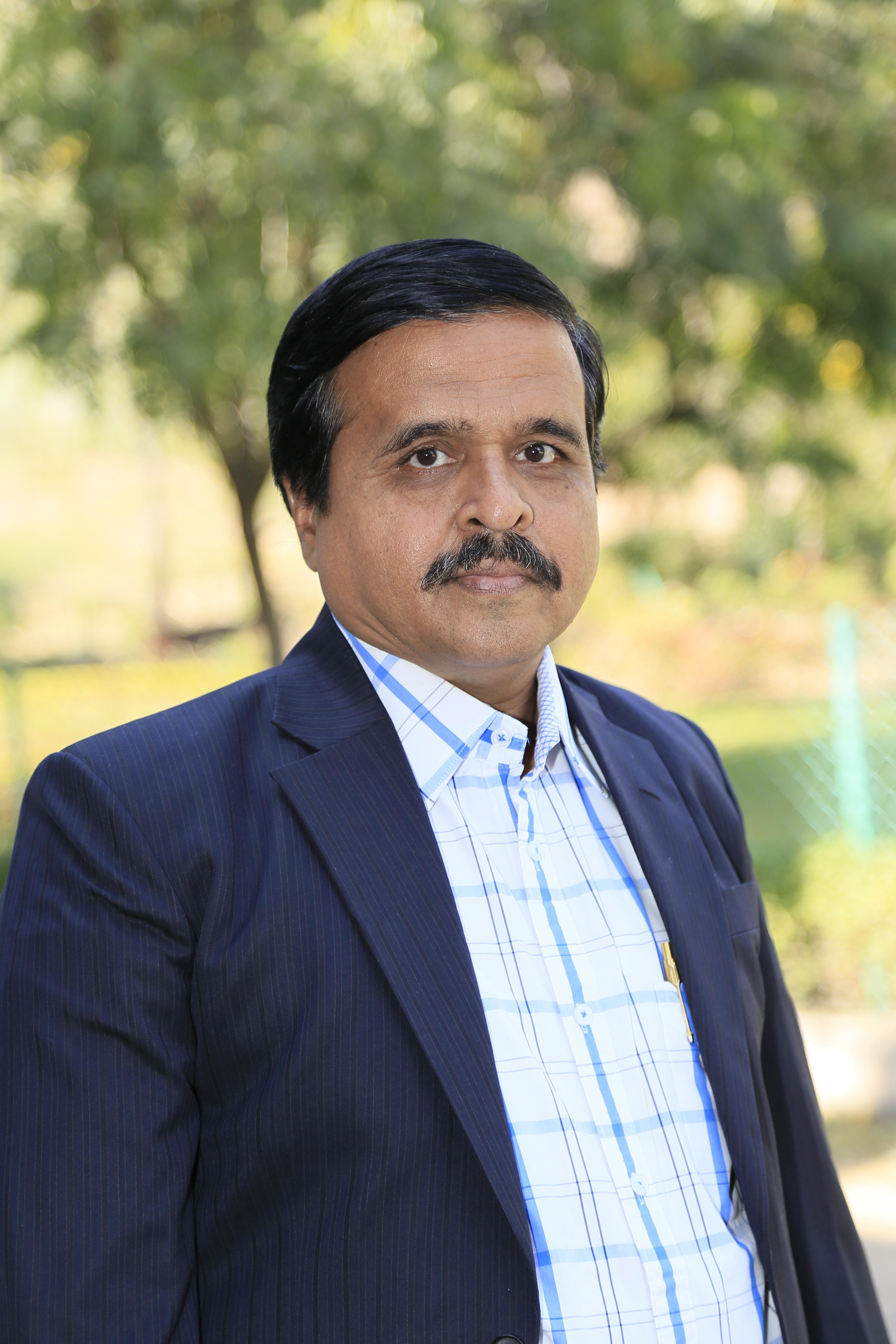
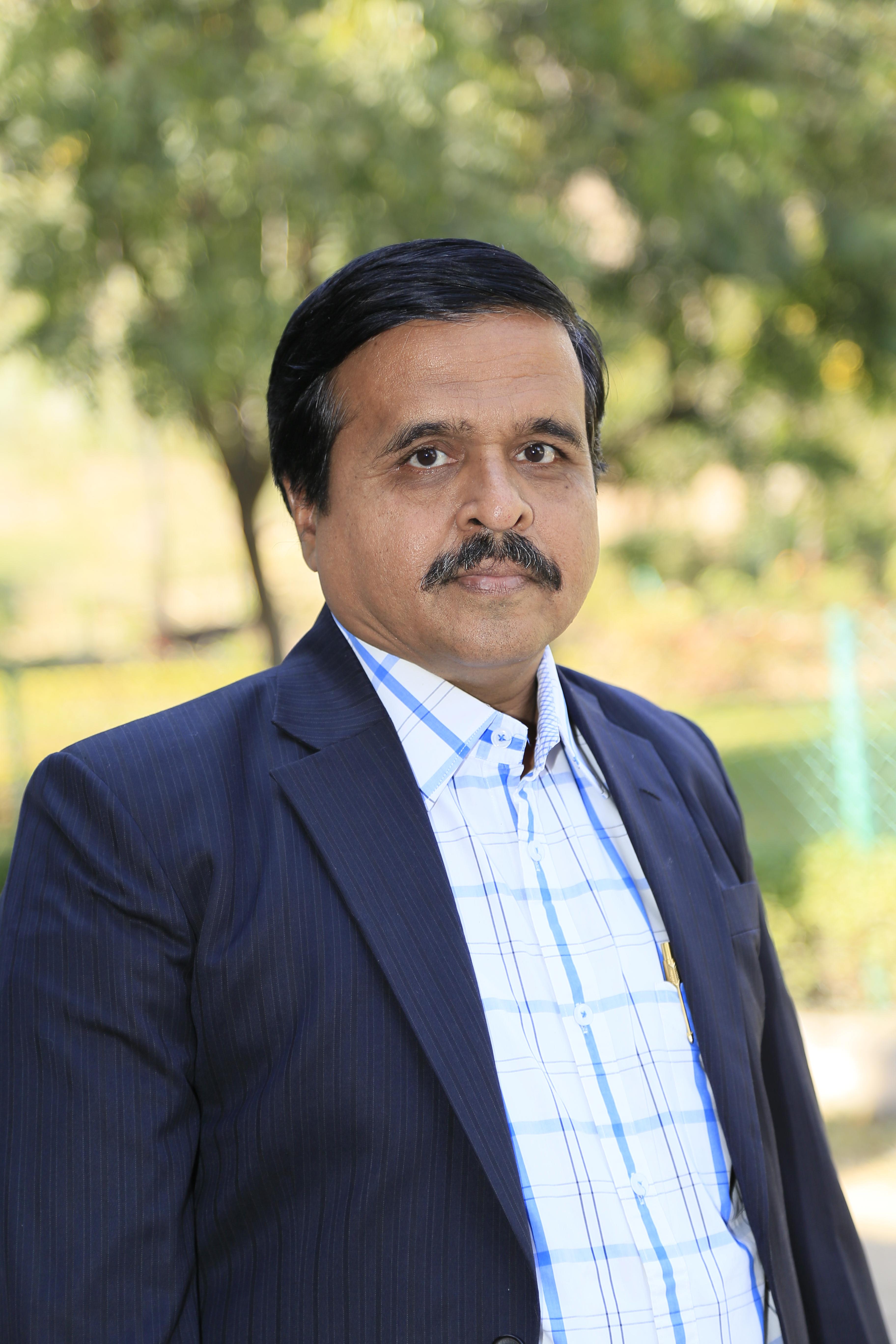
Dr. D.B.Pachpatte

Professor & Head

View Biodata

Ph.D (Physics), PDF (UCR, USA), NIH Fellow (USA), Visiting Scientist (Wollongong University, Australia), MCA (Eng. & Tech.)

Phone No. (office): 0240-02403301

Mobile No. : 9860051167

E-mail : head.maths@bamu.ac.in

Dr. S.G. Gupta
Courses/Programs
Admissions
Faculty / Staff
Facilities
Research
Alumni
Achievements
NCNAA-25
Photo Gallery
Courses Offered
Academic Programs offered:
  • M. A. /M. Sc. (Mathematics) (Intake capacity 70)
  • Ph. D.
Syllabus for M.Sc. (Mathematics)-2023-24(NEP)
Programme Educational Objectives(PEOs):
  • PEO1: To have advance knowledge of mathematics and apply mathematical rules in designing/solving problems.
  • PEO2: To provide the professional services to industry, research organization, institutes.
  • PEO3: To provide the professional consultancy and research support for the relevant organization in the domain of super specialization.
  • PEO4: To opt for higher education, disciplinary & multi-disciplinary research and to be a life-long learner.
  • PEO5: To provide, value based and ethical leadership in the professional and social life.
Programme Outcomes:
  • PO1: Solve advance problems in all the courses.
  • PO2: Read, analyse, and write logical arguments to prove mathematical concepts.
  • PO3: Communicate mathematical ideas with clarity and coherence, both written and verbally.
  • PO4: Perform research in conjunction with others as well as individually.
  • PO5: Apply value-based and ethical principles in providing leadership to profession and social life.
Programme Specific Outcomes:
  • PSO 1: Communicate and apply mathematical ideas.
  • PSO 2: Perform advanced research in mathematics and related fields.
The CO-PO MATRIX is provided in the below table. -
M. Sc. Mathematics(OBE)-Old course Choice Based Credit and Grading System (CBCGS):

The department adopted the Choice Based Credit System (CBCS) under the academic flexibility program of the University from the Academic Year 2011-12. This provides flexibility to make the system more responsive to the changing needs of students, professionals and society. It gives greater freedom to students to determine their own pace of study. The credit based system also facilitates the transfer of credits.

Students will have to earn 120 credits for the award of M.Sc. (Mathematics/ Applied Mathematics) degree.

  • 2 credits will have to obtain from the course: constitution of India.
  • 4 credits will have to obtain from the open elective course from other department.
Credit to contact hour Mapping:

One contact hour per week is assigned 1 credit for theory and 0.5 credits for laboratory courses/ research project. Thus a 6- credit theory course corresponds to 6 contact hours per week and same analogy will be applicable for laboratory courses / research project.


Assessment Methods and Exam Reforms adopted:
Semester I & II: (30 credits each)
  • Continuous Internal Assessment - 20 marks
  • Semester End Exam - 80 marks
Semester III & IV: (30 credits each)
  • Continuous Internal Assessment - 20 marks
  • Semester End Exam - 60 marks
  • Research project - 20 marks

80 : 20 Pattern ( Semester End : Continuous Internal Assessment ( CIA) )
CIA consists of two formal test and seminar presentation for research project.
For CIA, two internal tests of 20 mark each are conducted and finally the marks are converted out of 20 marks by taking the average of two internal test.
The setting of the question papers and the assessment will be done by the concerned teacher or as per rules of the University.
Assessed answer books are being shown to the students and their grievances are redressed.


Semester End Examination (SEE):
  • The total marks shall be 100 for 6 credit theory course. The semester end theory examination for each theory course will be of 80 marks (for sem I & II, 80 marks for semester end exam + 20 marks for CIA) and 60 marks (for sem III & IV , 60 marks for semester end exam + 20 marks for CIA + 20 marks for project and seminar on project)
  • Examination time tables are declared by the departmental committee (as per the university academic calendar). The setting of the question papers and the assessment are done by the concerned teacher or as per rules of the University.
  • Pattern of semester end question paper will be as below:
  •           The first and second semester end examination of theory course will have two parts ( Part A:20+ Part B :60 = 80 Marks) and the third and fourth semester end examination of theory course will have two parts ( Part A :12+ Part B : 48 = 60 Marks)
  •            For first and second semester, Part A (20 marks) consists of multiple choice questions / fill in the blanks/ short answers as compulsory questions and it should cover entire course syllabus.
  •            For third and fourth semester, Part A (12 marks) consist of multiple choice questions / fill in the blanks/ short answers as compulsory questions and it should cover entire course syllabus.
  •            For the first and second semester, Part B will carry 7 questions (01 question from each of 05 units and 02 questions randomly from the syllabus), and students will have to attempt 05 questions out of 07 (60 Marks)
  •            For third and fourth semester, Part B will carry 6 questions (01 question from each of 04 units and 02 questions randomly from the syllabus), and students will have to attempt 04 questions out of 06 (48 Marks).
  •            20 to 30% weightage will be given to problems/ numerical.
  •            Number of sub questions (with allotment of marks) in a question will be decided by the corresponding paper setter.
  •            At the end of each semester the Head of the Department sends all results to the Director, Board of Examinations and Evaluation for further processing.
Admission Details

Admission is given on the basis of marks obtained in CET and marks at graduation level as per the rules prescribed by the University.

Eligibility

As per University rules.

Intake/Reservations

Intake

M. Sc. Mathematics : 70

M. Phil : 20


Reservations

For M. Sc. Mathematics :

As per the Govt. of Maharashtra and Dr. B. A. M. University guidelines.

Course/Program Fees

Course Name:

M.Sc. (Mathematics)

M.Phil and Ph.D.

Duration:

M. Sc. 2 Years and M. Phil 1 Year course work and Dissertation

Course Fees

As per University rule.

Scholarships

Scholarships

For M.Sc. and M.Phil.: GOI, EBC, Merit Scholarship, Eklavya etc.

For M.Phil and Ph.D.: Rajiv Gandhi National Fellowship, BARTI and University Fellowship.

Facility for son / daughter / ward of Secondary Teacher (S.S.T.)

Candidates who are son / daughter / ward of Secondary Teachers & seeking the tuition fees facility should submit their application to the concerned departments. The forms should be carefully filled in. It should be complete in all respects.

Facility for son [daughter] ward of Ex-serviceman / Freedom Fighter

Candidates who are son / daughter / ward of Ex-serviceman / Freedom Fighter and seeking the tuition fees facility should submit their application signed with the seal of District Ex-serviceman Welfare Board to the concerned department. The forms should be carefully filled in and complete in all respects. Application for BBC. facility must be submitted before the last date in the concerned departments. Applications received after the last date will not be entertained.

Schedule of application procedure for candidates of E.B.C., P.S.T., S.S.T. and Ex-Serviceman

The schedule will be communicated to Departments through circular by P.G. section. EBC, PST, SST. facility for non-granted courses is subject to the decision of the Government Authority.

Scholarship: Govt. of India Scholarship (G.O.I.)

The Government of India (G.O.I.) gives scholarships for students belonging to the reserved categories. An online application form in proper format and supported by the following documents must be submitted to the Post-Graduate Section (Admission Unit) before the last date. The applications received after the last date will not be entertained under any condition. AADHAR CARD No. is compulsory for Scholarship holder students. Management Quota Students are not eligible for GOI and Freeship Scholarship (Ex. MBA. MCA. B.Tech. Students of Management Quota are not eligible for this facility.)

  1. A. New scholarship application form with passport size photograph of the student must be duly signed by the competent authority.
  2. B. Application for scholarship forms must be submitted with attested copies of the following documents:
    • Transfer Certificate (Photocopy of original T.C.)
    • Caste Certificate
    • Income Certificate of the father/guardian (original) (issued by the Executive Magistrate)
    • Attested Copy of Death Certificate in case of death of the father.
    • March Salary Certificate of parents in case of service.
    • Photocopy of Mark Memo.
    • Certificate from hostel in case of student staying at hostel.
    • Income Certificate of the husband must be given in case of a married girl student.
    • District change certificate must be given in case of student coming from other district.
  3. In case of Duplicate T.C. no concession/scholarship will be given. Such students will have to pay full fees.
  4. Scholarship will be issued to the students who have fulfilled 75% attendance.
  5. The income of the guardian of the student should be less than the limit declared by the Govt. from time to time.
  6. The caste of the student (Schedule caste, Schedule Tribe, Nomadic and De-notified Tribe, Other Backward Special Backward Categories) must be included in the list as per the govt. policy for reservation.
  7. Students or parents of students belonging to Erstwhile Schedule Caste who have later converted to Buddhist religion (Buddhism) are entitled to obtain a scholarship.
  8. Candidates applied for the vocational courses can obtain a scholarship whether they passed or failed in the course (Degree/Diploma) from the Arts, Commerce, and Science faculty. But such students cannot further change their course.
  9. Candidates who have once accepted a scholarship for a vocational course are not allowed to get a scholarship for the next vocational course.
  10. Candidates working in a full-time job are not eligible for a scholarship. But the candidate learning on leave without salary will be eligible for a scholarship.
  11. Scholarship will not be given to more than two children in the same family. (This condition is not applicable in the case of girls) (The third child will not get the scholarship.) (Exception: If the second child is twins or more than two, consider them as one unit.)
  12. Candidates should fill a new application form for a scholarship in case of his/her first admission. Second-year candidates do the process as directed by the Social Welfare office. A new application form should be filled in case of any gap.
Important notes about scholarships /Fellowships
  • Exam appearance is compulsory for GOI, Freeship, EBC, PST, SST, Ex-Serviceman, Freedom fighter and other scholarship facility holders. Otherwise, students must have to pay total tuition fees.
  • The scholarship facility is not for Certificate, Diploma courses.
  • In some scholarships, Tuition Fees are not transferred to the university/college account. Students must pay their tuition fees. (for ex. Minority Scholarship, Handicapped Scholarship etc.)
About Other Scholarships:
  1. 1. Vidyavetan Facility:

    Application forms should be submitted in the P.G. Section within the period of 15 days after the completion of admission. A Govt. Hostel Certificate is necessary to fulfill this form.

    This facility is only for SC, ST, DNT students who have completed their admission for professional Courses. ST Students must attach an attested caste validity certificate with the scholarship form, and if the student is living in a hostel, then he must furnish a Hostel Certificate.

  2. 2. Important Note about Scholarship:

    Candidates are not eligible for GOI, EBC, PST, SST, Freedom fighter, or any governmental scholarship if he/she does not attend the exam and will have to pay full fees.

    Governmental Scholarships are not given for Diploma/Certificate Courses.

  3. 3. Other Scholarships:

    Candidates of the University campus can get the following scholarships by the Govt. of Maharashtra and University as stated below:

  4. 4. Eklavya Scholarship:

    This Scholarship will be given to the candidate who has secured 60% marks in Degree Exams in the Art Faculty and 70% Marks in the Science Faculty Degree Examination. After submitting the application form in the proper format, the Eklavya Scholarship will be approved by the Director of Higher Education. Govt. of Maharashtra. Pune. The Annual Income of the parents of an applicant must be prescribed by the Government.

  5. 5. University Merit Scholarship:

    After completing the admission procedure of the University, Scholarships will be granted to the applied candidates ranking 1st and 2nd as per merit in each subject. Three candidates of M.Phil. can get this Scholarship as per the merit list in each subject.

  6. 6. Post Matriculation Scholarship:

    Post Matriculation Scholarship for students belonging to Minority communities. The students belonging to the Minority communities (Muslim, Parsi, Sikh, Christian, Buddha, Jain) learning in the university.

  7. 7. Scholarship for Non-Hindi Language Speakers:

    Non-Hindi Language speakers, who are studying in the Hindi language, could submit their applications in the proper format for a Scholarship for Non-Hindi language speakers. The Scholarship for Non-Hindi Language speakers will be given to four candidates only.

The scholarship holders of any kind are supposed to abide by the following rules:
  • Candidates will get only one scholarship at a time. Legal action will be taken against a candidate accepting two scholarships at a time. Students must furnish the form in the Hindi Department.
  • It is mandatory to submit the application form for a scholarship within the stipulated time.
  • The amount of the scholarship will be given only after its approval and acceptance of the amount of scholarship by the University.

Important Dates

Tentative / Important Dates

Not Given

Faculty/Staff
Name Specialization
Dr. D.B.Pachpatte

Dr. D.B.Pachpatte

Professor & Head

Qualification: -

Email: pachpatte@gmail.com

Contact: 9860051167

(Resume), (View Profile)

Differential & Integral Equations
Dr. K.P.Ghadle

Dr. K.P.Ghadle

Professor

Qualification: B. Ed M. Sc. Ph. D.

Email: drkp.ghadle@gmail.com

Contact: 09421725765

(Resume), (View Profile)

Dr. S.K.Panchal

Dr. S.K.Panchal

Professor

Qualification: M. Sc. Ph. D.

Email: dr_panchal_sk@yahoo.co.in

Contact: 9822771801

(Resume), (View Profile)

Distribution Theory and Transform Analysis
Dr. P. N. Kamble

Dr. P. N. Kamble

Assistant Professor

Qualification: M.Sc.

Email: -

Contact: 9423396804

(Resume), (View Profile)

Fuzzy Theory
Dr. Amol Khandagale

Dr. Amol Khandagale

Associate Professor

Qualification: -

Email: -

Contact: -

(Resume), (View Profile)

-
Facilities Available
  • Three Class Rooms, one classroom with LCD projector.
  • Two Computer Laboratories.
  • Internet Facilities for Teachers, Research Students and Office.
Research Activities
  • Fractional differential equations
  • Boundary value problems
  • Fuzzy Mathematics
  • Thermoelasticity
  • Operation research

Selected Research Articles

Research Related Articles:
  1. Prof. (Dr.) Kirtiwant P. Ghadle: Most cited Research Papers
    • Existence and uniqueness of solutions for fractional neutral Volterra-Fredholm integro-differential equations, Advances in the Theory of Nonlinear Analysis and its Application 4 (4), 321-331.
    • Modified Adomian decomposition method for solving fuzzy Volterra-Fredholm integral equation, The Journal of the Indian Mathematical Society, 53-69
    • The approximate solutions of fractional Volterra-Fredholm integro-differential equations by using analytical techniques, Probl. Anal. Issues Anal 7 (25), 41-58
    • Some new existence, uniqueness and convergence results for fractional Volterra-Fredholm integro-differential equations, Journal of Applied and Computational Mechanics 5 (1), 58-69
    • Existence and uniqueness theorems for fractional Volterra-Fredholm integro-differential equations, International Journal of Applied Mathematics 31 (3), 333-348
  2. Prof. (Dr.) S. K. Panchal
    • On a comprehensive model of the novel coronavirus (COVID-19) under Mittag-Leffler derivative, Chaos, Solitons & Fractals 135, 109867
    • Fractional integro-differential equations involving ψ-Hilfer fractional derivative, Adv. Appl. Math. Mech 11 (2), 338-359
    • Fractional boundary value problem with ψ-Caputo fractional derivative, Proceedings-Mathematical Sciences 129 (5), 65
    • Fractal-fractional mathematical modeling and forecasting of new cases and deaths of COVID-19 epidemic outbreaks in India, Results in Physics 20,103702
    • Existence and Ulam stability results of a coupled system for terminal value problems involving ψ-Hilfer fractional operator, Advances in Difference Equations 2020, 1-21
    • Existence theory and numerical analysis of three species prey–predator model under Mittag-Leffler power law, Advances in Difference Equations 2020, 1-16
    • Ulam–Hyers–Mittag-Leffler stability for a ψ-Hilfer problem with fractional order and infinite delay, Results in Applied Mathematics 7, 100115
    • Existence and Ulam–Hyers–Mittag-Leffler stability results of ψ-Hilfer nonlocal Cauchy problem, Rendiconti del Circolo Matematico di Palermo Series 2 70 (1), 57-77
    • Positive solution of a fractional differential equation with integral boundary conditions, Journal of Applied Mathematics and Computational Mechanics 17 (3)
    • Nonlinear implicit fractional differential equation involving ψ-Caputo fractional derivative, Proceedings of the Jangjeon Mathematical Society 22 (3), 387-400.
  3. Prof. (Dr.) D. B. Pachpatte
    • Saeed, N.A., Pachpatte, D.B., Usage of the Fuzzy Adomian Decomposition Method for Solving Some Fuzzy Fractional Partial Differential Equations, Advances in Fuzzy Systems, 2024, 8794634.
    • Henok Desalegn Desta, Deepak B Pachpatte, Jebessa B Mijena, TadesseAbdi, Univariate and Multivariate Ostrowski-Type Inequalities Using Atangana–Baleanu Caputo Fractional Derivative, Axioms, 11(9), 482, https://doi.org/10.3390/axioms11090482
    • Deepak B. Pachpatte, Juan J. Nieto, Properties of Certain Volterra type ABC Fractional integral equations, Advances in the Theory of Nonlinear Analysis and its Applications, 6(3), 2022.
    • Deepak B. Pachpatte, Properties of some ψ-Hilfer fractional Fredholm type integrodifferential equations, Adv. Oper. Theory, 6(7), 2021.https://doi.org/10.1007/s43036-020-00114-1
    • Deepak B. Pachpatte, On some Psi Caputo fractional like inequalities for functions of two and three variables, AIMS mathematics, 5(3): 2244-2260.(2020). doi: 10.3934/math.2020148
    • Deepak B. Pachpatte, A Generalized Gronwall inequality for Caputo Fractional Dynamic delta operator, Progress in Fractional Differentation and Applications, 6(2), (2020), 129-136.
    • Deepak B. Pachpatte, Some Ostrowski Type Inequalities for Double Integrals on Time Scales, Acta. Appl. Math., 161(1), June2019, 1-11. https://doi.org/10.1007/s10440-018-0201-2.
    • Deepak B. Pachpatte, Properties of certain iterated dynamic integrodifferential equation on time scales, Appl. Math. Comput., 346 (2019), 767-775. Doi.org/10.1016/j.amc.2018.10.034.
  4. Dr. P. N. Kamble :
    • Shrigan M.G. and Kamble P.N., Fekete-Szego Problems for Certain Class of bi-Starlike functions involving q-differential Operator, Journal of Combinatorial Mathematics and Combinatorial Computing, 112(2020), 65-73, (Indexed in Scopus).
    • Kamble P.N. and others, On Lamda-Pseudo q-bi-Starlike functions, Turkish Journal of Mathematics, 43(2) (2019), 751-758, (Indexed in Scopus)
    • Nazia Paerveen and P.N. Kamble. Decision – Making Problems using TOPSIS Method with Hexagonal Fuzzy Number, Advances in Intelligent System and Computing, Springer Nature,1025(2020), 431-430 (SCOPUS)
    • Nazia Perveen and P.N. Kamble, An Extension of TOPSIS for group Decision Making In Intuitionistic Fuzzy Environment, Mathematical Foundation of Computing, American Institute of Mathematical Sciences 4(2021),67-71.(WOS)
  5. Dr. A. D. Khandagale:
    • Amol D. Khandagale, Ahmed A. Hamoud, Kirtiwant P. Ghadle, New Results On Nonlocal Fractional Volterra-Fredholm Integro-Differential Equations, J. Math. Comput. Sci. 11 (2021), No. 5, 6193-6204, https://doi.org/10.28919/jmcs/6050, ISSN: 1927-5307
    • Amol D. Khandagale, Ahmed A. Hamoud, Kirtiwant P. Ghadle, Existence Of Solutions For Fractional Integro-Differential Equations Involving The Caputo Type Atangana-Baleanu Derivative, Turkish Journal of Computer and Mathematics Education, Vol.12 No.14(2021), 613-620, e-ISSN 1309-4653
    • Abdulrahman A. Sharif, Maha M. Hamood , Amol D. Khandagale, Usage of the Fuzzy Laplace Transform Method for Solving One-Dimensional Fuzzy Integral Equations, EQUATIONS, DOI: 10.37394/232021.2022.2.6, E-ISSN: 2732-9976, Volume 2, 2022
    • Vaijanath L. Chinchane, Asha B. Nale, Satish K. Panchal , Christophe Chesneau and Amol D. Khandagale, On Fractional Inequalities Using Generalized Proportional Hadamard Fractional Integral Operator, Axioms 2022, 11, 266, https://doi.org/10.3390/axioms11060266, ISSN: 2075-1680
    • Ahmed A. Hamoud, Amol D. Khandagale and Kirtiwant P. Ghadle, On Time Scales Fractional Volterra-Fredholm Integro-Differential Equation, Discontinuity, Nonlinearity, and Complexity 12(3) (2023) 615-630, ISSN 2164-6376, eISSN 2164-6

Publication Output

Publications
Name of Faculty Designation No. of Publications in No. of Ph.D. / Working No. of M. Phil.
Journal Conference Proceedings Book Chapter
Dr. M. B. Dhakne Ex Head & Professor 18 --- --- 04
Dr. D. B. Dhaigude Ex Head & Professor 29 --- --- 13
Dr. S. K. Nimbhorkar Ex Head & Professor 11 --- --- 01
Dr. M.P Wasadikar Ex Head & Professor 07 --- --- 00 02
Dr. S. K. Panchal Professor and Head 16 03 2/7 02 02
Dr. K. P. Ghadle Professor 29 03 2/8 03 03
Dr. P. N. Kamble Assistant Professor 08 --- --- 0/3 01
Dr. D. B. Pachpatte Associate Professor 24 02 01/4 01 01
Mr. A. D. Khandagale Assistant Professor 05 01 --- ---
Total 147 09 23/22 09 09
Name of the Teacher SCOPUS Web of Science ICI / Google Scholar
Total number of Publications Total Number of Citations h-index Total number of Publications Total Number of Citations h-index Total number of Publications Total Number of Citations h-index
Dr. M. B. Dhakne 10 75 5 4 5 1 18 160 6
Dr. D. B. Dhaigude 7 28 3 4 26 2 29 270 9
Dr. M. P. Wasadikar 13 47 3 2 1 1 7 63 4
Dr. S. K. Nimbhorkar 1 6 1 5 9 2 10 58 3
Dr. S. K. Panchal 2 - - - - - 7 30 3
Dr. K. P. Ghadle 7 18 2 5 6 2 41 153 8
Dr. P. N. Kamble 1 - - - - - 12 7 2
Dr. D. B. Pachpatte 10 79 5 - - - 19 172 8
Mr. A. D. Khandagale 1 - - - - - 5 16 2
Total 52 253 19 20 47 8 148 929 45
Average 5.77 28.11 2.11 2.22 5.22 0.88 16.44 103.22 5

Thurst Areas

Thrust Areas
  1. Prof. (Dr.) Kirtiwant P. Ghadle: Boundary Value Problems (Thermoelasticity), Operation Research, Integral Equations, Fractional Differential Equations, and Fluid Mechanics.
  2. Prof. (Dr.) S. K. Panchal: Generalized Integral Transformations and Fractional Differential Equations
  3. Prof. (Dr.) D. B. Pachpatte: Mathematical Inequalities
  4. Dr. P. N. Kamble: Fuzzy Mathematics
  5. Dr. A. D. Khandagale: Fractional Differential Equations

Research Projects

Research Projects
Sr No. Purpose Amount Funding Agency
1 Major Research Project Rs. 13.62 Lakhs Science and Engineering Research Board (SERB)

Research Scholar

Ph. D. Awarded Students:
Sr. No. Name of the Student Name of Research Guide Ph. D. Awarded
1 Sanjivani M. Ingle Prof. Dr. Kirtiwant P. Ghadle Oct. 10, 2019
2 Ahire Yogita M. Prof. Dr. Kirtiwant P. Ghadle Dec. 20, 2020
3 Dabhole Amit C. Prof. Dr. Kirtiwant P. Ghadle Feb. 25, 2021
4 Khan Firdos Farooq A Prof. Dr. Kirtiwant P. Ghadle May 24, 2021
5 Ahmed Abdullah Hamoud Mohammed Prof. Dr. Kirtiwant P. Ghadle Sept. 16, 2021
6 Magar Sachin K. Prof. Dr. Kirtiwant P. Ghadle March 10, 2022
7 Khandagale Amol D. Prof. Dr. Kirtiwant P. Ghadle March 24, 2022
8 Deshmukh Mayuri C. Prof. Dr. Kirtiwant P. Ghadle Oct. 20, 2022
9 Bhadane R. Pradipkumar Prof. Dr. Kirtiwant P. Ghadle Nov. 24, 2022
10 Nawal Abdulwahab Al-Sarori Prof. Dr. Kirtiwant P. Ghadle Dec. 01, 2022
11 Fawziah Mohammad Al-Saar Prof. Dr. Kirtiwant P. Ghadle Dec. 05, 2022
12 Munot Dhanashri A. Prof. Dr. Kirtiwant P. Ghadle June 15, 2023
13 Shinde Kavita Uttamrao Prof. Dr. D. B. Pachpatte April 12, 2019
14 Arif Shabbir Bagwan Prof. Dr. D. B. Pachpatte Oct. 20, 2021
15 Gajanan Sonerao Solanke Prof. Dr. D. B. Pachpatte May 31, 2022
16 Bhagwat Ramji Yewale Prof. Dr. D. B. Pachpatte Mar. 14, 2023
17 Tariq Ahmad Mohammed Aljaaidi Prof. Dr. D. B. Pachpatte April 21, 2023
18 Mr. Mohammed Salem Abdo Qaid Prof. Dr. S. K. Panchal 12-04-2021
19 Ms. Hanan Abdulrahaman Saleh Wahash Prof. Dr. S. K. Panchal 08-10-2022
20 Suresh Kondaji Gudade Prof. Dr. S. K. Panchal 02-11-2022
21 Mr. Mohammed Ali Hussein Ahmed Almalahi Prof. Dr. S. K. Panchal 16-03-2023
22 Ms. Asha Baban Nale Prof. Dr. S. K. Panchal 13-05-2023
23 Ms. Nazia Parveen Shaikh Dr. P. N. Kamble 05-07-2022
24 Shrigan Mallikarjun G. Dr. P. N. Kamble 10-11-2022
List of Ph. D. Students: Working for Ph. D.
Sr. No. Name of the Student
1 Nirde Shamal D.
2 Sharif Abdulrahman Ahmed Hebah
3 Adhe Abhijeet B.
4 Thorat Satish N.
5 Maha Mohammed Ghaleb Hamood
6 Miss. Alka N. Gaikwad
7 Khedekar Mansing D.
8 Dhamone Santosh S.
Prominent Alumni of Department
Sr. No. Name of Alumni Institution/Organization
1 Prof. S. Leela Florida Institute of Technology, USA.
2 Prof. G. S. Ladde University of South Florida, USA.
3 Prof. B. B. Shinde Ex. Chairman, Maharashtra Public Service Commission, Mumbai
4 Prof. S. S. Deshmukh Dept. of Mathematics, King Soud University, Riyadh, Saudi Arabia.
5 Prof. V. V. Dhobale Ex.-Vice Chancellor, S.R.T.M. University, Nanded.
6 Prof. M. S. Choudhary Professor, Dept. of Mathematics, Shivaji University, Kolhapur.
7 Prof. V. S. Kharat Professor & Head, Dept. of Computer Science, University of Pune.
8 Prin. B. K. Bondge Principal, Dayanand Science College, Latur.
9 Prin. P. L. More Principal, Dnynopasak Mahavidalaya, Parbhani
10 Prin. B. P. Reddy Principal, Pratishthan Mahavidalya, Paithan
11 Dr. Prakash Prayag Principal, Yogeshwari Mahavidalaya, Ambajogai
12 Dr. V. V. Joshi Professor, Dept. of Mathematics, University of Pune.
13 Dr. S. D. Kendre Associate Professor, Dept. of Mathematics, University of Pune.
14 Dr. H. L. Tidke Assistant Professor, Dept. of Mathematics, North Maharashtra University, Jalgaon.
15 Dr. Chintaman Age Assistant Professor, Dept. of Mathematics, North Maharashtra University, Jalgaon.
16 Dr. K. D. Kuchhe Assistant Professor, Dept. of Mathematics, Shivaji University, Kolhapur.
17 Smt. Dr. Jain Rupali Assistant Professor, Dept. of Mathematics, S. R. T. M. University, Nanded
18 Dr. M. B. Dhakne Ex Head & Professor, Department of Mathematics, Dr. BAMU, Aurangabad
19 Dr. D. B. Dhaigude Ex Head & Professor, Department of Mathematics, Dr. BAMU, Aurangabad
20 Dr. S. K. Nimbhorkar Ex Head & Professor, Department of Mathematics, Dr. BAMU, Aurangabad
21 Dr. M.P Wasadikar Ex Head & Professor, Department of Mathematics, Dr. BAMU, Aurangabad
22 Dr. K. R. Gaikwad NES College Nanded
23 Dr. J. K. Mane Dept. of Mathematics, Sanjeevani Mahavidyalaya Chapoli, Tq. Chakur, Distt. Latur
24 Dr. B. R. Sontakke Pratishthan Mahavidyalaya, Paithan
25 Dr. Kiwane S. B. Deogiri College, Aurangabad
26 Dr. Dhaigude R.M. VMV, Amarawati
27 Dr. Patil J. V. Vasantrao Naik college, Aurangabad
28 Dr. Dhakne P. M. S. B. College, Aurangabad
29 Dr. Bodkhe D. S Anandrao Dhonde Alias Babaji Mahavidyalaya, Kada
30 Dr. Nanawaer J. A. Shrikrushna Mahavidyalaya, Gunjoti, Omerga
31 Dr. Chinchane V. L. Deogiri Institute of Engineering and Management Studies, Chh. Sambhajinagar
32 Dr. Mule Y. Kai. Rasika mahavidyalaya, Deoni, Dist. Latur
33 Dr. Gonge B. Sant Ramdas Arts, Commerce & Science College, Ghansawangi
34 Dr. Bhairat Sandeep ICT Jalna
35 Dr. Rokade G. L. JES College, Jalna
36 Mr. Gade Ananta Arts, Commerce & Science College
37 Mr. Vinayak Shavajirao Kadam Govt. Polytechnic Nasik
38 Dr. Dhondge Satyawan Deogiri Institute of Engineering and Management Studies, Chh. Sambhajinagar
39 Dr. Khan Firdous MGM University, Chh. Sambhajinagar
40 Dr. Chinchane Ashaj MGM University, Chh. Sambhajinagar
41 Dr Salunkhe Gajanan K J’s Educational Institute, Pune
42 Dr. Abhuj Narayan JSPM University, Pune
43 Dr. Yewale Bhagwat Jayant Shikshan Prasarak Mandal, Pune
44 Dr. Deshmukh Mayuri Chhatrapati Shahu maharaj Shikshan Sanstha, Chh. Sambhajinagar
45 Mr. Dongardive Akshay Vidhya Vikas Mandal Pathrud, Th. Bhoom
46 Dr. Gaikwad Priyanka Phulsingh Naik Mahavidyalya, Pusad
47 Dr. Munot Dhanshree SAJVPM’S Gandhi College, Kada
48 Dr. Birajdar Gunwant ICT, Mulund, Mumbai
Prof. (Dr.) Kirtiwant P. Ghadle:
  1. AD Scientific World Ranking Scientist 2% In Position Number – 5 (2021-22, 2022-23, 2023-24)
  2. Board of Studies Member (Mathematics Board), Dr. Babasaheb Ambedkar Marathwada University, Aurangabad (Ref. - Estt. Dept./Ele./2017/540 on dated 28-12-2017)
  3. RRC Committee Member, Dr. Babasaheb Ambedkar Marathwada University, Aurangabad (Ref. - Estt. Dept./Ele./2018/797 on dated 24-01-2018)
  4. RRC Committee Member, Swami Ramanand Teerth Marathwada University, Nanded (Ref. - SRTMUN/Election-2022/Nomination/RRC/2023-24/314 on dated 23-06-2023).
  5. Fellowships:
    • RGNF- 02
    • BARTI- 02
    • CSIR- 01
    • SARATHI- 01
  6. Paper Reviewer of the Journals:
    • Journal of Civil Engineering and Construction Technology (JCECT).
    • Theoretical Applied Mechanics Letter.
    • International Journal of Thermophysics.
    • Bulletin of the Marathwada Mathematical Society.
    • International Journal of Mathematics in Operational Research (IJMOR) ISSN (Online): 1757-5869.
    • WebPub Journal of Scientific Research (WJSR).
    • Cogent Mathematics
    • Bioinfo Publication
    • Asian Journal of Mathematics and Computer Research
    • Journal of Advances in Mathematics and Computer Science
    • Operation Research and Decisions
    • Paper Reviewing the review (for 04 papers) made to the ICIIIE-2020 held at Panjab University, Chandigarh.
    • Journal of Applied Mathematics and Informatics (JAMI), KOREA.
    • GANITA (ISSN: 0046-5402)
    • Advances and Applications in Mathematical Sciences (ISSN 0974-6803)
    • South East Asian Journal of Mathematics and Mathematical Sciences
    • Journal of Taibah University of Science (Taylor and Francis)
    • Nonlinear Functional Analysis and Applications (NFAA)
    • Journal of Applied Mathematics and Informatics
  7. Life Member of the Journal of the Indian Academy of Mathematics.
  8. Life Member of Bulletin of the Marathwada Mathematical Society.
  9. Advisory Board Member (Membership No: 8E168883F4) Journal of Statistics and Mathematics, ISSN: 0976-8807 & E-ISSN: 0976-8815, Bioinfo Publication.
  10. Associate Editor of the “Academic Journal of Mathematical Sciences” International Association of Scientists & Researchers.
  11. Editorial Board Member in SCIREA Journal of Mathematics.
  12. Life Member of the Indian Society of Theoretical and Applied Mechanics. Life Membership Number L/1161.
  13. Member of RESEARCHFORA journal. Membership ID: RF20545C

National Conference on Nonlinear Analysis and Applications (NCNAA-25)
About Conference

The purpose of the conference is to bring together the experts and young researchers in Nonlinear Analysis and provide platform for discussion on the current research trends and applications. The academic program of the conference includes plenary talks, invited talks and paper presentation.

The thrust areas of the conference is nonlinear analysis, but not limited to this theme only.

Conference Brochure

Registration and Accommodation

  • Last Date of Registration and Abstract submission: January 15, 2025
  • Registration Fees Teacher & Research Scholar ₹ 1000/-
    P.G Students ₹ 300/-
  • Registration Link: January 15, 2025
  • Last Date of Registration and Abstract submission: https://tinyurl.com/MathConf-25

Tentative Speakers

  • Prof. Dr. V. Shri Hari Rao (FSRTI, Hyderabad)
  • Prof. Dr. P. Dhanumjay (BITS Goa)
  • Prof. Dr. Sachin Bhalekar (University of Hyderabad)
  • Prof. Dr. J. Jonnalsgadda (BITS Hyderabad)
  • Prof. Dr. D. D. Pawar (SRTMU Nanded)
  • Prof. Dr. S. D. Kendre (SPPU Pune)
  • Prof. Dr. B. S. Desale (Mumbai University)
  • Prof. Dr. K. D. Kucche (Kolhapur University)
  • Prof. Dr. H. L. Tidke (KBCNMU Jalgaon)

Organizing Committee

Chief Patron Prof. Vijay Fulari (Hon’ble Vice Chancellor)
Patron Prof. Walmik K. Sarwade (Hon’ble Pro Vice Chancellor)
Prof. Prashant S. Amrutkar (Registrar)
Convener Prof. D. B. Pachpatte
(9860051167)
Academic Secretary Prof. S. K. Panchal (7875467777)
General Secretary Prof. K. P. Ghadle (9421725765)
Organising Secretary Dr. P. N. Kamble (8208285649)
Treasurer Dr. A. D. Khandagale (8788568346)
Members
  • Prof. Pravin Yannawar
  • Prof. S. V. Kawale
  • Prof. Mrs. C. D. Sonar
  • Dr. O. S. Jadhav
  • Dr. Satish Bhalanshankar
  • Mr. G. R. Pandhre
  • Dr. A. T. Tayade
  • Prof. B. R. Sontakke
  • Prof. J. A. Nanaware
  • Dr. Gajanan Peherkar
  • Dr. V. L. Chinchane
  • Dr. J. K. Mane

National Advisory Committee

Members
  • Prof. E. Thandapani
  • Prof. G. D. Kedar
  • Prof. M. S. Chaudhari
  • Prof. K. C. Deshmukh
  • Prof. J. Vasundharadevi
  • Prof. S. R. Chaudhari
  • Prof. M. B. Dhakne
  • Prof. Vilas Kharat

Photo Gallery


Image 84
Image 85
Image 86
Image 87

Image 88
Image 89
Image 90
Image 91

Image 92
Image 93
Image 94
Image 95