Department of Nanotechnology

Dr. Babasaheb Ambedkar Marathwada University | Official Website

Department of Nanotechnology

About Department

Currently, nanotechnology is described as a revolutionary discipline in terms of its possible impact on industrial applications. Nanotechnology offers potential solutions to many problems using emerging nanotechniques. Depending on the strong interdisciplinary character of nanotechnology, there are many research fields and several potential applications that involve nanotechnology. Inspired by these facts.

Nanotechnology operates at the first level of organization of atoms and molecules for both living and anthropogenic systems. This is where the properties and functions of all systems are defined. Such fundamental control promises a broad and revolutionary technology platform for industry, biomedicine, environmental engineering, safety and security, food, water resources, energy conversion, and countless other areas. Nanotechnology is also defined as the ability to understand, control, and manipulate matter at the level of individual atoms and molecules, as well as at the “supramolecular” level involving clusters of molecules (in the range of about 0.1 to 100 nm), in order to create materials, devices, and systems with fundamentally new properties and functions because of their small structure.

The definition implies using the same principles and tools to establish a unifying platform for science and engineering at the nanoscale, and employing the atomic and molecular interactions to develop efficient manufacturing methods. There are at least three reasons for the current interest in nanotechnology. First, the research is helping us to fill a major gap in our fundamental knowledge of matter. At the small end of the scale, single atoms and molecules, we already know quite a bit from using tools developed by conventional physics and chemistry. And at the large end, likewise, conventional chemistry, biology, and engineering have taught us about the bulk behavior of materials and systems. However, the intermediate nanoscale, which is the natural threshold where all living and manmade systems work is less explored. The intellectual drive toward smaller dimensions was accelerated by the discovery of size-dependent novel properties and phenomena.

The basic properties and functions of material structures and systems are defined here and, even more importantly, can be changed as a function of the organization of matter via ‘‘weak” molecular interactions (such as hydrogen bonds, electrostatic dipole, van der Waals forces, various surface forces, electro-fluidic forces, etc.). The second reason for the interest in nanotechnology is that nanoscale phenomena which hold the promise for fundamentally new applications. Possible examples include chemical manufacturing using designed molecular assemblies, processing of information using photons or electron spin, detection of chemicals or bioagents using only a few molecules, detection and treatment of chronic illnesses by subcellular interventions, regenerating tissue and nerves, enhancing learning and other cognitive processes by understanding the “society” of neurons, and cleaning contaminated soils with designed nanoparticles.

Department insights

History

The Department of Nanotechnology, founded in June 2009 under the guidance of Hon. Vice Chancellor Prof. Nagnath Kottapalle, has an intake capacity of 20 postgraduate students specializing in various fields of nanotechnology and interdisciplinary sciences. It currently has three faculty members, including Dr. Bhaskar Sathe as the Head of the Department, Dr. Ketan P. Gattu, and Dr. Dipak A. Tonpe (Assistant Professor), along with two supporting office staff. The department's research facilities are available for postgraduate and Ph.D. programs, with plans to relocate to a new building currently under construction.

The Department, officially inaugurated on February 16, 2010, has a strong interdisciplinary character and aims to flourish in the coming years through national and international collaborations. It is actively seeking new teaching and research staff to fulfill its Nanovision. Financial support comes from the University Grant Commission (UGC) and the Government of Maharashtra, with an initial startup fund of Rs. 2 Crore and expectations of additional funding from various competitive projects submitted to different agencies.

Nanotechnology, considered a revolutionary discipline with significant industrial applications, offers potential solutions to various problems through emerging nanotechniques. The Department of Nanotechnology is inspired by these possibilities and strives to achieve international standards through collaboration and funding. The current location is within the Department of Physics, awaiting relocation to the new building for expanded capabilities. Additional funds for basic facilities are being pursued through research projects submitted to funding agencies such as DST, BRNS, CSIR, UGC, DRDO, IMA, DIT, etc.

Vision and Mission

Vision

To structure the Dr. Babasaheb Ambedkar Marathwada University to be an Epitome of Excellence by creating and imparting time responsive Quality Education to address Changing Scenario, keeping Research and Development at its core, for 'Anyone' at 'Anytime' and 'Anywhere'.

Mission

  • To excel in research and innovation for disseminating new knowledge and technological know-how.
  • To create future industry-ready skilled manpower.
  • Pedagogy development on cutting-edge technology and research.
  • Creation of an industry-friendly research environment and state-of-the-art infrastructure.

Core Values of the Departments

  • Innovation: Advancing cutting-edge research to address real-world challenges.
  • Collaboration: Encouraging interdisciplinary teamwork for scientific breakthroughs.
  • Excellence: Delivering quality education and skill development for future leaders.

Objectives

Department Objectives

The M.Sc. course in Nanoscience and technology is a potential base provided by the Dr. Babasaheb Ambedkar Marathwada University, Aurangabad, in the University Campus to educate and prepare postgraduate students from rural and urban areas. In order to enhance quality education standards and skilled training to the postgraduate students, well-organized and planned efforts of the Department of Nanotechnology and Nano Science and Technology will meet the global standards in postgraduate teaching, research, and training programs.

One of the objectives of the M.Sc. course in Nanotechnology and Nano Science and Technology is to meet the needs and requirements of modern society in a focused area to solve humanity's topmost problems like energy, materials, food, water, and the environment for the next fifty years. The integrated 5-year course in Nanoscience and/technology will provide a broad common framework of a syllabus to expose our young graduates to the recent and applied knowledge of interdisciplinary branches of science, namely Physics, Chemistry, Biotechnology, Biochemistry, Botany, Zoology, and Electronics. The M.Sc. course in Nanoscience and Technology will lead to a higher level of knowledge base, which will be useful for career development in higher education, academic fields, as well as opportunities in industrial and corporate fields.

The objectives of Dr. Babasaheb Ambedkar Marathwada University are “To disseminate, create, and preserve knowledge and understanding by teaching, research, extension, and service and by effective demonstration and influence of its corporate, extension, and society.”

The functions of Dr. Babasaheb Ambedkar Marathwada University are as follows:

  1. To play a significant role in the economic, educational, social, and cultural development of the people of Marathwada.
  2. To cater to the need for higher education in the region.
  3. To cultivate and promote the arts, commerce, science, medicine, engineering, technology, and other branches of learning and culture.
  4. To organize, maintain, and manage university laboratories, libraries, museums, and other equipment for teaching and research.
  5. To contribute to the advancement and dissemination of knowledge by undertaking Postgraduate studies and research in its own departments as well as through its colleges and recognized institutions.
  6. To serve as a nursery of leaders in different walks of life—professional, industrial, economic, political, social—who can actively help in all directions and in the resuscitation of its unique culture.

The University is an examination as well as a teaching body. It carries out its own teaching in departments. At present, Dr. Babasaheb Ambedkar Marathwada University has more than 40-50 departments actively pursuing teaching and research activities.

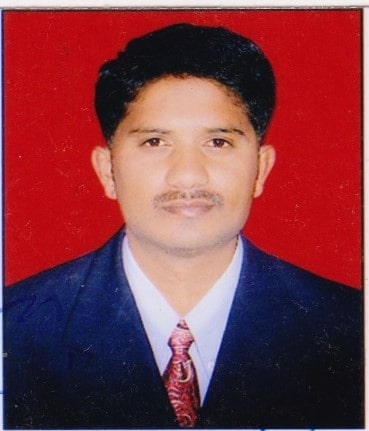
HOD's Desk

Dr. S.G. Gupta
Dr. Bhaskar R. Sathe

Associate Professor

Phone No. (office): 240-2401365(R)

Department Phone No. : 02402403284

e-mail : bhaskarsathe@gmail.com

View Biodata

It is with great pride and a sense of responsibility that I extend my warm greetings as the Head of the Department of Nanoscience and Technology at Dr. Babasaheb Ambedkar Marathwada University. Since its inception in 2009, the department has grown exponentially, driven by a commitment to excellence in education and research in the rapidly evolving field of nanotechnology. Our dedicated faculty, state-of-the-art facilities, and collaborative spirit enable us to pioneer new research frontiers and equip our students with the skills necessary to excel in both academia and industry.

At our department, we believe in fostering an environment that encourages innovation, critical thinking, and interdisciplinary research. Our programs are designed to provide a deep understanding of the fundamental principles of nanotechnology while addressing real-world challenges. The department is actively engaged in cutting-edge research areas such as energy materials, nanodevices, and nanocomposites, and is supported by funding from esteemed agencies like UGC, DST, and CSIR.

We are committed to building a legacy of academic excellence and innovation, nurturing the next generation of scientists, researchers, and industry leaders. As we look toward the future, our goal is to continue expanding our research capabilities, forging meaningful collaborations, and making impactful contributions to the global scientific community.

I invite you to explore the opportunities and resources that our department offers and join us in our pursuit of excellence in nanoscience and technology.

Courses/Programs
Admissions
Faculty / Staff
Research
Facilities
Alumni
Achievements
Photo Gallery

M.Sc. (Nano Technology)

Course Structure
Outline Syllabus of each course offered:
First Semester
 
Course Type
Course Code Course Name
Teaching Scheme
Credits Assigned
     

Theory

(Hrs./ week)

Practical

(Hrs./ week)

Theory

Practical Total Credits
Major Mand atory DSC
NTTC-500 Foundation of Nanoscience and Nanotechnology
2
---- 2 ---- 8T
NTTC -501 Chemistry of Nanomaterials 2 ---- 2 ---
NTTC -502 Synthesis of Nanomaterials and Fabrication Techniques 2 ---- 2 ---
NTTC -503 Scientific Commutation and Simulation in Nanoscience and    Nanotechnology 2 ---- 2 ---
NTTC -504 Laboratory –I --- 4 --- 2 6L
NTTC -505 Laboratory-II --- 4 --- 2
NTTC -506 Laboratory-III -- 4 --- 2
DSE (Choose any two)
NTTE-507 Introduction to Bionanotechnolgy
2
---- 2 ---- 4T
NTTE -508 Materials and Methods of Nanocoatings 2 ---- 2 ---
NTTE -509 Societal Impacts of Nanotechnology 2 ---- 2 ---
NTTE -510 Introduction to Nanoelectronics and Quantum Devices 2 ---- 2 ---
RM
NTRM -511 Research Methodology-I
2
---- 2 ---- 4T
NTRM -512 Research Methodology-II 2 ---- 2 ---
Total 16 12 16 06 22

*- a) Choice of DSE courses for offline mode is to the students subject to prior reporting of minimum ten students. b) Among the Four courses from DSE, one DSE is compulsory for offline mode and one among the remaining three for online (MOOC, NPTEL) mode. c) If online course for DSE is not available, students should choose two courses for offline mode.

Course Code Nomenclature:DSC-Discipline Specific Core, DSE- Discipline Specific Elective, T-Theory, L- Laboratory course, NTTC- Nanotechnology Theory Core, NTLC-Nanotechnology Laboratory Core, NTTE-Nanotechnology Theory Elective, NTRM- Nanotechnology Research Methodology, NTOJT- Nanotechnology on the Job Training, NTFP- Nanotechnology Field Project

Second Semester
 
Course Type
Course Code Course Name
Teaching Scheme
Credits Assigned
     

Theory

(Hrs./ week)

Practical

(Hrs./ week)

Theory

Practical Total Credits
Major Mand atory DSC
NTTC-550 Nanomaterials Based Devices:MEMS and NEMS
2
---- 2 ---- 8T
NTTC-551 Physics of Nanomaterials 2 ---- 2 ---
NTTC-552 Characterization Techniques for Nanomaterials 2 ---- 2 ---
NTTC-553 Carbon Nanomaterials: Synthesis, Functionalization and Applications 2 ---- 2 ---
NTTC-554 Laboratory –IV --- 4 --- 2 6L
NTTC-555 Laboratory-V --- 4 --- 2
NTTC -556 Laboratory-VI -- 4 --- 2
DSE* (Choose any two)
NTTE-557 Advancement to Bionanotechnolgy
2
---- 2 ---- 4T
NTTE -558 Theoretical Studies in Nanoscience: Scientific Computation and Simulation 2 ---- 2 ---
NTTE -559 Nanocomposites: Fabrication, Properties and Applications 2 ---- 2 ---
NTTE -560 Nanotechnology in Energy and Environment 2 ---- 2 ---
OJT
NTOJT-561 On the Job Training
--
4 -- 4 4L
NTOJT-562 Field Project --
Total 12 20 12 10 22

*- a) Choice of DSE courses for offline mode is to the students subject to prior reporting of minimum ten students. b) Among the Four courses from DSE, one DSE is compulsory for offline mode and one among the remaining three for online (MOOC, NPTEL) mode. c) If online course for DSE is not available, students should choose two courses for offline mode.

Course Code Nomenclature:DSC-Discipline Specific Core, DSE- Discipline Specific Elective, T-Theory, L- Laboratory course, NTTC- Nanotechnology Theory Core, NTLC-Nanotechnology Laboratory Core, NTTE-Nanotechnology Theory Elective, NTRM- Nanotechnology Research Methodology, NTOJT- Nanotechnology on the Job Training, NTFP- Nanotechnology Field Project

M.Sc. Nanoscience and Technology Semester-III
Course Type Course Code Course Name Teaching Scheme (Hrs./ week) Credits Assigned Marks Total Credits
Theory Practical Theory Practical Theory Internal Total
Major Mandatory DSC NTTC-600 Advances in Energy Materials 2 - 2 - 30 20 50 8T
NTTC -601 Fundamentals and Engineering of Solar Energy Devices 2 - 2 - 30 20 50
NTTC -602 Thin Films and Devices Fabrication 2 - 2 - 30 20 50
NTTC -603 Applied Surface Science 2 - 2 - 30 20 50
NTLC-604 Laboratory –VII - 4 - 2 30 20 50 6L
NTLC-605 Laboratory –VIII - 4 - 2 30 20 50
NTLC-606 Laboratory –IX - 4 - 2 30 20 50

Ph.D.(Nano Technology)

Course Structure
Duration : Total No. of Years/ Months to complete the course e.g. 06 Months or 03 Years :-Two Years Duration.
Sr.No. Course Name Number of Session Intake Pattern Duration of Course
1 Ph. D.   8 Research Scholar–Each Teacher - Minimum 3 Years
Course Fees Year/Semester
Sr.No. Course Name Admission Fees Exam Fees
1 Ph. D. 8000 Per Year -
List of admitted Students 2009 to 2023 (15 Batches)
Sr. Year I Year II Year Total
M F M F
1. 2009-2010 05 01 00 00 06
2. 2010-2011 08 01 05 01 15
3. 2011-2012 06 04 08 01 19
4. 2012-2013 08 02 06 04 20
5. 2013-2014 00 00 08 02 10
6. 2014-2015 07 01 00 00 08
7. 2015-2016 00 00 06 00 06
8. 2016-2017 04 03 00 00 07
9. 2017-2018 04 01 00 02 07
10. 2018-2019 02 00 03 01 06
11. 2019-2020 00 00 02 00 02
12. 2020-2021 06 01 00 00 07
13. 2021-2022 04 06 06 01 17
14. 2022-2023 04 02 04 06 16
15. 2023-2024 02 00 04 02 08

Pattern of CET

Under Construction

Eligibility

Sr. No. Course Name Duration Eligibility Criteria
1 M.Sc. in Nanotechnology 2 years (4 Semesters) Candidates with a bachelor's degree in science, engineering, technology, or pharmacy, including mathematics as a subject until the 12th standard, are eligible for admission to M.Sc. in Nanotechnology. A minimum of 50% marks (45% for reserved category) in the B.Sc./B.E./B.Tech./B.Pharm. degree examination qualifies for admission, with preference given to meritorious candidates. Those who have passed the bachelor's degree in science, engineering, pharmacy, or technology subjects can seek admission to the M.Sc. (Nanotechnology) course, subject to fulfilling other conditions as per 0.848. The interdisciplinary nature of nanotechnology allows for a diverse range of subjects to be part of the coursework for the M.Sc. examination.
2 Ph.D. in Nanotechnology 2-5 years M.Sc. in Nanotechnology and allied subjects.

Intake/Reservations

Sr. No. Course Name Number of Session Intake Pattern Duration of Course
1 Ph. D. 8 Research Scholar – Each Teacher - - Minimum 3 Years

Course/Program Fees

Course Name
Sr. No. Course Name Number of Session Intake Pattern Duration of Course
1 Ph. D. 8 Research Scholar – Each Teacher - Minimum 3 Years
Duration

Total No. of Years/ Months to complete the course e.g. 06 Months or 03 Years :-Two Years Duration.

Course Fees Year/Semester
Sr. No. Course Name Admission Fees Exam Fees
1 M.Sc. Nanoscience and Technology 20000 Per Year
2 Ph. D. 8000 Per Year -

Scholarships

Scholarships

For M.Sc. and M.Phil.: GOI, EBC, Merit Scholarship, Eklavya etc.

For M.Phil and Ph.D.: Rajiv Gandhi National Fellowship, BARTI and University Fellowship.

Facility for son / daughter / ward of Secondary Teacher (S.S.T.)

Candidates who are son / daughter / ward of Secondary Teachers & seeking the tuition fees facility should submit their application to the concerned departments. The forms should be carefully filled in. It should be complete in all respects.

Facility for son [daughter] ward of Ex-serviceman / Freedom Fighter

Candidates who are son / daughter / ward of Ex-serviceman / Freedom Fighter and seeking the tuition fees facility should submit their application signed with the seal of District Ex-serviceman Welfare Board to the concerned department. The forms should be carefully filled in and complete in all respects. Application for BBC. facility must be submitted before the last date in the concerned departments. Applications received after the last date will not be entertained.

Schedule of application procedure for candidates of E.B.C., P.S.T., S.S.T. and Ex-Serviceman

The schedule will be communicated to Departments through circular by P.G. section. EBC, PST, SST. facility for non-granted courses is subject to the decision of the Government Authority.

Scholarship: Govt. of India Scholarship (G.O.I.)

The Government of India (G.O.I.) gives scholarships for students belonging to the reserved categories. Online application form in proper format and supported by following documents must be submitted to Post-Graduate Section (Admission Unit) before the last date. The applications received after the last date will not be entertained in any condition. AADHAR CARD No. is compulsory for Scholarship holder students. Management Quota Students are not eligible for GOI and Freeship Scholarship (Ex. MBA. MCA. B.Tech. Students of Management Quota are not eligible for this facility.)

  • A. New scholarship application form with passport size photograph of the student must be duly signed by the competent authority.
  • B. Application for scholarship forms must be submitted with attested copies of following documents.
    • Transfer Certificate (Photocopy of original T.C.)
    • Caste Certificate
    • Income Certificate of the father/guardian (original) (issued by the Executive Magistrate)
    • Attested Copy of Death Certificate in case of death of the father.
    • March Salary Certificate of parents in case of service.
    • Photocopy of Mark Memo.
    • Certificate from hostel in case of student staying at hostel.
    • Income Certificate of the husband must be given in case of married girl student.
    • District change certificate must be given in case of student coming from other district.
  • Incase of Duplicate T.C. no concession! scholarship will be given. Such students will have to pay full fees.
  • Scholarship will be issued to the students who have fulfilled 75% attendance.
  • Income of the guardian of the student should be less than limit declared by Govt. time to time.
  • Caste of the student (Schedule caste, Schedule Tribe. Nomadic and De notified Tribe. Other Backward Special Backward Categories) must be included in the list as per the govt. policy for reservation.
  • Students or parents of students belonging to Erstwhile Schedule Caste who have later converted to Buddhist religion (Buddhism) are entitled for obtaining scholarship.
  • Candidates applied for the vocational courses can obtain scholarship eitherthey passed or failed in the course (Degree/ Diploma) from Arts. Commerce and Science faculty. But such students can not further change their course.
  • Candidate who have once accepted scholarship for vocational course are not allowed to get scholarship for the next vocational course.
  • Candidates working in the full time job are not eligible for scholarship. But the candidate learning on leave without salary will be eligible for scholarship.
  • Scholarship will not be given to more than two children in the same family. (This condition is not applicable in case of girls) (Third will not get the scholarship.) (Exception If Second child is as twins or more than two consider as one unit.)
  • Candidate should fill new application form for scholarship in case of his/ her first admission. Second year candidates do process as per directed by Social Welfare office. New application form should be filled in case of any gap.

Important notes about scholarships /Fellowships

  • Exam appearance is for GOI. Freeship. EBC, PST, SST, Ex-Serviceman, Freedom fighter and other scholarship facility holder. Otherwise student must have to pay total tuition fees.
  • Scholarship facility is not for Certificate, Diploma courses.
  • In some scholarships' Tuition Fees is not transfer to university /college account. Student must have to pay their tuition fees. (for ex. Minority Scholarship, Handicapped Scholarship etc.)

About Other Scholarships:

  1. 1.Vidyavetan Facility:

    Application form should be submitted in P.G. Section Within the period of 15 days after completion of admission. Govt. Hostel Certificate is necessary to fulfill this form.

    This facility is only for SC. ST. DNT students who had completed their admission for professional Courses ST Students must attached attested caste validity certificate with scholarship form and if Student is living in hostel then he must furnish Hostel Certificate.

  2. 2.Important Note about Scholarship:

    Candidate is not eligible for GOI, EBC. PST, SST, Freedom fighter or any governmental scholarship. if he/she does not attend exam, and will have to pay full fees.

    Governmental Scholarship is not given for Diploma/ Certificate Courses.

  3. 3.Other Scholarships:

    Candidates of University campus can get following scholarships by Govt. of Maharashtra and University as stated below:

  4. 4.Eklavya Scholarship:

    This Scholarship will be given to the candidate who has secured 60% marks in Degree Exams in Art Faculty and 70 % Marks in Science Faculty Degree Examination. After submitting application form in proper format, Eklavya Scholarship will be approved by the Director of Higher Education. Govt. of Maharashtra. Pune. The Annual Income of theAfter completing the admission procedure of the University Scholarship will be granted to the applied candidates ranking 1st and 2nd as per merit in each subject. Three candidates of M.Phil. can get this Scholarship as per merit list in each subject.

  5. 6.Post Matriculation Scholarship:

    Post Matriculation Scholarship for students 'belonging to Minority communities. The students belonging to the Minority communities (Muslim, Parshi. Shikh. Christian, Buddha, Jain learning in the university.

  6. 7.Scholarship for Non-Hindi Language Speakers:

    Non-Hindi Language speakers, who are doing study in Hindi language, could submit their applications in proper format for Scholarship for Non-Hindi language speakers. Scholarship for Non-Hindi Language speakers will be given to four candidates only.

The scholarship holders of any kind are supposed to abide the following rules:

  • Candidate will get only one scholarship at a time. Legal action will be taken against a candidate accepting two scholarships at a time. Student must furnish form in Hindi Department.
  • It is mandatory to submit the application form for scholarship within the stipulated time.
  • The amount of scholarship will be given only after its approval and acceptance of the amount of scholarship by the University.

Important Dates

Tentative / Important Dates

Not Given

Name Specialization
Dr. Bhaskar R. Sathe

Dr. Bhaskar R. Sathe

Professor & Head

Qualification: M.Sc. Ph.D.

Email: bhaskarsathe@gmail.com

Contact: +2403311/313

Resume

Smart Materials, Environmental Electrochemistry, Renewable Energy, Energy Storage and Conversion
Dr. Ketan P. Gattu

Dr. Ketan P. Gattu

Assistant Professor (Contractual)

Qualification: M.Sc. Ph.D.

Email: drkpgattu@gmail.com

Contact: +91-8999912115

Resume

Green Nanotechnology, Energy Storage, Photovoltaics
Dr. Dipak A. Tonpe

Dr. Dipak A. Tonpe

Assistant Professor (Contractual)

Qualification: M.Sc. Ph.D.

Email: deepak.tonpe@gmail.com

Contact: +91-9404258283

Resume

Hybrid Nanomaterials
Dr. Deepak S. Upadhye

Dr. Deepak S. Upadhye

Assistant Professor (Contractual)

Qualification: M.Sc. Ph.D.

Email: dsunano129@gmail.com

Contact: +91-8767174435

Resume

Polymer Nanomaterials
Research Activities

The research activity carried out in the department flourishes as and when a particular group puts the effort of pursuing the front line research in that particular field. Many a times the constraints like perennial funding, equipment, library facilities, unavailability of the technical personnel put limits. But it is creditable to the department that, in spite of all these odds and along with teaching work a quality frontline work is always preferred by the faculty members by seeking the collaboration, correspondence, advice, discussion etc. from the international and national scientists, and also taking the view and needs of the students into consideration. Help from premier Institutes in India like C-MET, BARC, TIFR, IUAC, UGC, DAE, CSR, DST, DRDO, BRNS, CSIR, SAMEER, MATSCIENCE etc and from international Institutes like Hanyang University (Seoul, Korea), National Tsing Hua University (Hsinchu, Taiwan), National Taiwan University (Taipei, Taiwan), is and will be taken from time to time. The department will be accepting Ph.D. students starting from the academic year 2010. We look forward for creative research activities and healthy discussion among the research students.

Thrust areas of research are:

  • Thin Films for various technological applications
  • Sensors (gas and biosensors)
  • Solar cells (Solid state, DSSC, Organic and hybrid solar cells)
  • Protective barriers
  • Transistors etc.
  • Green Nanotechnology
  • Bio nanotechnology
  • Nanotechnology in Defence applications
  • Nan composites and their technological applications
  • Nanotechnology for Analytical Chemistry
  • Environmental applications of nanotechnology
  • Nanotechnology in Biomaterials and Biomedical applications
  • Carbon nanotubes and their technological applications

Research Related Articles

Professor R. B. Sharma (During last five Years)
  1. Shaheed U Shaikh, Farha Y Siddiqui, Fouran Singh, Pawan K kulriya, D M Phase, Ramphal Sharma, Modification of photosensing properties of CdS-Bi2S3 Bi-layer by thermal annealing and swift heavy ion irradiation Materials Chemistry and Physics 169 (2016) 6-12.
  2. Study of room temperature LPG sensing behavior of polyaniline thin film synthesized by cost-effective oxidative polymerization technique Ravikiran B. Birajadar1,2, Deepak Upadhye2,3, Sandip Mahajan2,3, J. C. Vyas4, Ramphal Sharma2,3, J Mater Sci: Mater Electron, 2015
  3. Shaheed U. Shaikh, Farha Y. Siddiqui, Deepali J. Desale, Anil. V. Ghule ,Fouran Singh, PawanK.Kulriya and Ramphal Sharma, Effect of swift heavy ion irradiation on structural and optoelectrical properties of Bi-layer CdS-Bi2S3 thin films prepared by solution growth technique at room temperature, Radiation Physics and Chemistry 106 (2015) 193-198
  4. Farha Y. Siddiqui, Shaheed U. Shaikh, Deepali J. Desale, Deepak S. Upadhye, Sandeep V. Mahajan, Anil. V. Ghule and Ramphal Sharma, Band gap engineering of CdS nanostructure thin films by substitution of Se nanoparticles for photosensor application, Materials Science in Semiconductor Processing 27(2014) 404 411
  5. Polyelectrolyte multilayer-assisted fabrication of p-Cu2S/n-CdS heterostructured thin-film phototransistors , Ramphal Sharma, *ab, GangriCai,bc, Dipak V. Shinde,b, Supriya A. Patil,b, Shaheed Shaikh,a, Anil VithalGhule,b, Rajaram S. Maneb and Sung-Hwan Han Mater. Chem. C, 2014,2, 8012-8017.
  6. Rajesh A. Joshi, Vidya S. Taur, Fouran Singh, Ramphal Sharma, Investigation of Au9+ swift heavy ion irradiation on CdS/CuInSe2 thin films Radiation Physics and Chemistry, 91 (2013) 81-88.
  7. Harishchandra K. Sadekar, Anil VithalGhule Ramphal Sharma, NanocrystallineZnSe Thin Films Prepared by Solution Growth Technique for Photosensor ApplicationComposites Part B: Engineering, 44 (2013) 553 557
  8. Shaheed U. Shaikh , Dipalee J. Desale , Farha Y. Siddiqui , Arindam Ghosh , Ravikiran B. Birajadar, Anil V. Ghule , Ramphal Sharma, , Effects of air annealing on CdS quantum dots thin film grown at room temperature by CBD technique intended for photosensor applications, Materials Research Bulletin 47 (2012) 3440-3444
  9. Vidya S. Taur ,Rajesh A. Joshi, Anil V. Ghule and Ramphal Sharma, Effect of annealing on photovoltaic characteristics of nanostructured p-Cu2S/n-CdS thin film Renewable Energy 38 (2012) 219-223.
  10. Shaheed U. Shaikh , Dipalee J. Desale , Farha Y. Siddiqui , Arindam Ghosh Ravikiran B. Birajadar , Anil V. Ghule and Ramphal Sharma, Effects of air annealing on CdS quantum dots thin film grown at room temperature by CBD technique intended for photosensor applications , Materials Research Bulletin 47 (2012) 3440 3444
  11. Rajesh A. Joshi, Vidya S. Taur and Ramphal Sharma, Effect of annealing on conversion efficiency of nanostructured CdS/CuInSe2 heterojunction thin film solar cell prepared by chemical ion exchange route at room temperature , Materials Research Bulletin, 47 (2012) 2206 2211
  12. Vidya S. Taur ,Rajesh A. Joshi, Anil V. Ghule and Ramphal Sharma, Effect of annealing on photovoltaic characteristics of nanostructured p-Cu2S/n-CdS thin film ., Renewable Energy 38 (2012) 219-223.
  13. Rajesh A. Joshi, Vidya S. Taur and Ramphal Sharma, Polymer impinged CdS/CuInSe2 solar cell , Solar Energy,86(1) (2012) 301-306.
  14. Rajesh A. Joshi, Vidya S. Taur and Ramphal Sharma, Growth and characterization of nanostructured CdS/Polyaniline/CuInSe2 thin films for solar cell applications , Journal of Non-Crystalline Solids 358(2) (2012) 188-195
  15. Ramphal sharma,Ravikiran B. Birajadar, Arindam Ghosh, Anil Ghule, Fouran SinghEnhancement of LPG sensing properties in nanocrystalline zinc oxide thin film by high electronic excitation, Sensors Actuators B: Chemical 160 (2011) 1050 1055
  16. Rajesh A. Joshi, Vidya S. Taur and Ramphal Sharma, Polymer impinged CdS/CuInSe2 solar cell,, Solar Energy 85 (2011)1316-1321
  17. Rajesh A. Joshi, Vidya S. Taur and Ramphal Sharma, Growth and characterization of nanostructured CdS/Polyaniline/CuInSe2 thin films for solar cell applications, Journal of Non-Crystalline Solids 358 (2011) 88-195
  18. U. Mene, Megha. P. Mahabole, Ramphal Sharma, Rajendra. S. Khairnar, Enhancement in CO gas sensing properties of hydroxyapatite thick films: Effect of swift heavy ion irradiation, Vacuum 86(2011)66-71
  19. Rajesh A. Joshi1,Vidya S. Taur, Anil V. Ghule and Ramphal Sharma, Stoichiometry controlled conversion efficiency in nanostructured heterojunction solar cell of CdS/CuInSXSe2-X grown by chemical ion exchange method at room temperature, Solar Energy 85 (2011) 1316 1321
  20. Rajesh A. Joshi, Arindam Ghosh, Vidya S. Taur, Shaheed U Shaikh, Farha Y. Siddiqui, Ravikiran B. Birajadar, Anil V. Ghule, Ramphal Sharma, Nanostructured p-CuIn3Se5/n-CdS heterojunction engineered using simple wet chemical approach at room temperature for photovoltaic applications, Materials Chemistry and Physics 127 (2011) 191 196
  21. Harishchandra K. Sadekar, Anil VithalGhule and Ramphal Sharma, engineering by substitution of S by Se in nanostructured ZnS1-xSex thin films grown by soft chemical route for nontoxic optoelectronic device applications, Journal of Alloys and Compounds 509 (2011) 5525 5531
  22. Arindam Ghosh, Ramphal Sharma, Anil Ghule, Vidya S. Taur, Rajesh A. Joshi, Dipalee J. Desale, Yuvraj G. Gudage, K.M. Jadhav, Sung-Hwan Han., Low temperature LPG sensing properties of wet chemically grown zinc oxide nanoparticle thin film, Sensors and Actuators B 146 (2010) 69-74.
  23. G. Gudage, Ramphal Sharma, Growth kinetics and photoelectrochemical (PEC) performance of cadmium selenide thin films: pH and substrate effect, Current Applied Physics 10 (2010) 1062-1070.
Present Ph.D. research students working with Co-Ordinator
Sr No. Name Registration Date Organization
1 Miss. Vidya S.Taur 06-03-2009 Dr.Babasaheb Ambedkar Marathwada University, Aurangabad.
2 Mr. Rajesh Joshi 06-03-2009 Dr.Babasaheb Ambedkar Marathwada University, Aurangabad.
3 Mrs. Dipali J. Desale 01-07-2009 Dr.Babasaheb Ambedkar Marathwada University, Aurangabad.

Publication Output

Publications
Name of Faculty Designation No. of Publications in No. of Ph.D. / Working No. of M. Phil.
Journal Conference Proceedings Book Chapter
Dr. M. B. Dhakne Ex Head & Professor 18 --- --- 04
Dr. D. B. Dhaigude Ex Head & Professor 29 --- --- 13
Dr. S. K. Nimbhorkar Ex Head & Professor 11 --- --- 01
Dr. M.P Wasadikar Ex Head & Professor 07 --- --- 00 02
Dr. S. K. Panchal Professor and Head 16 03 2/7 02 02
Dr. K. P. Ghadle Professor 29 03 2/8 03 03
Dr. P. N. Kamble Assistant Professor 08 --- --- 0/3 01
Dr. D. B. Pachpatte Associate Professor 24 02 01/4 01 01
Mr. A. D. Khandagale Assistant Professor 05 01 --- ---
Total 147 09 23/22 09 09
Name of the Teacher SCOPUS Web of Science ICI / Google Scholar
Total number of Publications Total Number of Citations h-index Total number of Publications Total Number of Citations h-index Total number of Publications Total Number of Citations h-index
Dr. M. B. Dhakne 10 75 5 4 5 1 18 160 6
Dr. D. B. Dhaigude 7 28 3 4 26 2 29 270 9
Dr. M. P. Wasadikar 13 47 3 2 1 1 7 63 4
Dr. S. K. Nimbhorkar 1 6 1 5 9 2 10 58 3
Dr. S. K. Panchal 2 - - - - - 7 30 3
Dr. K. P. Ghadle 7 18 2 5 6 2 41 153 8
Dr. P. N. Kamble 1 - - - - - 12 7 2
Dr. D. B. Pachpatte 10 79 5 - - - 19 172 8
Mr. A. D. Khandagale 1 - - - - - 5 16 2
Total 52 253 19 20 47 8 148 929 45
Average 5.77 28.11 2.11 2.22 5.22 0.88 16.44 103.22 5

Thurst Areas

Thrust Areas
  • Bio-green synthesis of nanomaterials
  • Room temperature Gas-sensing
  • Photovoltaics
  • Li-ion batteries
  • Supercapacitors
  • Photocatalysis for environmental remediation
  • Photocatalytic water splitting
  • Engineering of electronic structure of Nanomaterials

Research Projects

Research Projects
Sr. No. Project Title Amount
1 “Simple and Economic Biosynthesis of SnO2 nanoparticles thin-films for gas sensor applications” sanctioned by UGC-DAE-CSR, Indore 7,09,800
2 “Fabrication of Biosynthesized In2O3 Nanoparticles based Thin Films: A Simple and Economic Approach Towards the Development of Low Temperature Operated Gas Sensors” sanctioned by UGC, New Delhi 14,00,800
3 “Growth and Characterization of Nanostructured ZnS/Cu2ZnSnS4 Chalcogenides Non-Toxic Large Area Thin Films for Solar Cell Applications” sanctioned by DST, New Delhi 15,70,000/-
4 “Growth and effect of SHI ions in structural and optoelectronic properties of nanocomposites CdS-Bi2S3 semiconductor thin-film for Photo sensor applications” sanctioned by IUAC, Delhi 5,63,000/-
5 “Growth and Optoelectronic Properties of Pure and Doped Polyaniline Thin Films for the Gas Sensor Applications” 17,19,000/-
6 “Engineering of Al2O3-NiO nanomaterial via Swift heavy ion (SHI) Ni+ irradiation on Al2O3 thin films prepared by SILAR for catalysis/gas sensor application” sanctioned by IUAC, New Delhi.Swift heavy ion (SHI) Ni+ irradiation Facility provide.
Total 45,49,600
Funds Received
Sr. No. Status Purpose Amount
1 Govt. of Maharashtra Department Building 2.00 crore
2 Govt. of Maharashtra Instruments 21.67 Lakhs

Research Scholar

Research Project Fellow
  • Total number of PhDs awarded: 6
  • Students pursuing PhDs abroad: 3
Equipments Photos
  • Deposition technique of thin film & growing nanoparticles.
  • Thermal vacuum evaporation unit.
  • Electro deposition.
  • Chemical bath deposition.
  • Selective ion layer adsorption and reaction technique.
  • Vacuum annealing furnace.
  • Gas Sensing unit.
  • Solar cell fabrication and characterisation system.
  • Photo electro chemical cell.
  • UV-VIS spectro photo meter.
  • Thermo electric power measurement.
  • X-ray diffraction (PAN Analytical).
  • Scanning electron microscopy with EDAX (JEOL).
  • Computer lab with Net facility.
Sr. No. Name of Instruments / Equipment Quantity Approximate Cost
1BET Analyzer0133,56,330
2Helium and Nitrogen Gas Cylinder, Trolly, Thermal and Goggles, UPS 3 KVA01,01,011,51,040
3Distilled water plant013,00,000
4Wipro Computer081,98,128
5Ball Milling Unit016,11,808
6Sputter Coating System015,67,890
7Software015,00,000
8Monitor017,800
9UPS1020,000
10Analytical Balance0173,125
11Water Bath Magnetic Stirrer0185,050
12Steel Cupboard019,311
13Steel Book Case1015,388
14Computer Office Chair1026,050
15Executive High Back0218,622
16Tables & plywood Door05+0175,000
17Steel Office Table019,311
18Lenovo Notebook0136,900
19Graphic Card019,750
20Lenovo Computer072,71,600
21Printer ( LBP 2600)016,300
22Scanner013,400
23Laser/Printer Scanner0116,500
24Spin Coater011,27,500
25Electric Microbalance0149,700
26Safe Lock015,800
27Mini spin Centrifuge0191,500
28Oven Gravity0142,000
29Ultra Sonic Bath0143,770
30Printer017,450
31Stirrer0659,928
32Hydro Thermal Equipment0118,834
33Hand Held Homogenizer034,31,526
34A.C.0281,000
35Computer0138,800
Total73,67,111/-
  1. Dr. Ketan Gattu: Assistant Professor, Department of Nanotechnology, Dr. Babasaheb Ambedkar Marathwada University Chh. Sambhajinagar.
  2. Ghazi Qamar: Senior Officer, Manufacturing at Wockhardt. Wockhardt. Chh. Sambhajinagar, Maharashtra.
  3. Dr. Sandip Mahajan: S. M. Dnyandeo Mohekar Mahavidyalaya, Kalamb · Tq. Kalamb, Dist. Osmanabad, Maharashtra.
  4. Dr. Sagar Bagul: Assistant Manager R&D at Cosmo Films, Chh. Sambhajinagar, Maharashtra.
  5. Dr. Yogesh A. Jadhav: Assistant Professor, Symbiosis Centre for Nanoscience and Nanotechnology, Symbiosis Pune.
  6. Vijay Wadode: Police Sub-Inspector (PSI), Maharashtra Police.
  7. Dr. Renuka Digraskar: D.S. Kothari, Postdoctoral Fellow, Savitribai Phule University Pune.
  8. Swapnali Dhanayat-Anap: R&D chemist Sigma chemiee Ambarnath.
  9. Dipak Tonpe: Assistant Professor, Department of Nanotechnology, Dr. Babasaheb Ambedkar Marathwada University Chh. Sambhajinagar.
  10. Dr. Pawan P. More: Postdoctoral Fellow at Department of Energy science and technology, Myongji University, South Korea.
  11. Akash Raut: Doctoral Student at Sunchon National University.
  12. Akash Sawate: Doctoral Student at Tokushima University, Japan.
Achievements
  1. World top 2% scientific rank updated by Stanford University USA based on Scopus-Elsevier data for the year 2021.
  2. AD Scientific ranking for scientists from university (04), country (6615), world (276873) based on Google Scholar data for the year 2021 and 2022.
  3. Elected as a Fellow of Maharashtra Academy of Sciences (MASc) for significant contributions to Chemical Sciences, 2021.
  4. Elected as a Young Associate of Maharashtra Academy of Sciences (MASc) for significant contributions to Chemical Sciences, 2017.
  5. Department of Atomic Energy, Young Scientist Research Award (17 Lakh), awarded start-up grant from Board of Research in Nuclear Sciences (BRNS) Mumbai, Government of India (January 2015).
  6. Visiting Faculty at Rutgers, The State University of New Jersey, (USA) (2012-13).
  7. Awarded Fulbright-Nehru Postdoctoral Research Fellowships at Rutgers, The State University of New Jersey (USA) through the United States-India Educational Foundation (USIEF) scheme 2012-2013.
  8. Awarded University “Shikshak Pratibha” Purskar (2013) given by the Department of Mass Communication and Journalism, Dr. BA Marathwada University, Aurangabad.
  9. Fast Track scheme for Young Scientist, 23 Lakh awarded start-up grant from science and engineering research board (SERB), Department of Science and Technology (DST), Government of India. (August 2012).
Dr. Ketan P. Gattu
  1. IOP Trusted Reviewer Certificate by Institute of Physics (IOP)
  2. Best Young Researcher Award by REST Society for Research International, 23rd June 2018, Goa.
  3. University Scholar Fellow, Dr. Babasaheb Ambedkar Marathwada University Aurangabad (April 2015 to April 2017)
  4. University Topper, M. Sc Nanotechnology (2009-2011), Dr. B. A. M. University Aurangabad.
Dr. Dipak A. Tonpe
  1. First Prize Oral Presentation at “Recent Trends in Material Science and Nanotechnology” Anandrao Dhonde also babaji mahavidyalaya, Kada, tq. Ashti, Dist-Beed-417208
  2. Third Prize Poster Display competition at “National Science Day Celebration 27-28 February 2016”. Dr. Babasaheb Ambedkar Marathwada University, Aurangabad

Image 100
Image 101
Image 102
Image 103

Image 104
Image 105
Image 106
Image 107

Image 108
Image 109
Image 110
Image 111